© Charlotte Lund Mortensen / Tapetown

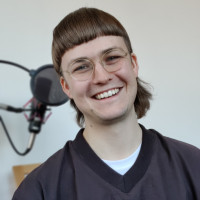
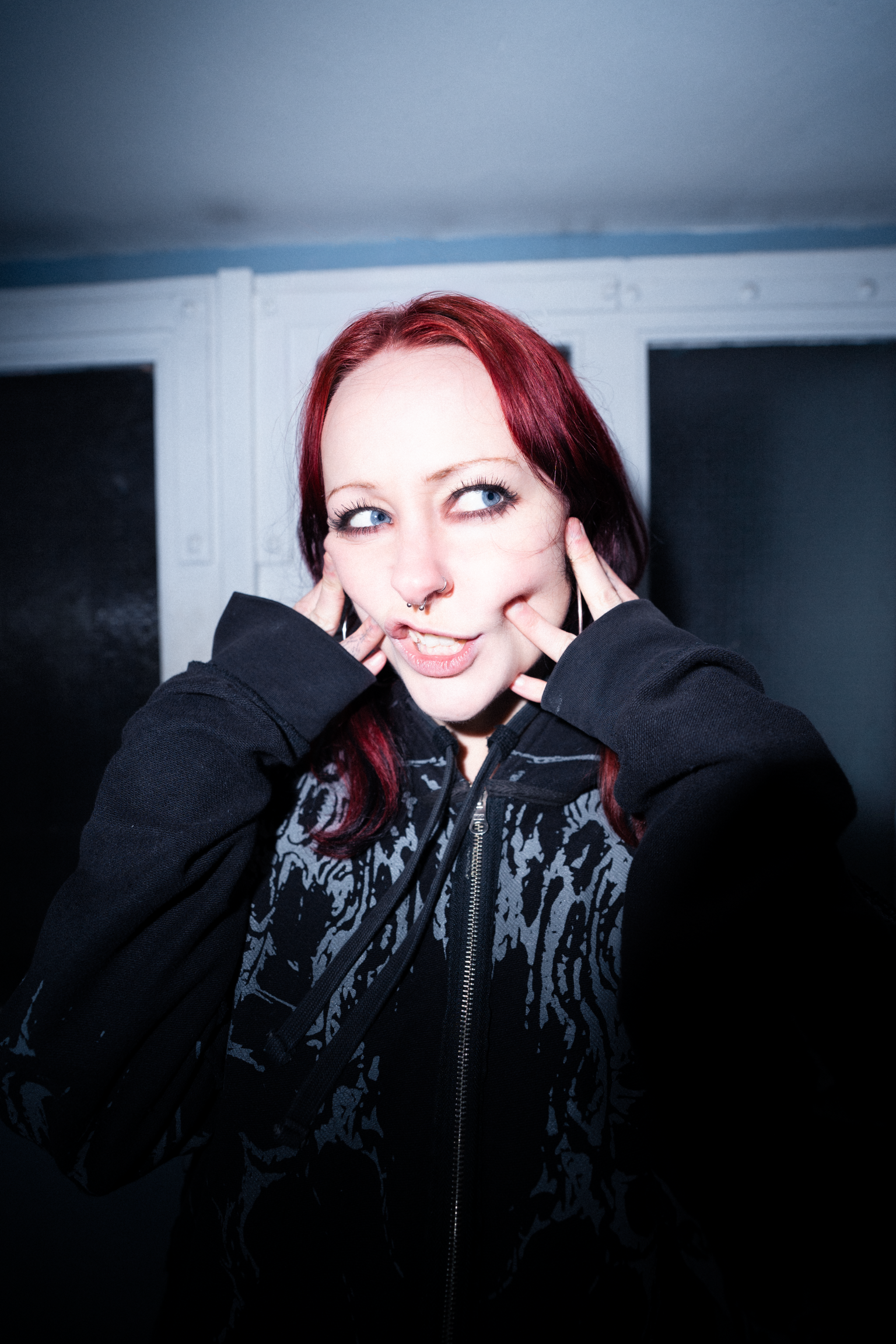
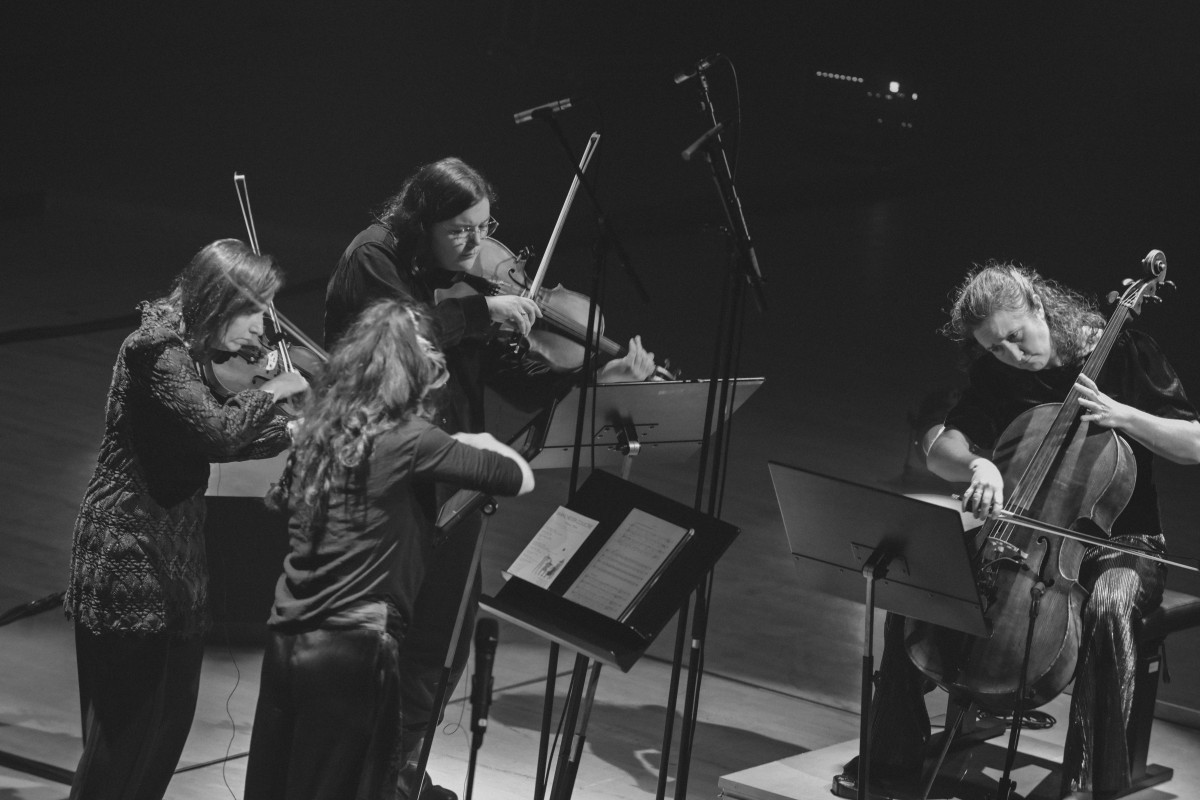
»Music is the pre-linguistic and pre-logical art form that allows us to access parts of consciousness that have not yet been thought about. You can sometimes become aware of what a song means several months later and have an inner problem resolve itself. Music is also collaboration and community. The Danish hard music scene is a fantastic place these years, where artists support each other and collaborate in all directions. In this way, music does not become a competition, but a community to constantly move forward.« 

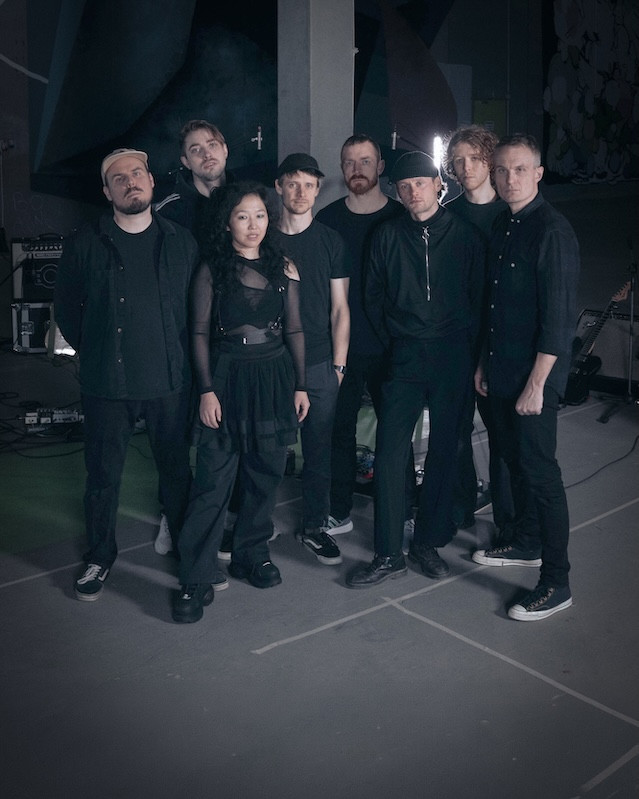
Two forces on the Danish underground scene, MEEJAH x HIRAKI, have joined forces on their release INTERWOVEN (Pelagic Records). The two bands belong to the Danish metal underground with common references such as The Body, The Armed, Chelsea Wolfe & Converge's Bloodmoon and Death Engine. HIRAKI released their debut album Stumbling Through The Walls in 2021 (Nefarious Industries]. Followed by ALTERER – Stumbling Through The Walls REWORKED in 2022. HIRAKI has toured Norway, supported The Armed in Germany and collaborated with Kh Marie. Danish-Korean MEEJAH released Queen of Spring in 2021, which was nominated for a Steppeulv, and recorded a KEXP Live Session during the Lunar New Year in 2024. Meejah has toured South Korea and supported Blonde Redhead and Jambinai. MEEJAH and HIRAKI have both played at A Colossal Weekend and have also crossed paths in the doom-rave collective John Cxnnor.
in briefrelease
09.12

Minimalism for Patient Ears

Lukas Lauermann: »Varve«
© Julia Haimburger
© Julia Haimburger

Varve – from the Danish varv – refers to the annual layers of sediment, a quiet geological archive of time’s passage. Lukas Lauermann’s album carries this meaning into its very sonic core. Here, organ and vocal samples taken from worn cassette tapes meet an inquisitive, almost ascetic cello that moves like fine strokes across a flickering, dust-filled soundscape.

The cello is restrained but never passive. It slips in and out of the cassette’s white noise, of fragmented voices and the organ’s gentle currents of air, until all elements ultimately merge into a single, organic texture. Lauermann himself describes the music as a depiction of irregularities, and it is precisely in these small shifts that Varve finds its quiet strength. The album’s idea of sonic sedimentation becomes an image of our longing to reconnect with nature’s tempo. The compositional motifs seem repetitive, yet they never repeat themselves entirely; they build layer upon layer, like organic growth. As a listener, one becomes witness to microscopic changes slowly unfolding – a process that can bring about an almost meditative state.

Varve is an album for those who prefer listening experiences at an unhurried pace; for those who find Hans Zimmer too grandiose and would rather follow the patient growth of grass than an orchestra’s emotional climaxes.

Gintė Preisaitė

»Music for me is the purest transformation of any energy hiding inside. Through the sound it can become anything we need. It is a form of a bond and connection, it's subtle and it is direct at the same time. For me it was always the biggest exploration machine I could learn about myself, people and environments.«

Gintė Preisaitė is a Lithuanian artist based in Copenhagen who works across piano, electronics, composition and improvisation. Classically trained, she has moved steadily toward electronics, noise, free improvisation and jazz, performing in numerous constellations in recent years.

Working with prepared acoustic instruments, electronics and tape, she bridges her classical background with contemporary sonic experimentation. Through shifting timbres, textures, collaged melodies and percussive figures, she seeks to push acoustic and electronic sound into a space that feels both personal and deeply connected.

Last year she released the EP Spring Mass under the name Baraboro, followed this September by Kaiko, her trio release with Amalie Dahl and Jan Philipp Treen. She is currently developing a new project under her own name for release next year. Gintė performs widely as both a solo artist and a member of various ensembles in Copenhagen and abroad.

in brieflive
05.12

Anna von Hausswolff: The Path to the Organ’s Modern Resurrection

Klara Lewis, Anna von Hausswolff
© PR
© PR

The organ, one of Christianity’s most powerful liturgical markers, runs like a red thread through Swedish artist Anna von Hausswolff’s work. But on her latest album Iconoclasts, the long, piercing drones are toned down in favour of a sharper, driving energy. It was an energy that came through strongly at Hausswolff’s concert in Vega last night, where she was, as usual, joined by a large band. The evening opened with Swedish noise musician Klara Lewis, whose mumbling cassette-loop textures set a brutally atmospheric tone from the start.

Hausswolff’s band was this time expanded with saxophone and percussion, both central on Iconoclasts and both contributing to the slight eurodance tinge that colours several tracks. Unfortunately, the saxophone was at times swallowed by the dense soundscape. Fortunately, Hausswolff’s radiant voice cut through clearly. So did the small organetto – a kind of bellows-driven organ with long pipes. It stood like a totem at the centre of the stage and was almost embraced by Hausswolff whenever she played it. A piece like »The Whole Woman« (a waltzing duet with Iggy Pop on the album) became, in concert, a touching love ode, carried by the organ’s gentle breath as its pulse.

In recent years, a number of musicians have used the organ’s distinctive resonances to wrest it free from the weight of Christian liturgy, giving the instrument an almost iconoclastic status. Despite a slightly muddy sound mix, Hausswolff’s concert was a clear example of this contrast – still deeply rooted in ecclesiastical connotations, yet now an accomplice in large-scale modern productions and a central instrument on major stages.

English translation: Andreo Michaelo Mielczarek

© PR

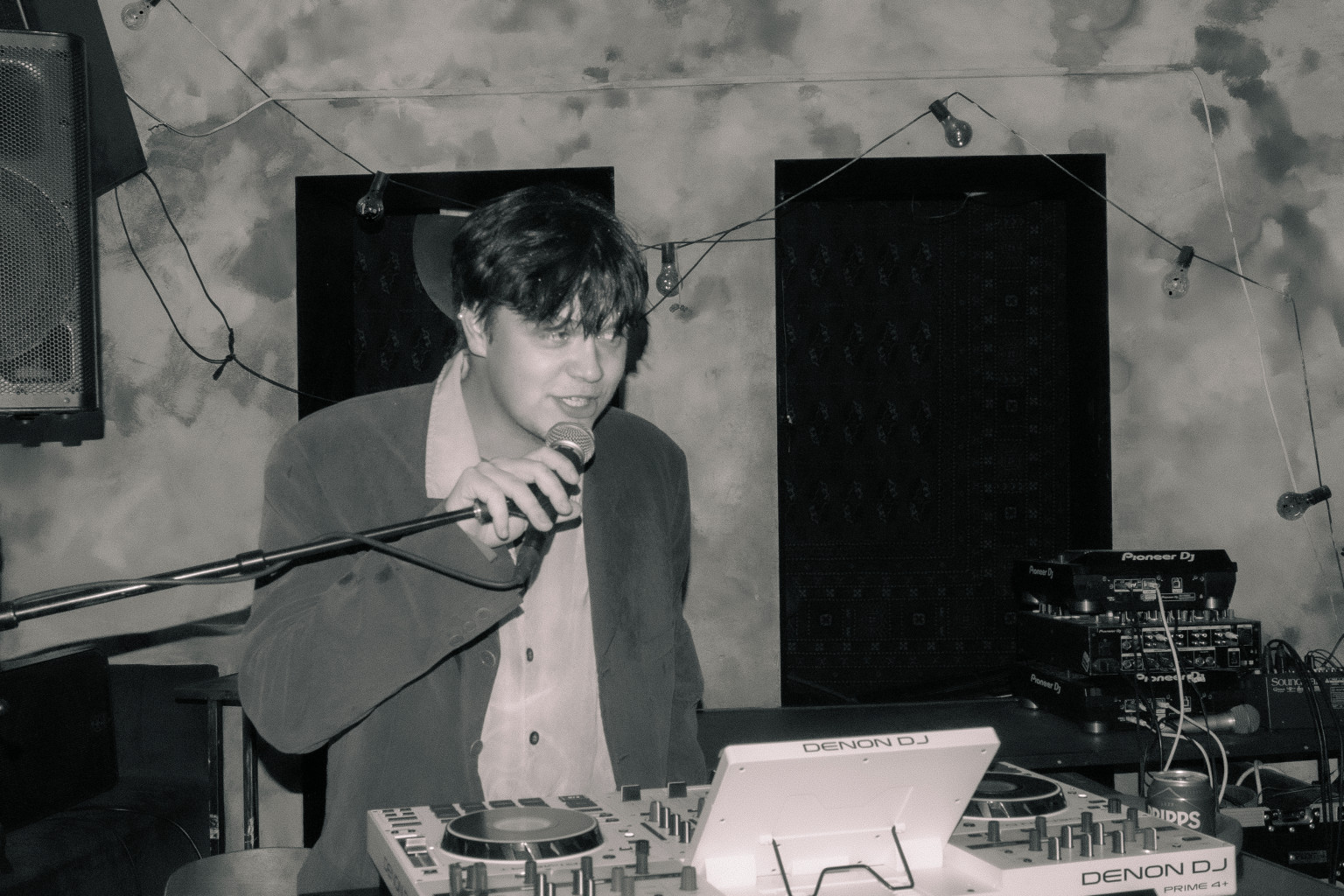
»Music, to me, is … the silence that gropes – like yourself – across a black canvas.
In moments, a hissing emerges.
Nuts are cracked.«

Jørgen Teller has a long career as an electric guitarist, vocalist, electronic musician, and performer. He has released records solo as Static Teller and with Jørgen Teller & The Empty Stairs, Kaptajn Ørentvist … He frequently collaborates with local and international musicians.

© Lou Mouw

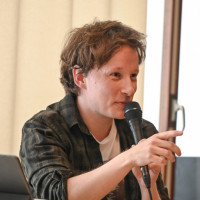
»For me, music is a non-figurative process that cannot be definitively categorised.«

Kristoffer Raasted graduated as a visual artist from the Media School at the Royal Danish Academy of Fine Arts in 2018 and is currently completing a PhD in practice-based and artistic research. Raasted has been an artist in residence at the Danish Institute in Rome and a visiting researcher at UdK Sound Studies in Berlin as part of his PhD.