review22.08.2025
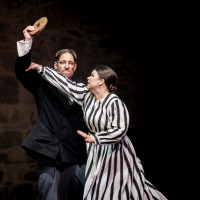
Opera’s Darkness Finds a Home in Savonlinna
Savonlinna’s castle festival lets Finnish national opera resonate between stone, lake, and summer night – and shows how dark dramas can mirror the soul of a people.




Use " " to search for an exact phrase. Use AND, OR, and NOT (in caps) to refine your search.
Savonlinna’s castle festival lets Finnish national opera resonate between stone, lake, and summer night – and shows how dark dramas can mirror the soul of a people.
The music is brutal, relentless. But could it have been more: more in colour, beyond the duel?
At its best, the ambitious sound art walk »Witness Stand« at Refshaleøen pierces right into Copenhagen’s gentrification of the old industrial area. But does it realise that it is itself part of the problem?
A few days before this year’s Copenhagen Opera Festival begins, I, as a critic, have been asked to keep away from one of the festival’s most experimental performances at the theatre Sort/Hvid. This is a complete misunderstanding of the role of criticism.
»Sofie Birch and Antonina Nowacka create a sensuous acoustic space where the dream of another time is allowed to emerge.«
An anti-anthem for those who fall asleep at concerts and wake up with Cage talking nonsense.
Borealis in Bergen promises experimental music but falls short when it comes to traditional concert formats. Instead, magic emerges when the audience is invited out into the forest or into floating sound saunas.
Music is the infinite sound of humanity, in all of its manifestations.
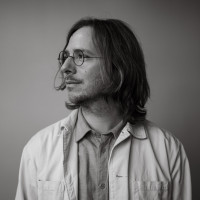
»For me, music is a particular engine for diversity, identity, individuality, and community.«
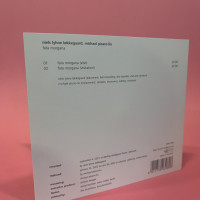
The idea is strong, simple, and well executed. Like the sonic version of a cartoon mirage shimmering falsely in the sharp Californian sunlight.

From digital melancholy and ritual noise assaults to pure silence – MaerzMusik explored the tactile forces of sound and the boundaries of the body.
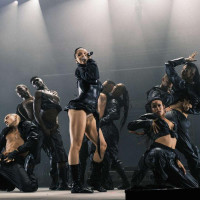
Roskilde Festival insists on ecstasy and togetherness, but the most beautiful moments arise in the dark, where the curious still dare to listen.
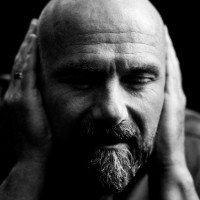
»Music is the other language – the one that can be spoken when all words and conversations have been worn to pieces.«
Like a warped, crumpled tape, melodies bubble to the surface, and the offbeat rhythms repeat with the halting tempo of a scratched LP.
»Music for me is like a sourdough. If you don't feed it right it is going to die.«
Music for me is a tool of infinite expression.
The Only Connect festival in Stavanger transformed the city into a landscape of noise, poetry and bodily vibrations.
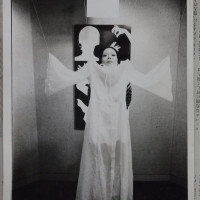
Katsuko Tsujimura sought to dissolve the body in postwar Japan. Now, new voices are gently piecing it back together.
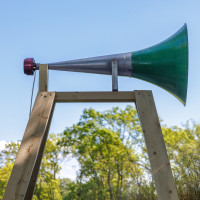
The MOMENTUM biennial in Moss, Norway lets sound art speak, guiding the audience into the borderlands of the senses – where even a toilet resonates like an echo chamber.
For me, music is an emotional refuge. When I sit at the piano I feel safe, it's where I can release everything I carry inside.
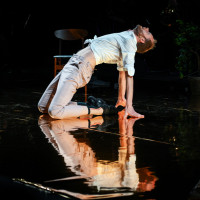
This year’s edition of Copenhagen’s festival for new music embraced sonic rituals, cultural encounters, and performances with loops, bodies, and cassette tapes – and featured French musicians playing as if sound itself could change the world.
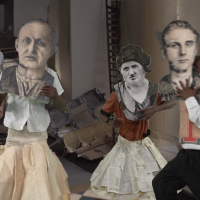
At the Bergen International Festival, William Kentridge and Ryoji Ikeda let art capture what can no longer be said – only felt.
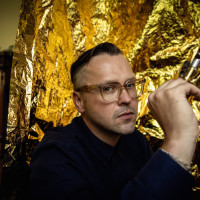
»Music is the ultimate gateway to presence, a true expression of the moment.«
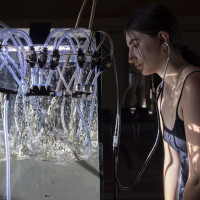
At Geneva’s Archipel Festival, lost instruments and occult soundscapes are brought to life in a journey through speculative rituals and experimental music.
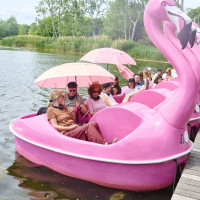
From seductive echoes in an abandoned yeast factory to allergy-inducing angel wings in a baroque church – Musik Installationen Nürnberg put the body in motion, but left the question of what a music installation truly is unanswered.