


A Country Built of Sound
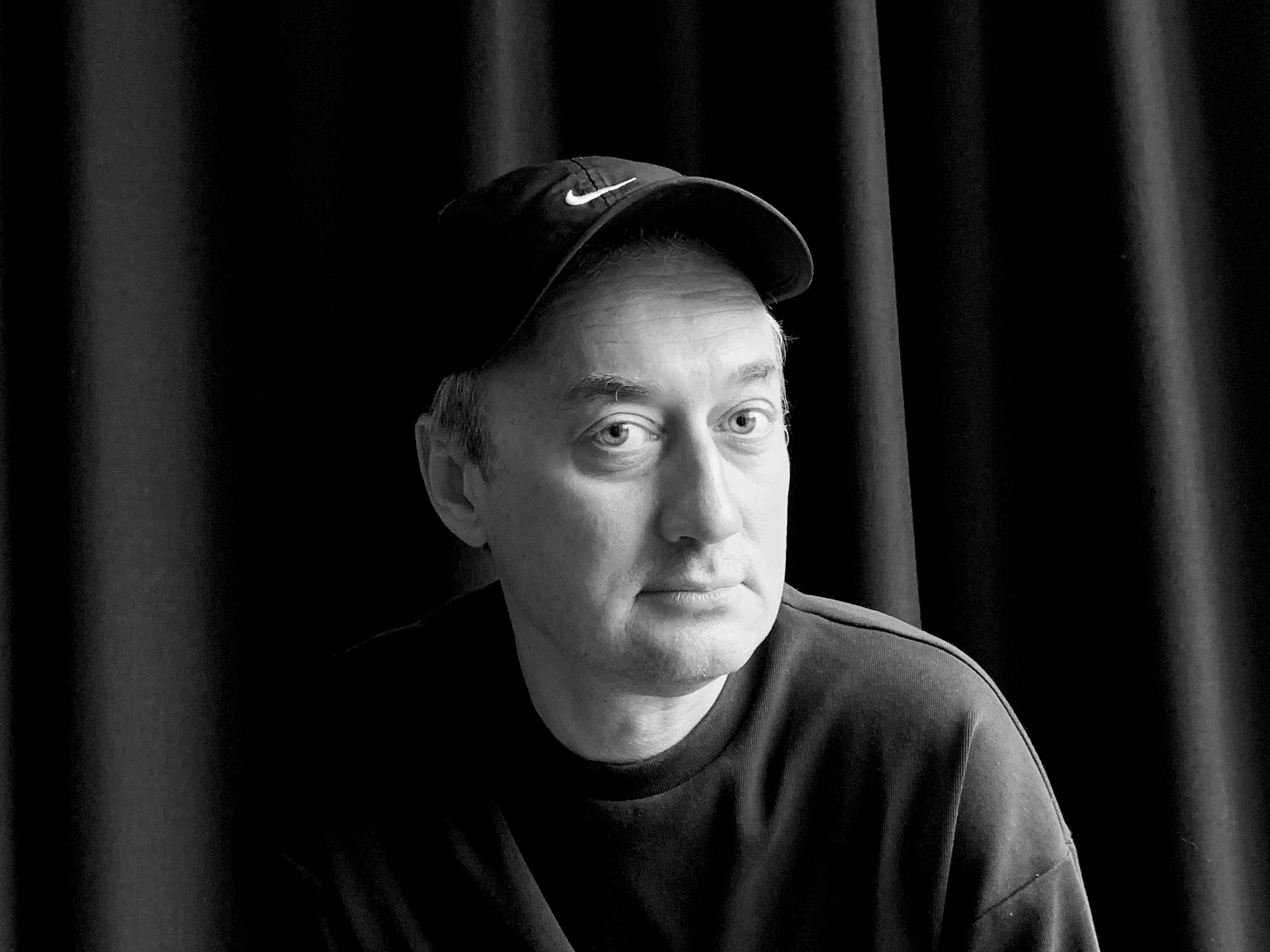
Where else would Bára Gísladóttir premiere her new orchestral work DÆGRIN than on the luxury liner of a music house, Harpa – of course, during Dark Music Days, in the middle of þorri, the darkest phase of the year in the old Nordic calendar, where the fourth month of winter begins on a Friday between January 19 and 26? Hardly anywhere.
And listen – were there not glimmers of light here and there? Yes, there were
Gísladóttir is shaped by this country’s basalt, wind and winter light, and although she is now based in Copenhagen, she has for many become the very sound of Iceland. Of course, the darkness was massive in her new work – deep, vibrating undercurrents – but there were new elements too: the Iceland Symphony Orchestra unfolded a more spacious, panoramic sound field than in her earlier, more compressed works. Screeching violins carved sharp lines through the orchestral mass, while subtle displacements slowly undermined any sense of stability. The piece took on the character of a pent-up hiss: one long, almost immobile tone was held like a strained breath, and around it arose a teeming world of rustling, friction and microscopic string movements. And listen – were there not glimmers of light here and there? Yes, there were. Still, a perfect opening to Dark Music Days.
Metal, friction and humour
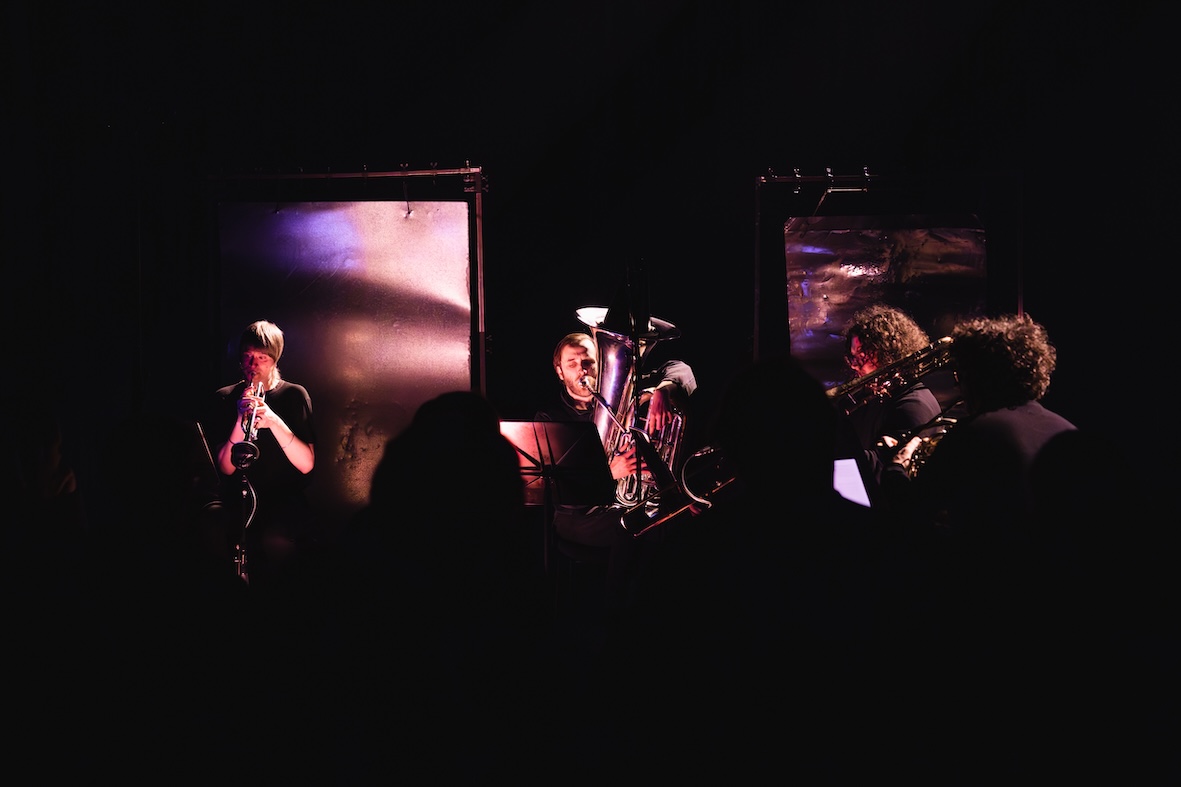
The German brass quartet APPARAT gave the world premiere of Bergrún Snæbjörnsdóttir’s Intraloper. Behind the musicians hung metal sheets like silent co-performers. They answered back, set themselves in motion, vibrated and – together with electronics – added a raw, tearing resonance. In Harpa’s polished concert hall, the feeling of a temporary industrial warehouse emerged.
We sat side by side watching the handball match between Iceland and Denmark on a big screen. Including Björk
The balance was exact: the dry clicks of the valves stood naked before the full brass sonority cut through the space with physical weight. The sound was unadorned – deeply material, cold and wildly compelling.
With Haukur Þór Harðarson, darkness assumed another form. Roots, Laments (2026) for chamber orchestra shimmered and glowed in muted layers, like sonic archaeology. The contrasts stood out all the more clearly in Tryggvi M. Baldvinsson’s Jarðljós (2025), where Herdís Anna Jónasdóttir’s bright voice cut like a shaft of light through the dense sound world. I did not understand a word of Gerður Kristný’s Icelandic text, yet I was struck by the song’s intensity. The same was true of Hannes Pétursson’s poems in Finnur Karlsson’s Fjögur lög með millispilum (2018). When Þórgunnur Anna Örnólfsdóttir sang them, the language was lifted into a special space. It surely added to the atmosphere that we sat together with the musicians on stage in Harpa’s main hall shortly before midnight, looking out at the empty rows of seats.
Among the most entertaining events at this year’s Dark Music Days was Ragnar Árni Ólafsson and Luke Deane’s oddly captivating, partly improvised TV show, in which the two performed a philosophical and gag-filled music lesson on how we store sounds, release them, sell them. They ended with a dry »Thank you for travelling with us.« Thank you in return. Best work title of the festival must go to the Danish composer S. Gerup: How to Ruin Someone’s Career as a Violist – a quiet study of the meeting between musical skill and human fragility, embodied by violist Þórhildur Magnúsdóttir.
Best work title of the festival must go to the Danish composer S. Gerup: How to Ruin Someone’s Career as a Violist
Soil and rubble
Nature stirred inside Harpa when the two composer-led ensembles Stelkur and Steinalda took the stage with works by Charles Ross and Guðmundur Steinn Gunnarsson. It was a concert moving along the borderland between nature and infrastructure – what in English is called the edgelands: the zone where the man-made slowly slips into something else.
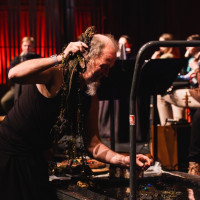
Guðmundur Steinn Gunnarsson’s Hugleiðingar um nýtingu afganga (Contemplations on the Utilization of Leftovers) – a kind of memorial to the petrol station that once stood where Harpa now rises – shaped a fragile ecology of sounds. Guitar, banjo and flutes appeared and disappeared like small growths. Unfortunately, the music idled.
Towards the end, Ross stood at the front of the stage with his hands in seaweed. Yes, this was earthy poetry
Charles Ross’ New Forest found a stronger form for the delicately organic. Towards the end, Ross stood at the front of the stage with his hands in seaweed. Yes, this was earthy poetry.
One work that stood out markedly was Véronique Vaka’s Vanascere (2026), premiered at the festival by Caput Ensemblewith accordionist Jónas Ásgeir Ásgeirsson as soloist. The accordion functioned as the work’s pulsating organ amid the orchestra’s muted, organic sound layers. Vaka’s compositional language is marked by a tactile attention to detail: small shifts in rhythm, texture and timbre. Darkness and light imperceptibly merged in a slowly unfolding course where time – as so often in Icelandic music – was a space the music was allowed to inhabit.
»Iceland is not only built on nature. Iceland is built on music«
Miracles and export
The music scene in Reykjavík is small. That means you inevitably run into each other – even between two concerts. In one of Harpa’s halls, composers, musicians and audience members sat side by side watching the handball match between Iceland and Denmark on a big screen. Including Björk. Yes, once again this year Björk was at Dark Music Days.
After the match, Páll Ragnar Pálsson, chairman of the Composers’ Association, said: »Iceland is not only built on nature. Iceland is built on music. But we must not take it for granted.« His soprano partner nodded: »No, it is a miracle.«
You hear it again and again: that a society of just over 400,000 inhabitants – the size of a medium-sized provincial town in Denmark – has made music one of its most important export goods.
A good example is Masaya Ozaki, who has come to Reykjavík to study and is here refining his already original musical language. Last year he made the parking garage beneath Harpa resound with noise
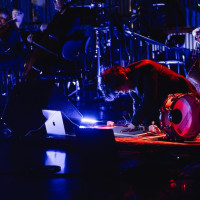
This year, together with ronja, he performed spidernetwork: boku wa… desutoroiya (2026). Inspired by a spider’s web, the performers sat on the floor on either side of the ensemble with electronics and snare drum. The noise quietly rolled over the orchestra, was absorbed and filtered, so that all hierarchies – between centre and periphery, soloist and ensemble, noise and structure – gradually dissolved.
In another of Harpa’s many halls, Magnús Jóhann Ragnarsson played the strange French electronic instrument Ondes Martenot from 1928. Ghostly vibrato and undulating glissandi recurred in several works, including Ingibjörg Elsa Turchi’s Hringiða (2026). Bára Gísladóttir also appeared on stage in a free improvisation; her double bass and the Ondes Martenot’s bright, spaced-out sounds were simply wonderful.
Miracles sing softly
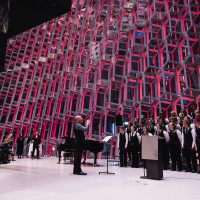
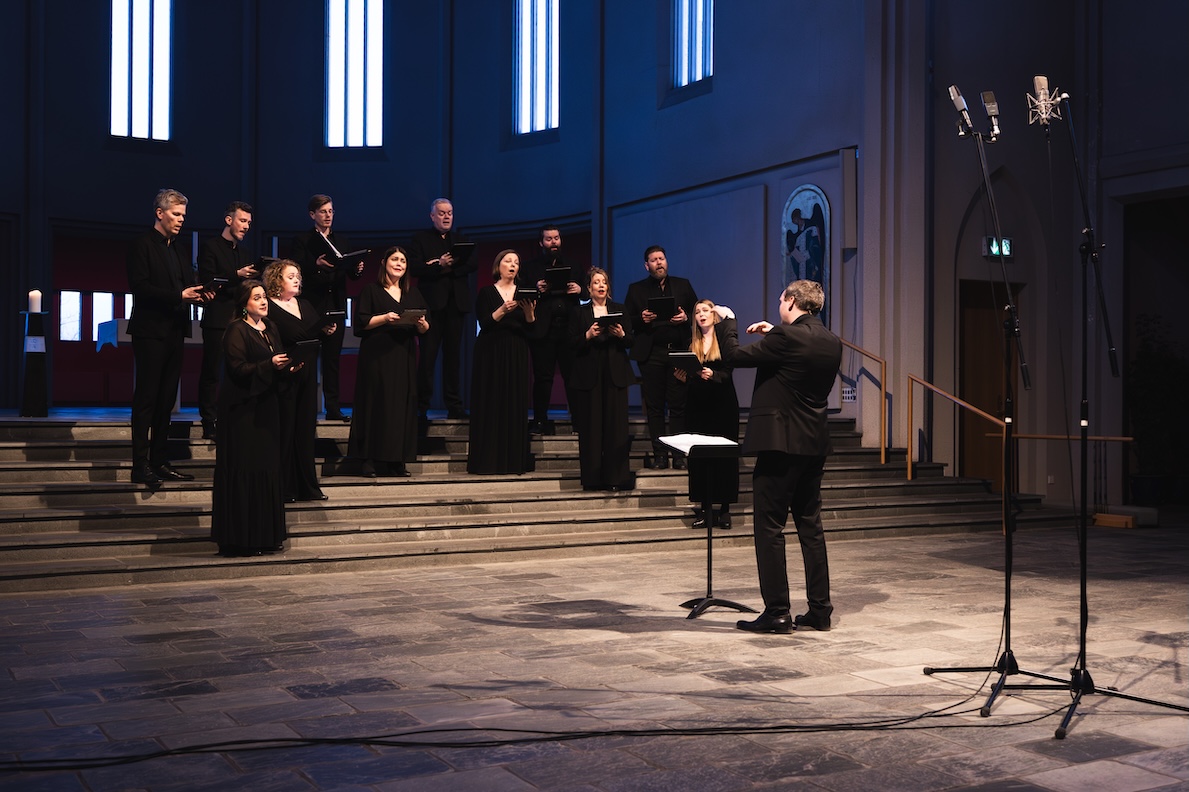
Song is naturally present everywhere in Iceland. Dark Music Days opened with a youth choir and ended with the phenomenal Cantoque Ensemble performing works by Hildigunnur Rúnarsdóttir. Syngur sumarregn (1994) sounded tremblingly pure, sorrowful and exalted – and at the same time completely down to earth.
After Bára Gísladóttir’s improvised concert, one could see the chairman of the Composers’ Association carrying her double bass out of Harpa. A small but telling image. Perhaps the miracle does not reside in export figures or in the myth of the uniquely Icelandic, but in the practical community: that people stay and help, that they share the handball screen and listen to each other’s music.
Dark Music Days, Reykjavík, Island, 28.01-01.02