© PR

»For me, music is a secret safe place. It is a refuge from society, from who you're expected to be, and from the idea of belonging. It is a space where you're free from conflict and dualistic ways of thinking. It is a place to feel the world without needing to understand it.«

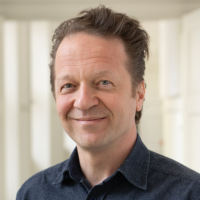
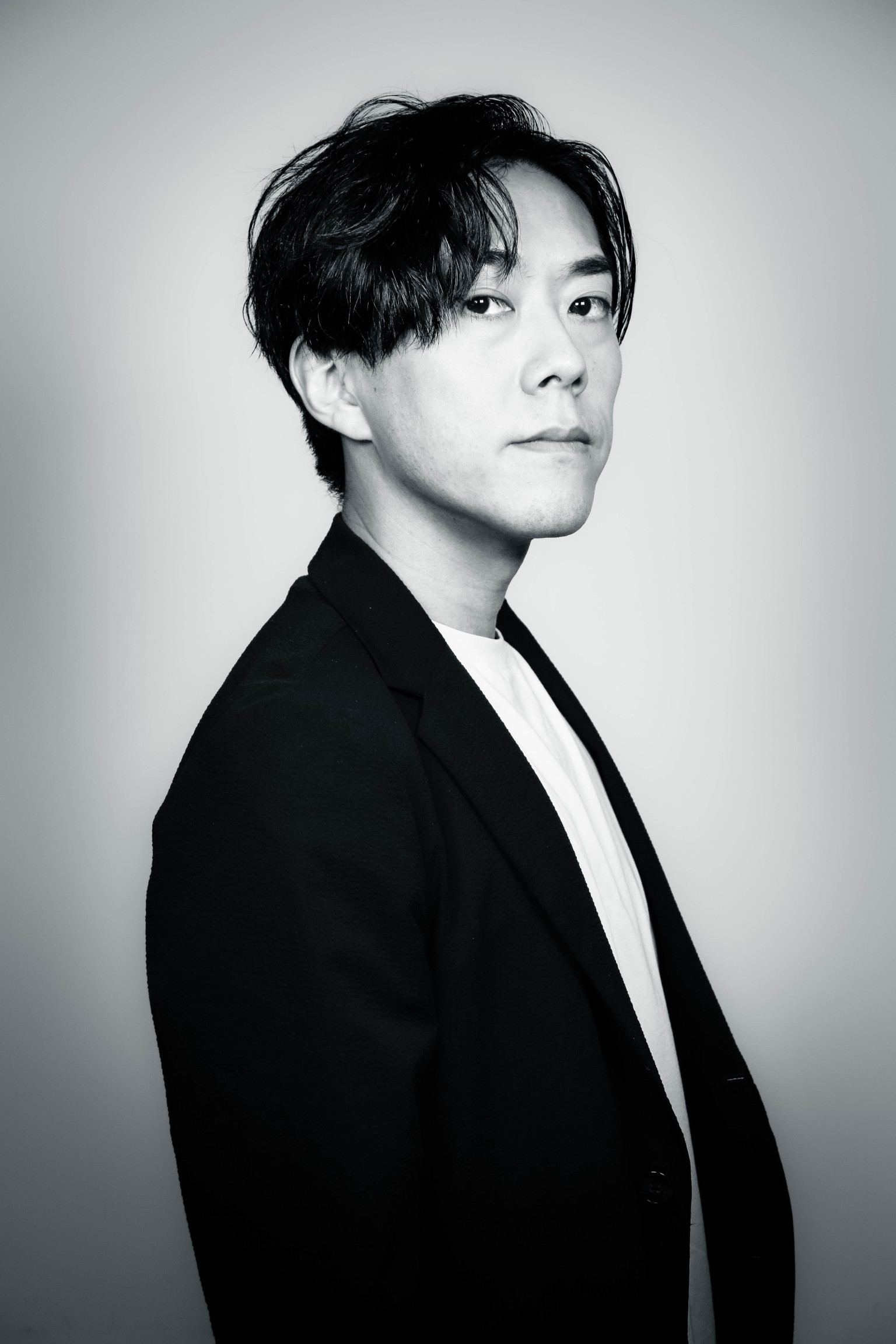
Masaya Ozaki is a composer born in Niigata, Japan. His work is deeply influenced by the transient nature of space and the subtleties of sound within physical environments.  Ozaki views sound not just as a medium, but as a form deeply intertwined with the spaces it inhabits, something that he explores extensively in site-specific projects like Echoes, which involved live performances inside a lighthouse. 

Ozaki’s latest album, Mizukara (2024), is a reflection of his personal and artistic journey, primarily shaped by his experiences in Iceland. The album embraces minimalism and introspection, incorporating field recordings, sparse instrumentals, and the textures of the Icelandic landscape to explore the fluid relationship between self and environment. In recent interviews, he emphasized his shift from purely sound-based compositions to ones that deeply consider the environment and space. His relocation to Iceland has profoundly influenced his work, encouraging him to further merge the boundaries between music, nature, and architecture.  He is also a member of the Reykjavík-based emo anime doom metal band MC Myasnoi.

In brieflive
19.02.2024

Cortini – the Electronic John Williams

Alessandro Cortini 
© René Passet
© René Passet

Alessandro Cortini is best known as a member of Nine Inch Nails, and as I discreetly listened in on conversations before the concert, it was clear that several people had shown up because of the connection to the famous band and its noisy, confrontational music – music that is worlds apart from the feather-light ambient universe that characterises most of Cortini’s solo work.

At ALICE, however, we were presented with a very different side of Cortini: Cortini the film composer. The artist was positioned far out at the edge of the stage, where he could tinker with his synthesizers in peace without stealing attention from the film projected onto the back wall of the stage. Contrasting, tactile images slowly sliding into and out of one another. Abstract, amorphous shapes that at times resembled misty memories from the real world: raindrops on a car window, a city seen from above, stars in the night sky; tar, metal shavings, crushed crystal.

Cortini reminded me of a kind of electronic John Williams, enveloping the images in an unusually grand, almost symphonic universe that elevated the black-and-white light forms into hieroglyphs of infinite wisdom. The atmosphere was so sacral and gripping that, with closed eyes, one could easily forget that Cortini was not singing Michelangelo’s paintings from behind the organ in the Sistine Chapel, but instead setting analogue synth tones to what looked like an image of a granite block. Some of the Nine Inch Nails fans, I could hear, were slightly confused by the emotionally charged, almost romantic aesthetic, but I myself truly admired Cortini for his uncompromising maximalism. There was no affected distance or feigned coolness – only pure, unadulterated musical beauty.

© Ditte Capion

»For me music is an irregular yet life-long event that requires constant attention in the form of private preparation, rehearsals with others, and performances to audiences.« 

Theater of Voices' founder and artistic director Paul Hillier is originally from England and was educated there Guildhall School of Music and Drama in London. During his career, he has worked as a conductor, singer, teacher, editor and writer. In addition to being the founder of the legendary Hilliard Ensemble, he has been chief conductor for i.a. the Estonian Philharmonic Chamber Choir, is artistic director of The National Chamber Choir of Ireland, and has been chief conductor of Ars Nova Copenhagen since 2003. Paul Hillier has completed more than 200 CD/DVD releases and has won two Grammys. Honors include OBE (Order of the British Empire), The Order of the White Star from Estonia and the Knight's Cross. This week Paul Hillier turns 75. 

In briefrelease
08.02.2024

Behind the Words

Alexander Tillegreen: »In Words« 
© PR
© PR

One of the most mysterious – and at times boundary-pushing – interviews ever captured on tape is Meatball Fulton’s 1967 interview with Pink Floyd’s Syd Barrett. Filled with broken sentences, incongruous word combinations, questions and answers that seem to bear no relation to one another, and pauses that feel endless, the interview pushes the limits of what can meaningfully be called communication at all. »Your impression of me… which you must have… would you care to tell me? And be like absolutely honest… Do you have one?« the interviewer asks at one point. »In words?« Barrett replies.

In Words is also the title of multidisciplinary artist Alexander Tillegreen’s debut album, whose closing composition samples a full seven minutes of the interview. It is not difficult to understand what Tillegreen hears in this peculiar exchange. For someone who, in his artistic explorations of psychoacoustics and phantom words, has consistently probed sound’s possibilities and limitations as a carrier of meaning, the interview must appear as a rather sensational example of the illusory nature of language.

None of this would, of course, be of any interest if the music were not as strong as it is: richly atmospheric, detailed, texturally varied, emotionally potent, and filled with pleasing, warm synth tones that recall 1970s German Kosmische Musik. The fact that a large part of the compositions originate in earlier installation works often leaves me with the strange feeling that there is a dimension or context I do not fully grasp – which, of course, is entirely in keeping with Tillegreen’s spirit.

© PR

Phil Battiekh (Basel, Switzerland) has been a Mahraganat  DJ and producer for over a decade. He is one of the first to dedicate himself to Mahraganat outside of Egypt. In addition to his most popular Mahraganat mixes on Soundcloud (over 450K streams worldwide),  he released the acclaimed Cairo Concepts compilation in 2019. Featuring DJ Plead, DJ Haram, Alaa Fifty, Nustaliga and others, Cairo Concepts contextualises the impact and developments of the Mahraganat scene and examines the way certain artists have appropriated Mahraganat for club scenarios.  

Mahraganat (Egyptian Arabic: مهرجانات( , which literally means »festivals«, is a mix of Egyptian Shaabi, electronic dance music, rap and trap. It is characterized by percussion-heavy rhythms,  massive bass and loads of autotune. Phil Battiekh is curating the SWANA night – a joint event by pantropical, turkis, and Volume Village, which takes place at the latter in Aarhus. Next to his own set, Phil will  also have a role as Wezza Montaser's DJ. 

Bill Frisell. © Carole D'Inverno

»I like when it's impossible to tell at first if something is black or white, or country or blues, or whatever.«

Bill Frisell’s career as a guitarist and composer has spanned more than 40 years and many celebrated recordings. From Aaron Copeland and Charles Ives to Bob Dylan and Madonna. Born in Baltimore, Bill Frisell played clarinet throughout his childhood in Denver, Colorado. His interest in guitar began with his exposure to pop music on the radio.