



Everything Makes Noise. Then Comes Silence
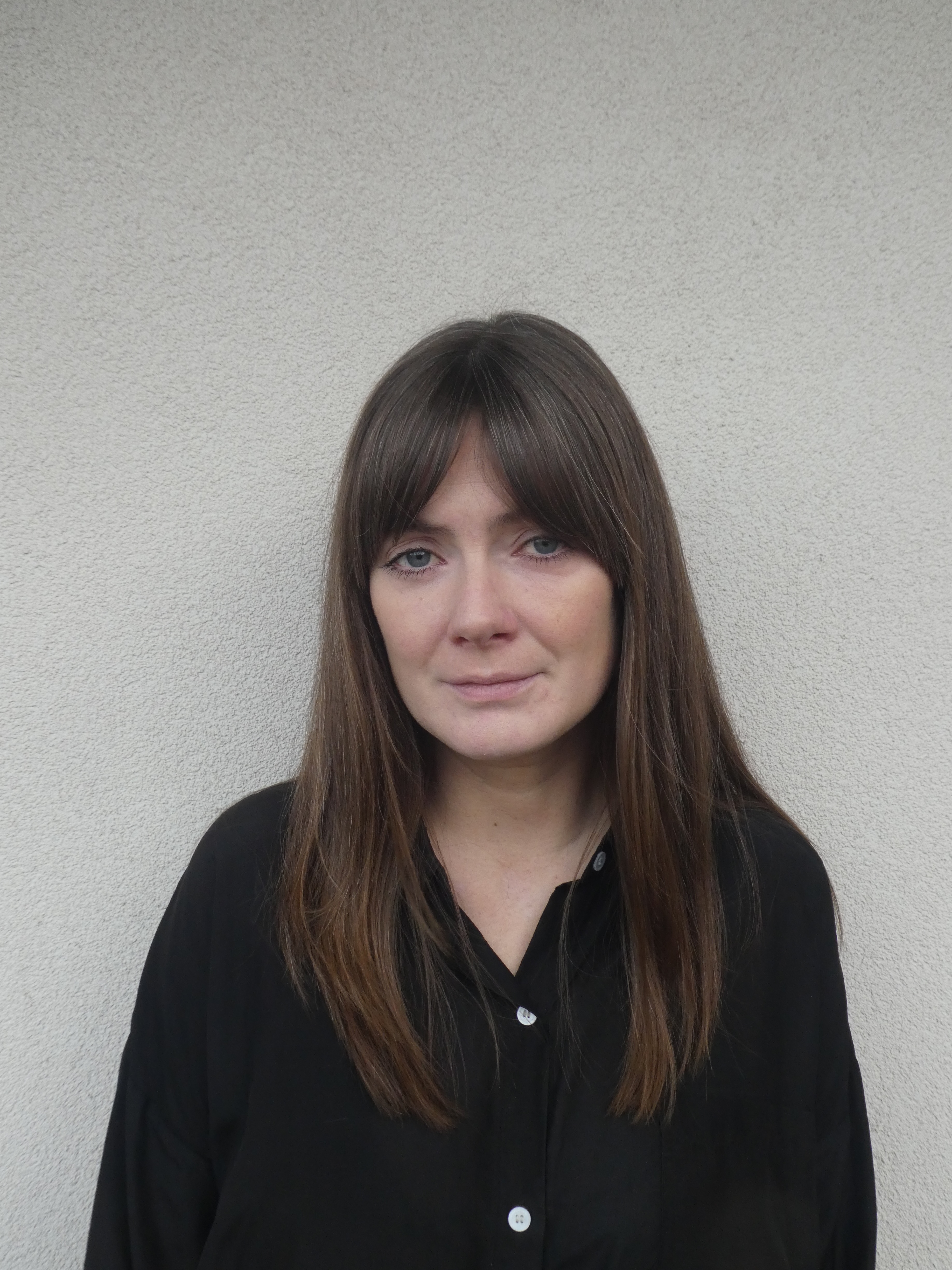
An infernal din fills the completely darkened theatre. Beside me, a Polish composer is covering his ears, while the row behind me is frantically rummaging through bags for earplugs. The noise seems to go on and on, not as a uniform wall of sound but as a brutally shifting texture: from predominantly electronic, piercing and high-pitched sounds to something more resonant – as if someone were banging pot lids, glass bottles and metal pipes down there in the darkness on stage.
The performance at Black Box, a theatre in a converted factory building in Oslo’s Grünerløkka district, was created by artist and scenographer Kjersti Alm Eriksen in collaboration with the Norwegian trio Pinquins, and in several respects it represented one extreme of a spectrum that tells us something about Ultima in 2026.
Beside me, a Polish composer is covering his ears, while the row behind me is frantically rummaging through bags for earplugs
When the festival was founded in 1990, it set out to explore and expand the boundaries of what music and sound could be. Since then, Ultima has grown into one of Scandinavia’s largest events for what it calls contemporary music, ranging from neoclassical works for symphony orchestras and chamber ensembles to noise, improvisation and electronic sound art at the other end of the spectrum. Extremely broad and extremely niche at the same time, you might say.
Perhaps we should send Ed Sheeran to Norway for a study trip?
When Silence Becomes Political
I start my weekend in Oslo at the exact opposite end of that spectrum: a symposium organised by two musicology researchers from the University of Oslo, who present their respective fields of research under the shared title Sonic Citizenship.
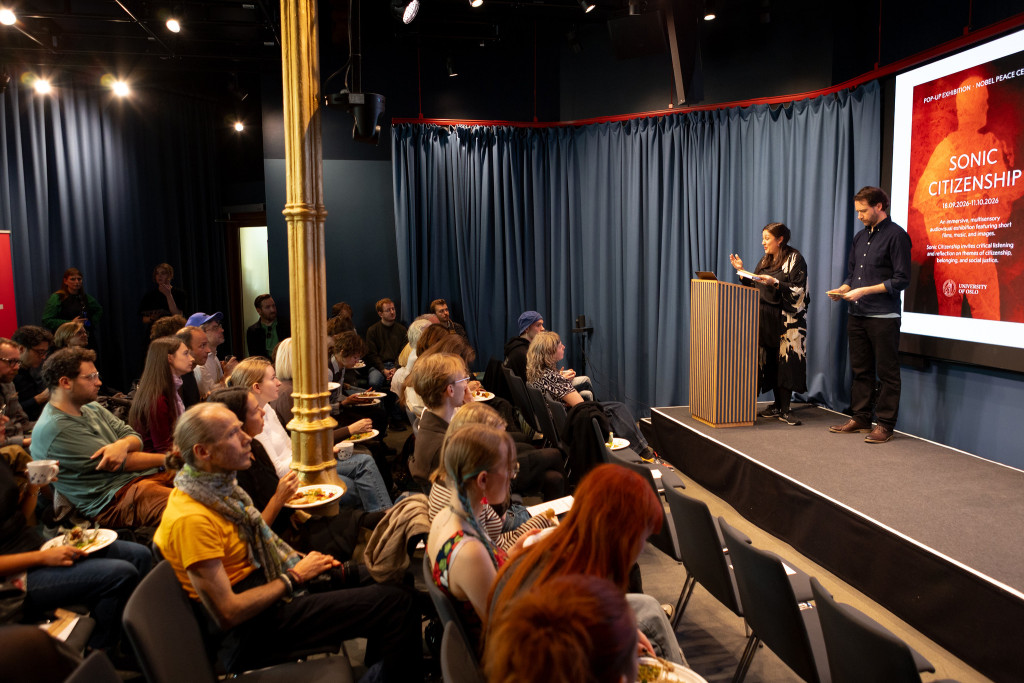
In a very small room tucked away behind the museum shop at the Nobel Peace Center on Oslo’s highly polished waterfront, they present an exhibition of the kind that is more interesting to talk about than to experience.
Peter Edwards talks about Democracy of Silence, a study of silence as a form of protest. »In our society today, there is a demand that you use your voice,« Edwards says, »but we also live in a world with an enormous amount of noise.« His research therefore examines how silence can function as a political expression, sometimes carrying more force than a loud protest.
The demonstrators stand silently, shoulder to shoulder, and despite the huge number of people, not a sound can be heard
He shows photographs from a mass demonstration following an accident at a railway station in Novi Sad, Serbia, in 2024, which protesters saw as the result of widespread political corruption. The demonstrators stand silently, shoulder to shoulder, and despite the huge number of people, not a sound can be heard. Interestingly, these are images from the same demonstration that later turned violent: protesters have described being subjected to a sonic weapon, a loud, piercing sound that subsequently caused hearing problems for several people.
Another researcher, Áine Mangaoang, presents her project on sound, dignity and participation in Nordic prisons. Although the two projects do not immediately seem to point in the same direction, they nevertheless share an interesting observation about how authoritarian forces use sound and silence as instruments of power against individuals who have no voice – or who refuse to speak. Perhaps Ed Sheeran should take a trip to Norway.
At Oslo Kunstforening, Norwegian pianist and visual artist Marte Gunnufsen has created a very beautiful video work about a colleague, Aino Thiesen.
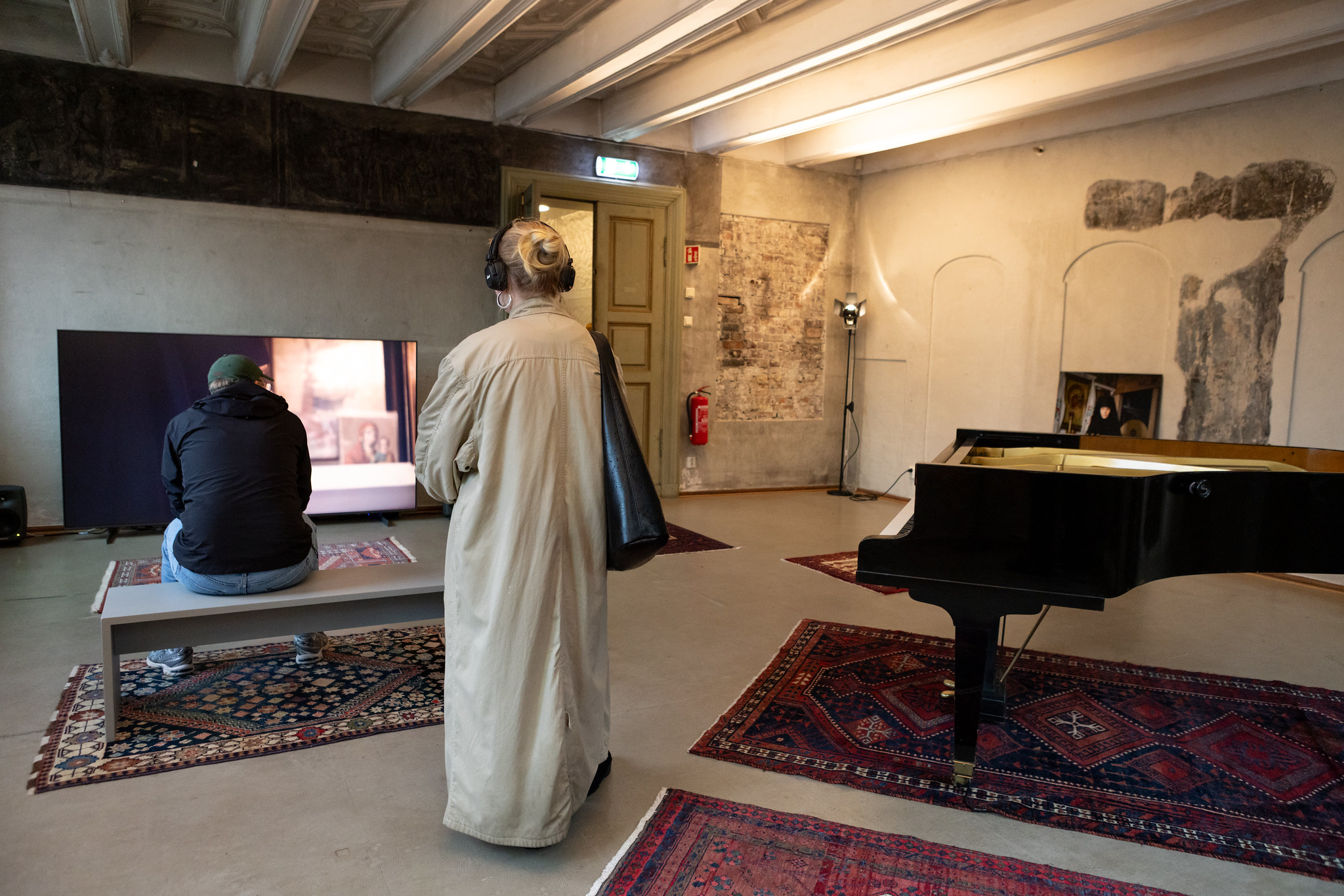
Thiesen was an exceptionally gifted pianist, on the threshold of an international breakthrough when she withdrew to a remote Russian Orthodox monastery. The camera follows Thiesen, now known as Mother Evgenia, through her slow-paced daily life of prayer, icon painting and contemplative silence. It is a compelling portrait of a woman who chooses silence over music and a withdrawn existence over all the noise of the world.
If you want notes with ghostly vibes, just put an AI to work, I think
Less compelling is a self-playing grand piano – the first of several I encounter at Ultima – which takes over Mother Evgenia’s playing when the video ends. I assume the intention is to conjure up a slightly ghostly sense of absence and presence at once, but a self-playing monstrosity like this simply feels and sounds like soulless machinery. If you want notes with ghostly vibes, just put an AI to work, I think.
A Whole Lot of Piano
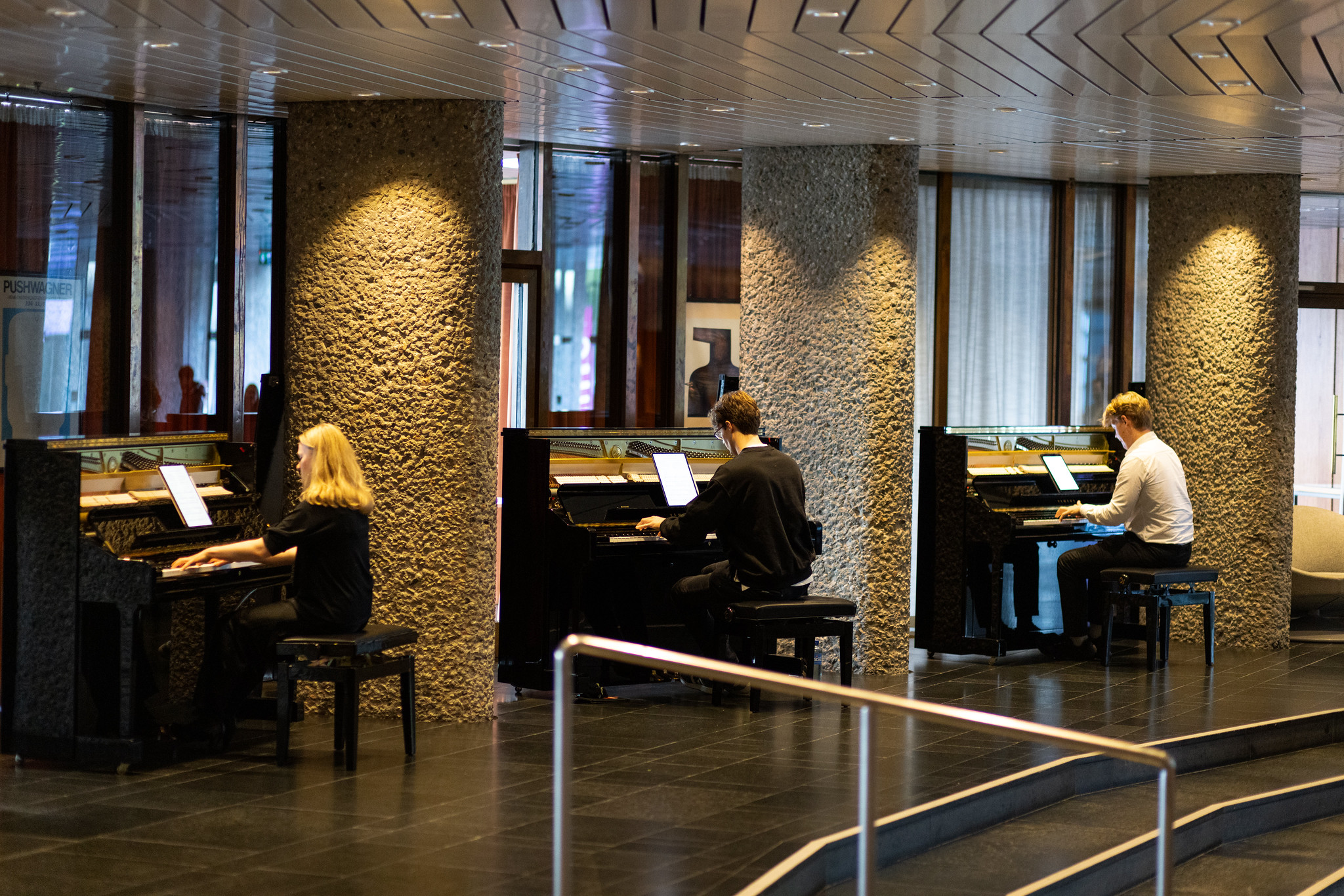
At the Heine Onstad Art Centre on the outskirts of Oslo, there is piano too – a whole lot of piano. One of Norway’s most prominent composers, Nils Henrik Asheim, has curated a six-hour programme in which grand pianos, upright pianos, self-playing technologies (there it is again, the self-playing piano!) and loose piano parts take over most of the building, transforming it into a kind of experimental laboratory centred on the grand piano.
Heine Onstad owns a fairly large collection of Fluxus works from the 1960s, including recordings of Piano Activities from 1962, in which a group of artists – among them Nam June Paik, Dick Higgins and George Maciunas, under the direction of composer Philip Corner – completely dismantled a grand piano with hammers, crowbars and saws. The target was the classical instrument as a symbol of the bourgeois high culture of the time, but the work also became emblematic of the movement’s systematic deconstruction of sound.
The noise finally stops. The lights come on, and we are looking straight at a tall wooden wall
Asheim clearly follows in that tradition, although as far as I know no grand pianos suffered any damage that day. In the art centre’s large studio, John Cage’s Suite for Toy Piano is among the works performed, as is Yun Kyung Lee’s Strings, a composition played with different kinds of thread directly on the piano strings. We also get a rather wonderful and thoroughly chaotic waltz by Chopin, performed by 16 pianists rotating between four grand pianos as if moving in waltz steps. For me, it is the highlight of the weekend.
The Music of Chance Itself
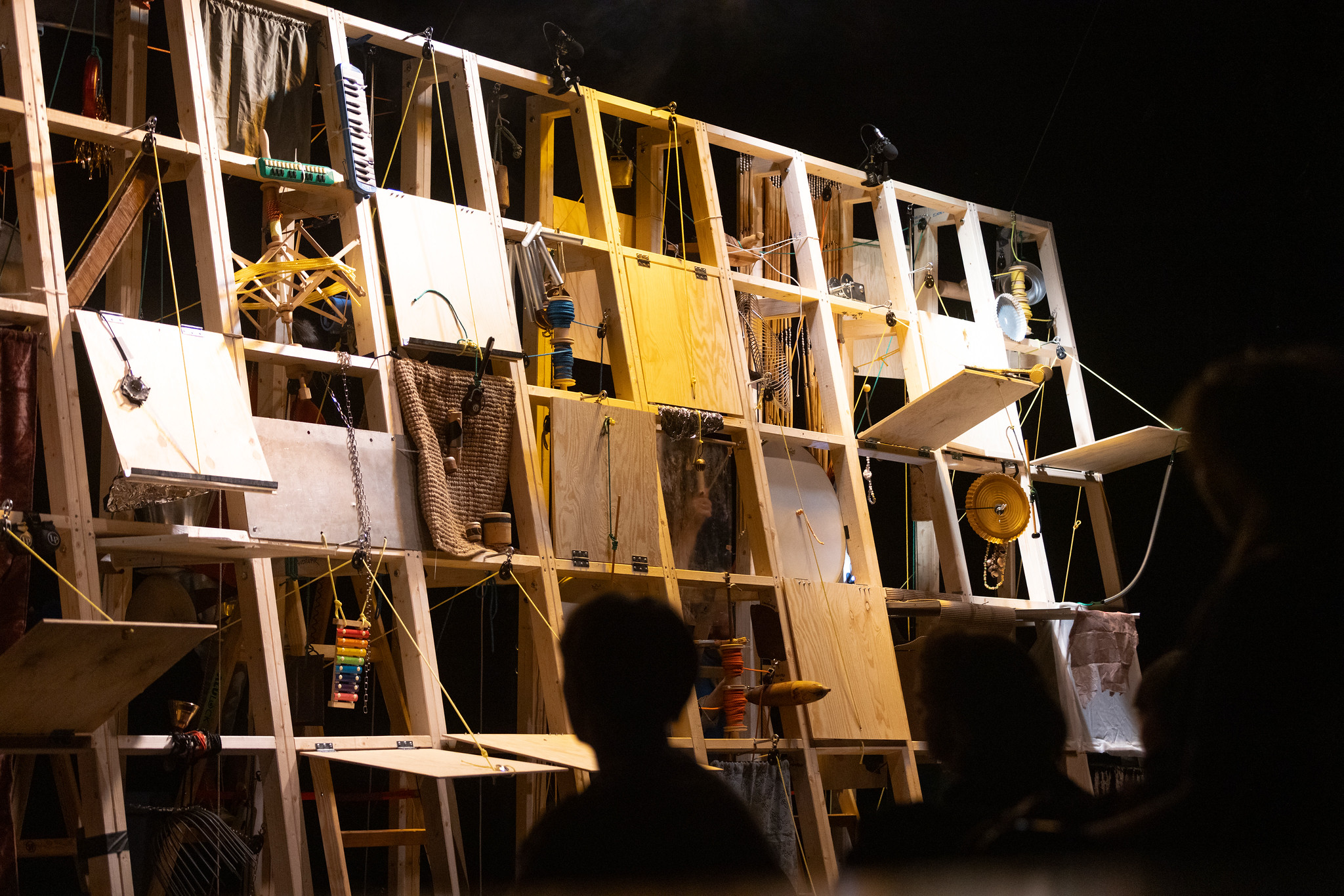
Back in the theatre at Black Box, the noise finally stops. The lights come on, and we are looking straight at a tall wooden wall. It consists of hatches that can be opened and closed using ropes, each hatch revealing an object: a funnel through which small stones are poured, a spinning wheel producing a rhythm, and all manner of surfaces over which objects can be dragged.
For the next hour, a group of performers behind the wall open hatches, run scrubbing brushes across sandpaper, make things crackle and objects spin.
We also get a rather wonderful and thoroughly chaotic waltz by Chopin, performed by 16 pianists
Presumably, this is some form of controlled improvisation, and I have a hard time figuring out what the performance is actually trying to do. Objects touching one another or a surface produce sound. We know that. But what is the sound for?
Earlier in the day, I find myself in a frustrating situation at Oslo Kunsthall. I am trying to operate a game in which you shoot a ball upwards so that it hits a trigger using a spring, but no matter how many times I try, I cannot make it work. The game is a work by the Norwegian artist group Samvær under tilsün, and the idea is that the ball should hit a point that activates a sound work, apparently a fanfare.
The entire Kunsthall is filled with things like this: machines that are meant to be operated by the audience and that may, under the right circumstances, produce more or less random sounds. By far the best work in the exhibition is the classic 1987 video Der Lauf der Dinge by the duo Peter Fischli and David Weiss. It shows a Heath Robinson-style chain reaction made from all kinds of things: a balloon on wheels rolls towards a needle and bursts. The air released from the balloon fans the flame of a candle, which sets fire to a liquid. The liquid flows down a tray and hits a button, setting a ball in motion. And so it continues for a good 30 minutes, as the camera pans along the completely crazy construction and we follow its progress with bated breath.
The movement is always on the verge of coming to a halt. At any moment, the whole thing could go off track, go wrong or fall apart.
I have seen the work before, but never paid much attention to its sonic dimension, which contains a wonderfully delicate poetry of chance. Small crackling, scraping, rhythmic and metallic sounds accompany the objects as they move through the construction, as if we are being given access to the inner life of things through the sounds they make themselves.
When Fischli and Weiss’s work is so compelling, while the performance at Black Box is so endlessly tedious, it must be the momentum that makes the difference. The artists’ work is built around suspense, around the sense that things possess their own sounds and forces, operating independently of us and beyond our control. In the theatre, the performers improvise and practise relinquishing control, but random sounds and arbitrary movements do not necessarily make for an exciting result, I think as I leave.
Who Is Listening Out There?
One of the great things about Ultima as a festival is the way it sends its audience all over Oslo, from abandoned factories to modern museums, from concert halls to parks. It creates a wide variety of acoustic possibilities and plenty of opportunities to reflect on how different spaces and contexts shape the experience of sound.
And so I find myself sitting on benches inside a dim church, where Cikada, a well-established Norwegian contemporary music ensemble, has been joined by a whole lot of electronics.
Five younger composers present new works that to a considerable extent also draw on the sounds of chance and the rhythms of everyday life, but which feel different here in the dark church. Hanna Hartman’s Advanced Weather Information Processing System, for instance, uses a rubber ball to play a bass drum, along with recordings of cutlery against terracotta and sandpaper as a crackling backdrop. The work slowly builds, with more and more instruments joining in, including a cello producing sounds I would not have thought the instrument capable of. It sounds like rain, a storm and acoustic chaos. Pretty wild.
I am particularly taken with Olivia Køppe, who has the ensemble accompanied by recordings she found on YouTube, played through speakers arranged in a circle around the audience. They are speeches and radio transmissions in which researchers, astronomers and reporters talk about the planet Mars.
One of the recordings describes a project from 1939 to send a sound signal towards the Red Planet in the hope that someone might hear it and respond. No response comes in Køppe’s work. Instead, she focuses on the people so preoccupied with outer space. The Elon Musks of their day, with dreams and plans so outrageous that you cannot help wondering what they hope to find out there – or what they are trying to escape from back home.
At Black Box, the lights go out and the audience breathes a sigh of relief, but too soon. The utterly awful noise starts up again, the wall collapses and reveals what is hidden on the other side. A group of performers with every imaginable kind of percussion tormenting and battering the instruments with an enthusiasm that is slightly difficult to process.
Sound is everywhere, more or less random, and mostly beyond my control
When the performance finally ends, I flee back towards my otherwise soundproof hotel room. Along the way, everything creaks and crackles, and I start wondering whether the world really is that noisy, or whether my nerves have simply been overstimulated by three days of sound festival.
Perhaps Kjersti Alm Eriksen’s work affected me more powerfully than I thought. At any rate, people’s feet pound against the pavement, tourists’ wheeled suitcases rattle rhythmically, and the wind makes the leaves rustle loudly. Sound is everywhere, more or less random, and mostly beyond my control. At Ultima, they give it direction.
Ultima, Oslo, 10–19 September 2026