


When Music Takes You Down the Rabbit Hole
»These spaces are designed for getting lost,« my British fellow critic tells me. I had got lost in Buchanan Galleries, the large shopping centre in the middle of Glasgow. On my second attempt, I found the installation opposite Krispy Kreme, in an empty retail unit. Shortly afterwards, I was lying blindfolded on a trampoline. For the next thirty minutes, it became a flying carpet, carrying me far, far away. Surrounded by speakers both above and below me, with transducers built into the mattress beneath me, I was guided through a sonic meditation that transformed acoustic vibrations into a literal sound massage.
Brazilian house, British electronica, Scottish crossover folk and Maltese electropop? How was this going to continue?
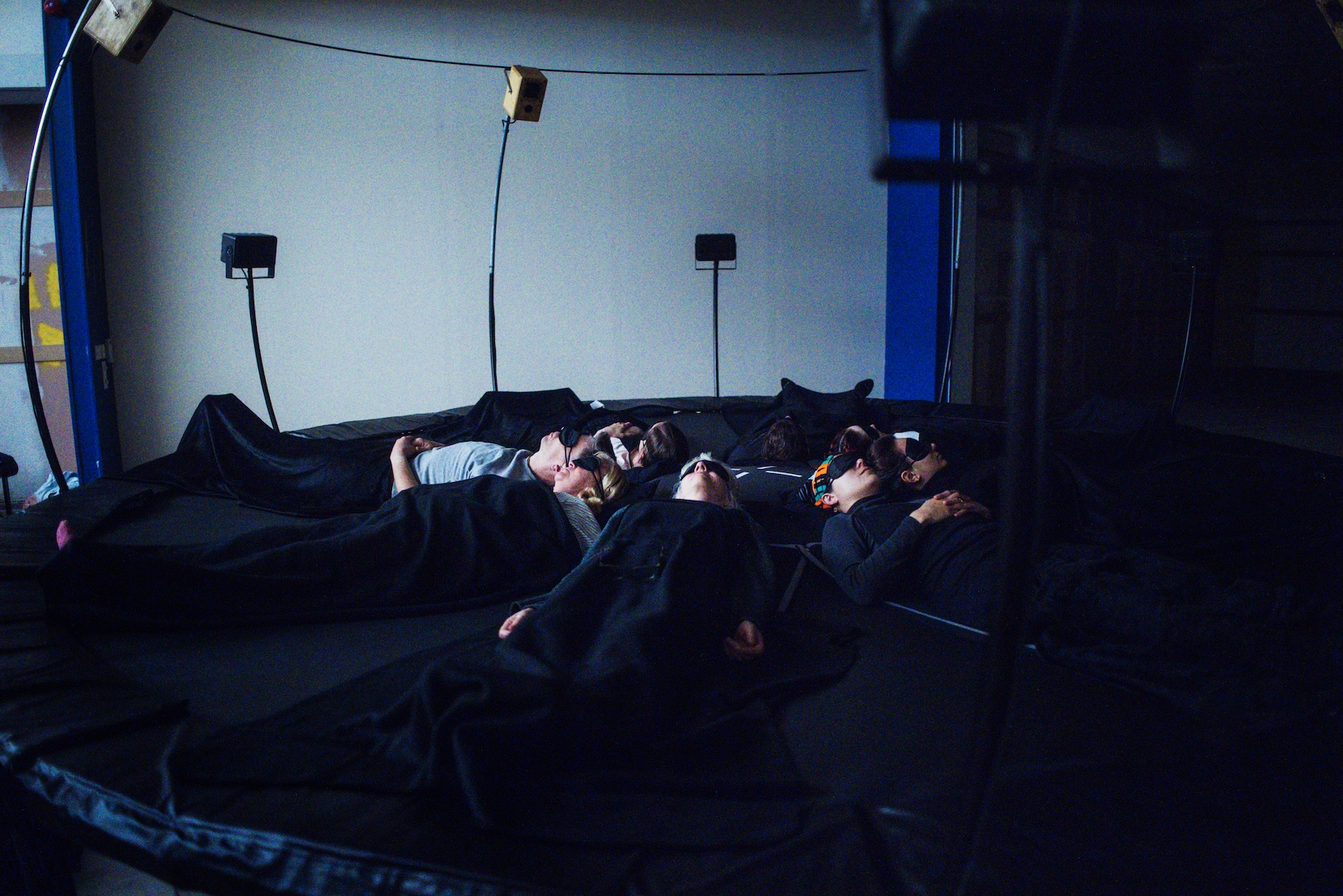
TransVISION by French artists Gaëtan Parseihian and Lucien Gaudion proved exemplary of the psychedelic rabbit-hole experiences offered during Sonica Glasgow’s opening weekend.
The way sound interacts with other senses – in this case, the sense of touch – is characteristic of the works presented at Sonica. The biennial describes itself as a festival of music, audiovisual and immersive art. Sound art, which often has a shorter route to the synaesthetic than classical concert music, makes up a large part of the programme. But it is only one part; during the opening weekend, visitors could experience everything from Balkan folk song, modular synth and ironic pop to drum’n’bass and a Fluxus-inspired performance.
I heard the word »shamanistic« being used in the foyer afterwards
When the Visual Takes Over
In keeping with the festival’s motto, »Look/Listen«, it began with a format that was repeated several times over the following evenings: an electronic musician accompanied by a VJ, whose digital image worlds unfolded on a large screen behind the performers.
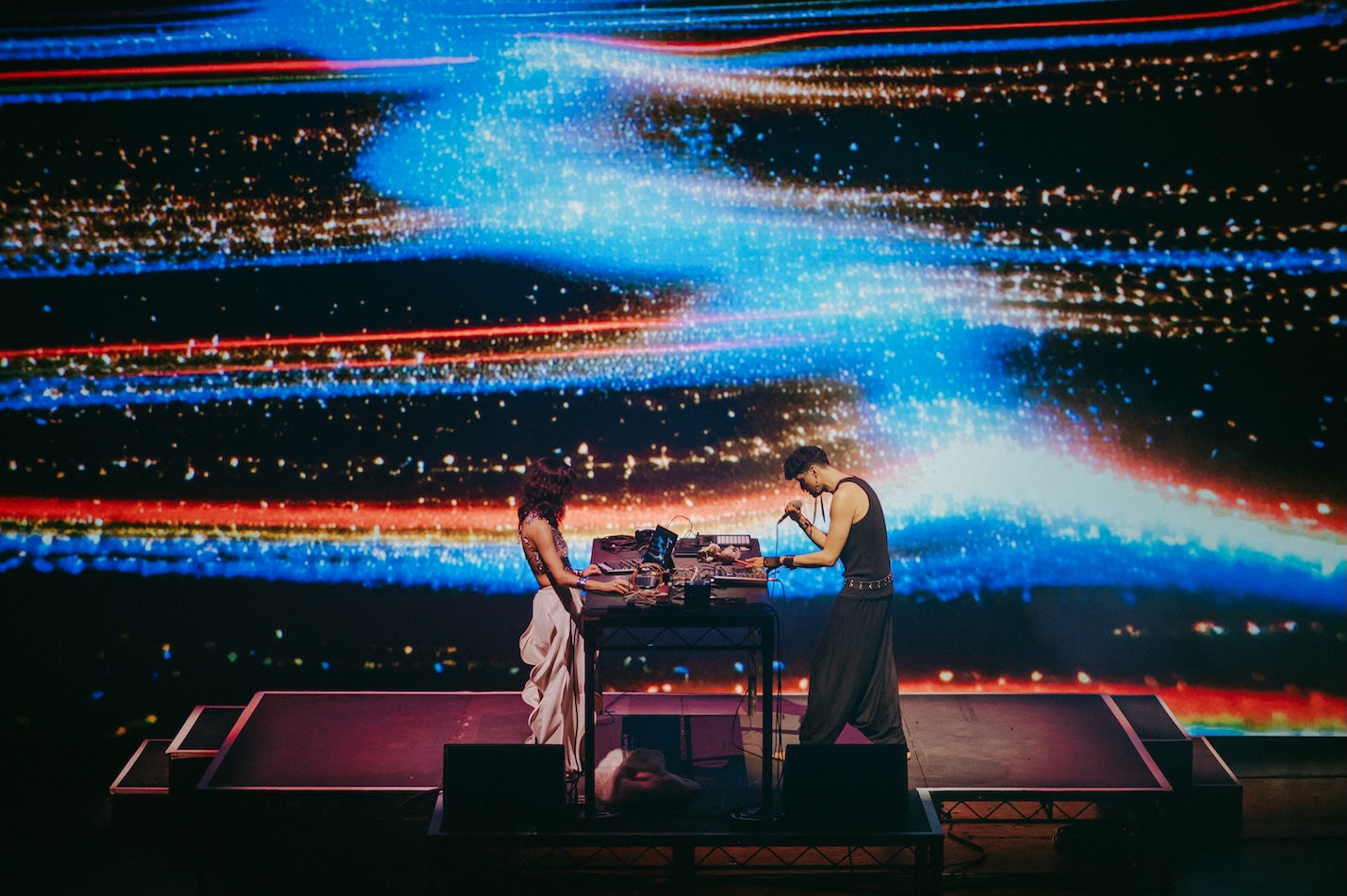
At Tramway, a venue in the rough-edged South Side, Renata Chebel and Nelson D, both of Brazilian background, opened the festival with a bang. Nelson D’s Amazon-inspired fusion club music was blasted through the room while Chebel’s gigantic, glittering digital fish swam over our heads. Their »pop-up performance« was the prelude to the evening’s headliner, Dinos Chapman. He accompanied his slower, experimental club music with grainy video footage of a landscape in which a person in a rabbit costume pulled us further and further down its hole. I heard the word »shamanistic« being used in the foyer afterwards.
Was this music with video, or video with music? At its best, the question is irrelevant. But I could not help noticing that my attention was much more firmly captured by the visual element – perhaps because it has become the standard of our time for sound to be subordinated to the image, or because that is simply how our attention works? Or perhaps because the music here simply was not compelling enough?
The Festival’s Unexpected Connections
There was hardly time to ponder such academic questions, however. On Tramway’s smaller stage, the evening continued with a concert that opened up the most surprising thread in the programme: experimental folk. stravsky & pelé performed quirky love songs with an ensemble combining instruments such as cello and harmonium with synth and sampler – as well as the Middle Eastern clarinet known as the balaban. It was a strangely enchanting crossover. It did not try to smooth out the differences between the traditions; it simply sounded as though the musicians enjoyed what each of them brought to the mix.
I expected something psychedelic, but as soon as they started, I realised that the title could also be understood ironically
Afterwards, my coordinates for how a festival is supposed to be put together shifted once again with JOON and Veronica Petukhov’s I want to lose my mind and never find it. I expected something psychedelic, but as soon as they started, I realised that the title could also be understood ironically. JOON performed kooky Italo-electropop with such a punk attitude that I lost my mind and really had no desire to find it again. Petukhov’s projections balanced on a congenial knife-edge between cute and edgy: bathrooms covered in puppy wallpaper, their walls shifting out of place. It was refreshing, infectious and simply fun. And after encountering quite a few self-important performances later in the festival, I remember theirs as the most joyful. I am excited to see what happens next for JOON, because she is a genuine pop star.
And then the festival was properly under way. I was confused after the first evening: Brazilian house, British electronica, Scottish crossover folk and Maltese electropop? How was this going to continue?
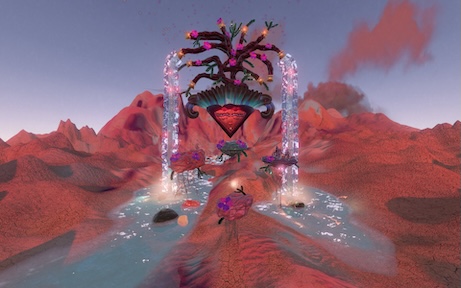
The next day I found myself inside a scenography with a projected film, wearing a costume that lit up in sync with the emotional fluctuations of the film. Bliesbro’s This is my heart, a poetic immersive installation about finding a place within one’s own body, was shown in a former garage. I also stood in a garden behind Tramway and listened to a tree’s biological processes – or rather, to the artists’ sonic translation of data from biosensors attached to the tree (Deepwood by Mechanical). Suddenly I found myself in a desert, inside the computer game Cosmic Ch’ixi by Daira Ronzoni and Alex Smoke.
And then, in the evening, I witnessed Svetlana Spajić’s utterly real, powerful Serbian voice combined, in a surprising twist, with Martin Green’s Scottish-inflected folk music. Slowly, I began to understand that these unexpected combinations were the festival’s DNA.
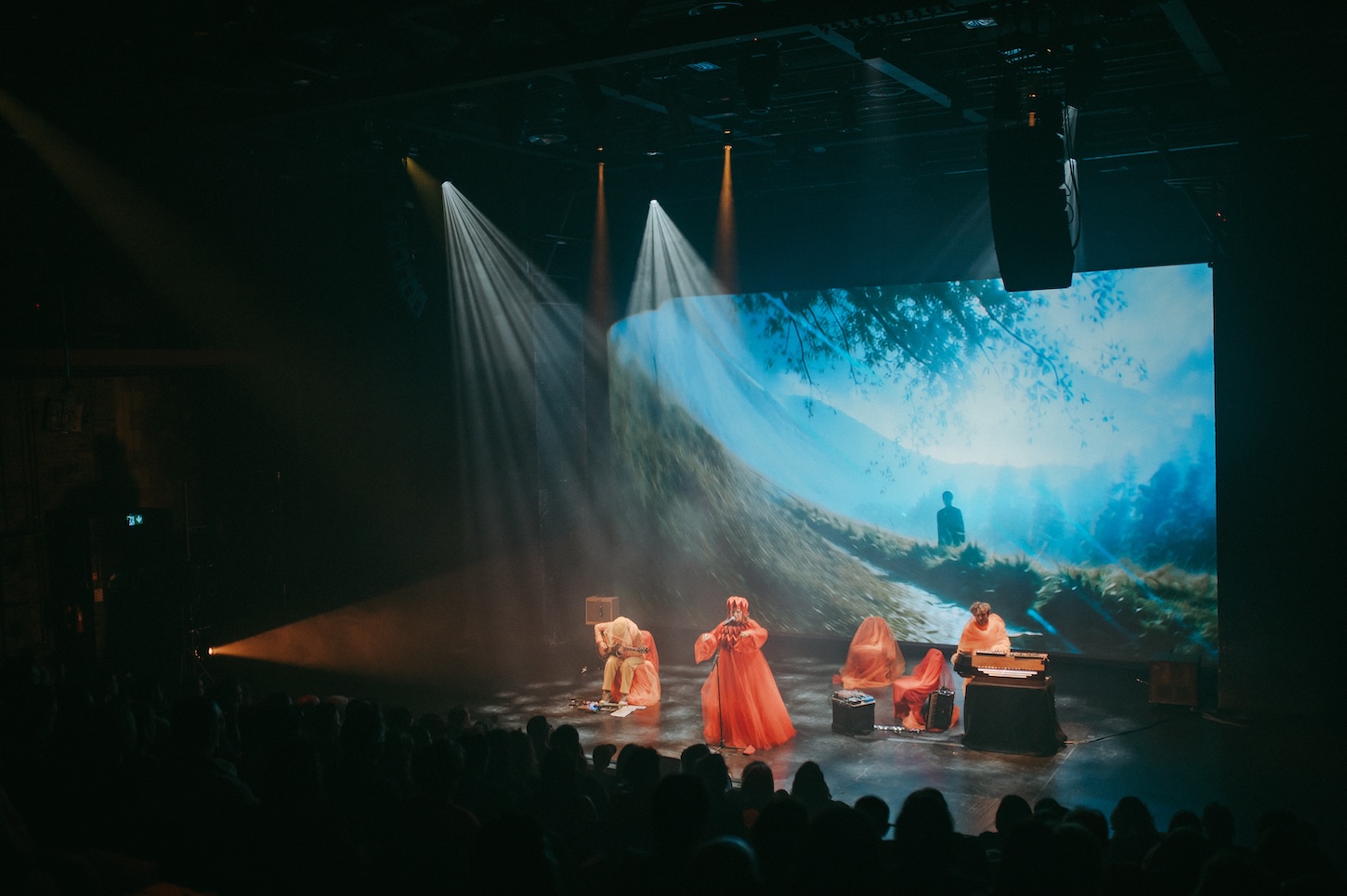
Cathie Boyd, the festival’s artistic director, had arranged this meeting between Balkan and Scottish folk, just as she had facilitated so many of the other artistic collaborations at Sonica. Martin Green tied the staged concert together with slightly over-intellectual monologues about folds – the concert was titled »Folding Songs« – and played drones on his self-developed instrument, the »syndrone«. Spajić’s resounding voice drowned out even her voluminous costume, designed by Alison Brown.
Graeme Stephen, improvising on guitar, stood in the shadows, not least because there were of course visuals here too: behind the musicians, Kurt d’Haeseleers’ video showed skin folding into rocks and eventually bursting into flames. It felt arbitrary, perhaps also because I could not understand the lyrics of Spajić’s songs. I longed to hear her sing without any kind of decoration.
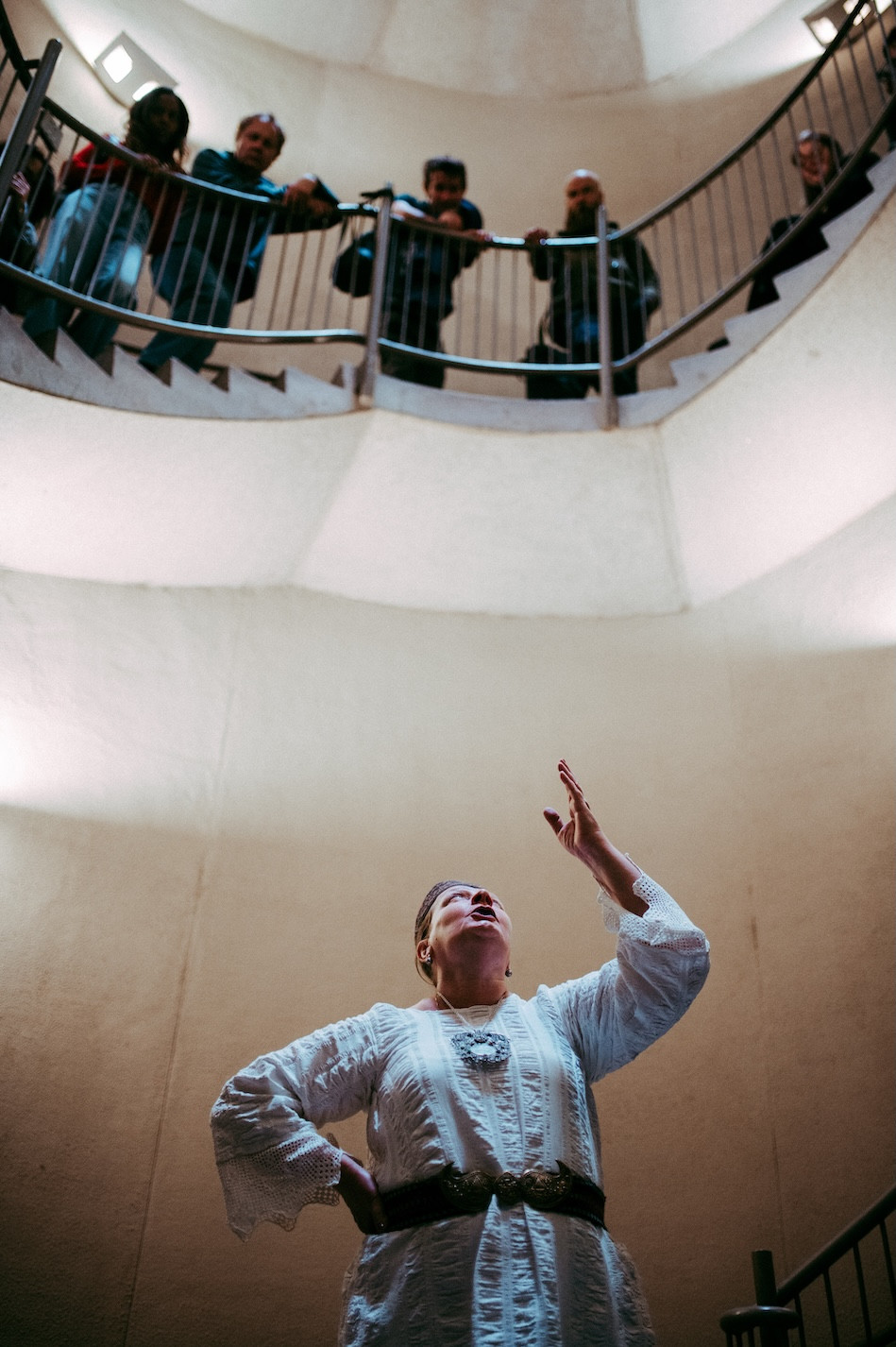
Fortunately, Cathie Boyd had heard my prayers. The next morning, Spajić stood at the bottom of a well-like stairwell at the Hunterian Art Gallery and sang Balkan folk songs. There was no video, no headphones, no VR goggles. It was impressive, old-fashioned acoustic singing technique. And audience participation in what is probably its oldest and most cultivated form: tell me what to sing, Spajić invited the audience, and then she sang a happy song, or a song for children!It was obvious that Spajić deserved the opportunity to demonstrate her abilities in this setting. But it also made me stop and think: why do we actually need all this digital, virtual, teleporting apparatus if we can have presence here and now?
Why Do We Need the Digital?
At Pollok House, in the middle of a magnificent landscaped park, this seemingly classic conflict between the immediacy of the acoustic and the alienation of the electronic was made more complicated. The house, which looks like a set from Downton Abbey, had been renamed the Listening House for Sonica and filled with sound art, installations and performances from basement to second floor.
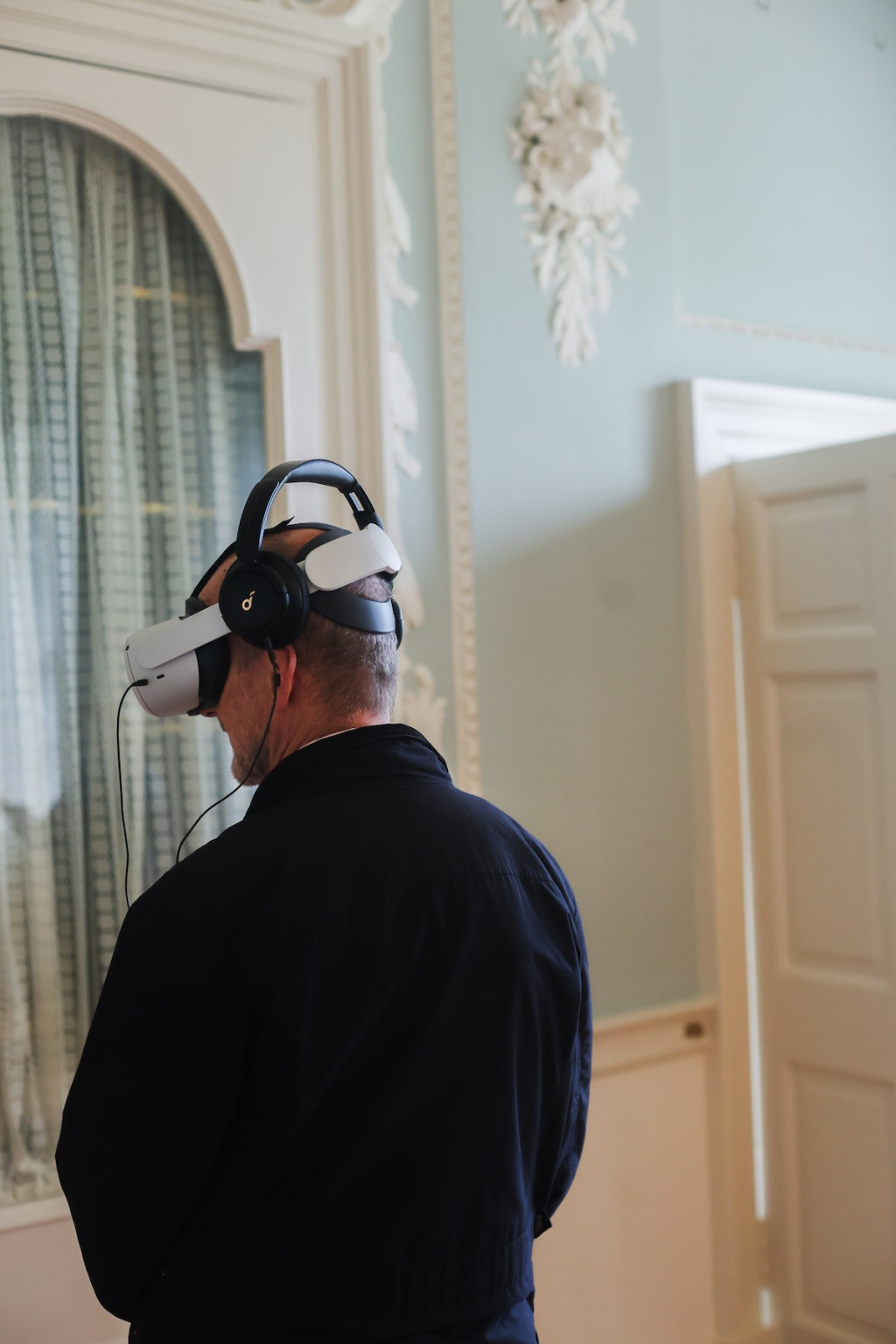
Here, visitors could lose themselves in the playful interaction of an ensemble of light bulbs in Paul Russell’s Ricochet, in Boris Labbé’s ingenious, Japan-inspired VR universe Ito Meikyū, or in AES+F’s grotesque video Inverso Mundus, in which pigs slaughter humans. Listening House was an entire festival in itself. There was something poetic about the empty, half-renovated rooms becoming home to the eerie, meditative and playful.
Of the concerts I heard at Pollok House, Thomas Ankersmit’s The Tcherepnin Series was the one that convinced me most. He improvised with sounds from the iconic Serge modular synthesizer. Ankersmit has an exceptional sense of form. After a couple of evenings of sentimental club music and copious reverb, it was a relief to hear electronic sounds simply being allowed to be themselves. If Svetlana Spajić’s traditional folk singing marked one musical extreme of the festival, Ankersmit marked another. Paradoxically, I sensed a similar presence here: an insistence contained in the sounds themselves.
Sonica’s cornucopia had much more to offer, including a terrifying yet decorative Tesla coil by Robbie Thomson, and aya, who unfortunately cut short her brilliantly unhinged drum’n’bass/grime/hardcore performance.
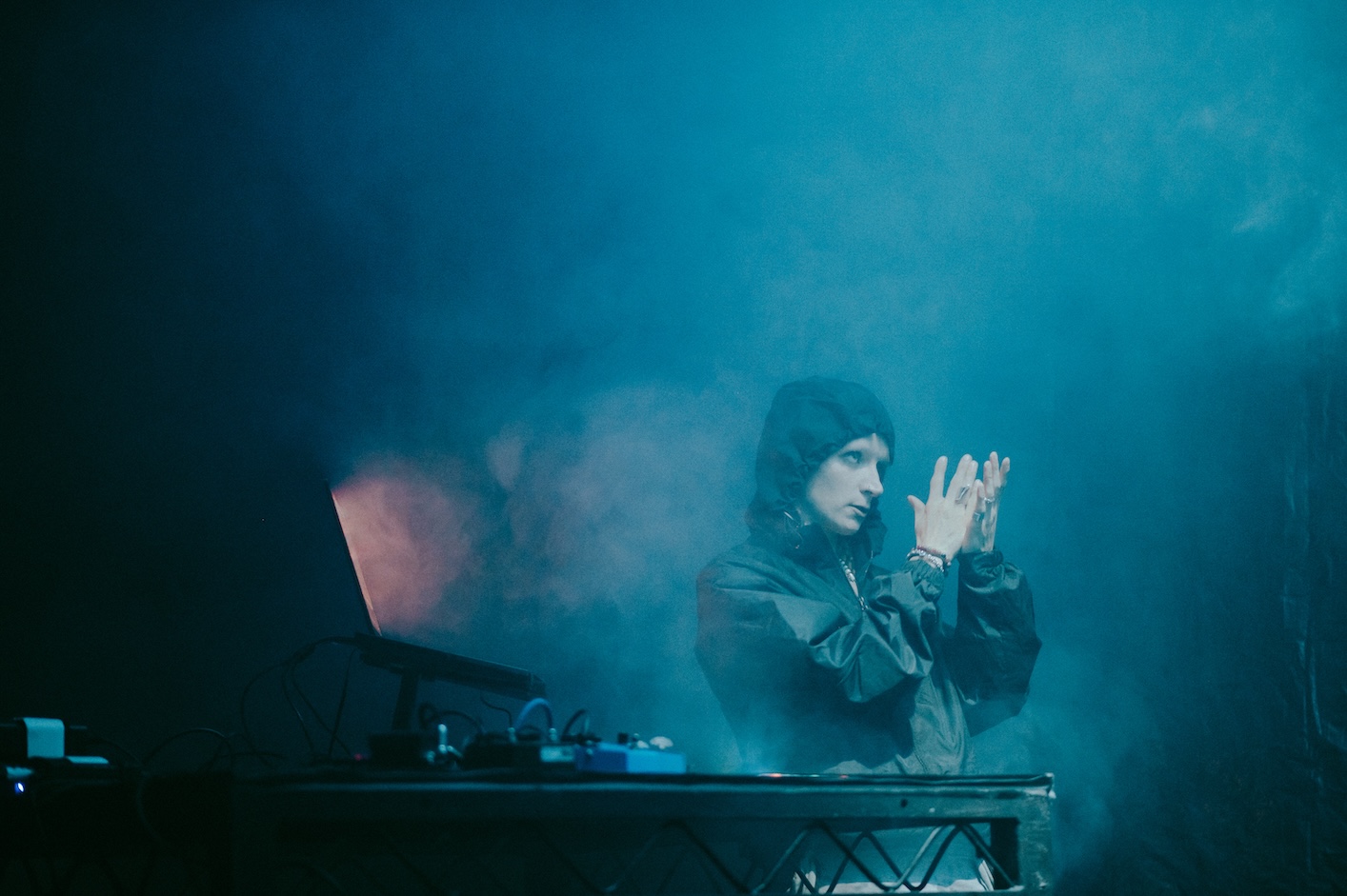
Perhaps that was for the best: my stomach was already hurting after SPIME.IM’s performance Grey Line just beforehand. It was a merciless horror trip into our era’s dystopian digital reality: runaway capitalism, militarisation, political madness, all delivered in an endless bombardment of AI-generated images and hypercuts blasting from the speakers. It was consistently superficial – superficial in its most potent form.
Rage bait, some said; activism, others. I was close to throwing up, but I loved it
The performance divided opinion: rage bait, some said; activism, others. I was close to throwing up, but I loved it.
Out of the Rabbit Hole
Where Grey Line flaunted excess, Asuna’s Afternoon Membranophone and Falling Sweets approached eating from a more affectionate angle.
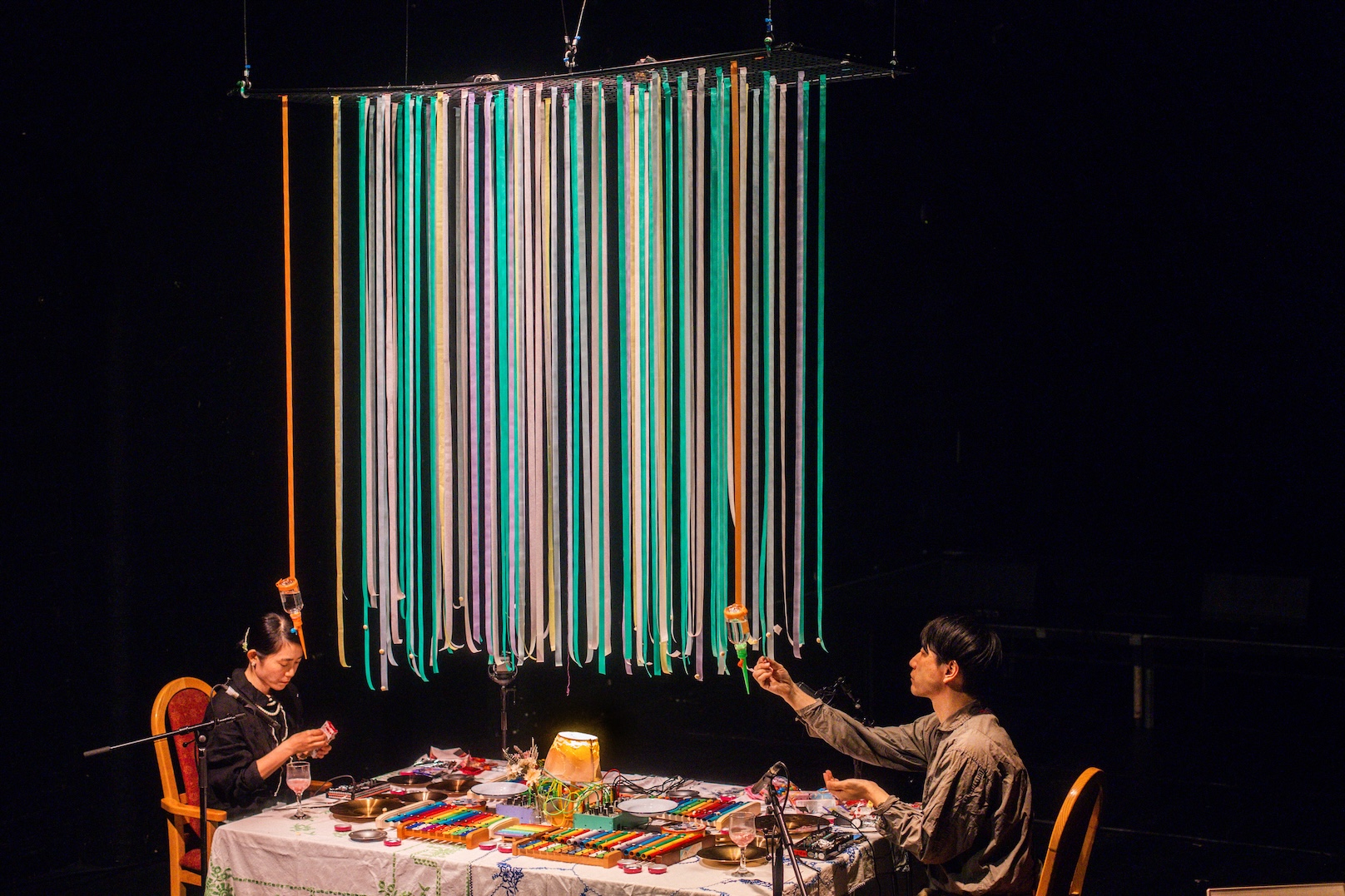
The most important ingredient in Asuna’s performance was, quite literally, sweets. They were placed partly on vibrating drumheads and partly on sticky tape stretched across a table. Little by little, the M&M’s tumbled down onto xylophones and electronic instruments. In the resulting meditative pling-plong, the two performers moved around with a rare combination of concentration and grace – even when they occasionally, almost absent-mindedly, ate some of the sweets themselves. The whole thing was infused with a healing, childlike and understated humour.
Little by little, the M&M’s tumbled down onto xylophones and electronic instruments
Asuna’s performance was like a gentle alarm clock reminding me that it was time to leave the rabbit hole. Sonica hit the mark when it dared to be uncompromising, as in Ankersmit’s crisp sounds or SPIME.IM’s bad trip. I wished it had taken that kind of risk more often. Too often, the laptop musicians settled into a safe 4/4 metre and modal melodies, while the visuals turned into screensavers. Perhaps breadth is the price of filling the halls. But it was at the extremes that the festival came alive.
The psychedelic can be an escape, but it can also reveal new ways of seeing reality
What stayed with me most was the humour. On the other side of the rabbit hole, it became clear that whether the means are electronic or acoustic is beside the point. The psychedelic can be an escape, but it can also reveal new ways of seeing reality. Humour was a helping hand, allowing me to realise that the rabbit hole continued out into our own world.
Sonica Glasgow, Scotland, 24 September - 04 October 2026
English translation: Andreo Michaelo Mielczarek