



In Aarhus, Music Refused to Stay in Its Lane
Andreo:
Did you headbang in the dark among the red plush seats in Musikhuset too?
Therese:
Almost :) Lueenas was probably the biggest experience at Spot. The string duo – Ida Duelund on double bass and Maria Jagd on violin – had invited a drummer and vocalist into the club, namely scream vocalist Marika Hyldmar. It was heavy, evil and mythological, with myriads of effect pedals on the bass, where experimental string music meets heavy metal (not the other way around).
The room vibrated with runaway bowling balls, beer, and damp noise.
Andreo:
Duelund is a master at making darkness shift shape and nuance from project to project. When she played pieces from the album Sibo last year, I remember headbanging inside my brain throughout every single song.
Therese:
The biggest surprise was Den Lille Dør, which I had actually overlooked in the programme. By a lucky coincidence, I ended up in the Chamber Music Hall for Andrea Scuisco’s musical journey through Danish landscapes, photography and cultural displacements.
Scuisco spoke with a dry humour that made the audience burst into laughter without tipping into sentimentality. The music moved between long guitar tones, electronic field recordings, airy trumpet and a drum kit placed prominently in the soundscape. Instrumental music that was innovative, moving and surprisingly entertaining.
Andreo:
At Aarhus Bowling Hall, Breadwinners gave a lesson in »screamomusic« – or »Aarhus skramz«, as the band themselves call it. The screams did not erupt abruptly, but crept into the music and lodged themselves in the choruses. The room vibrated with runaway bowling balls, beer, and damp noise.
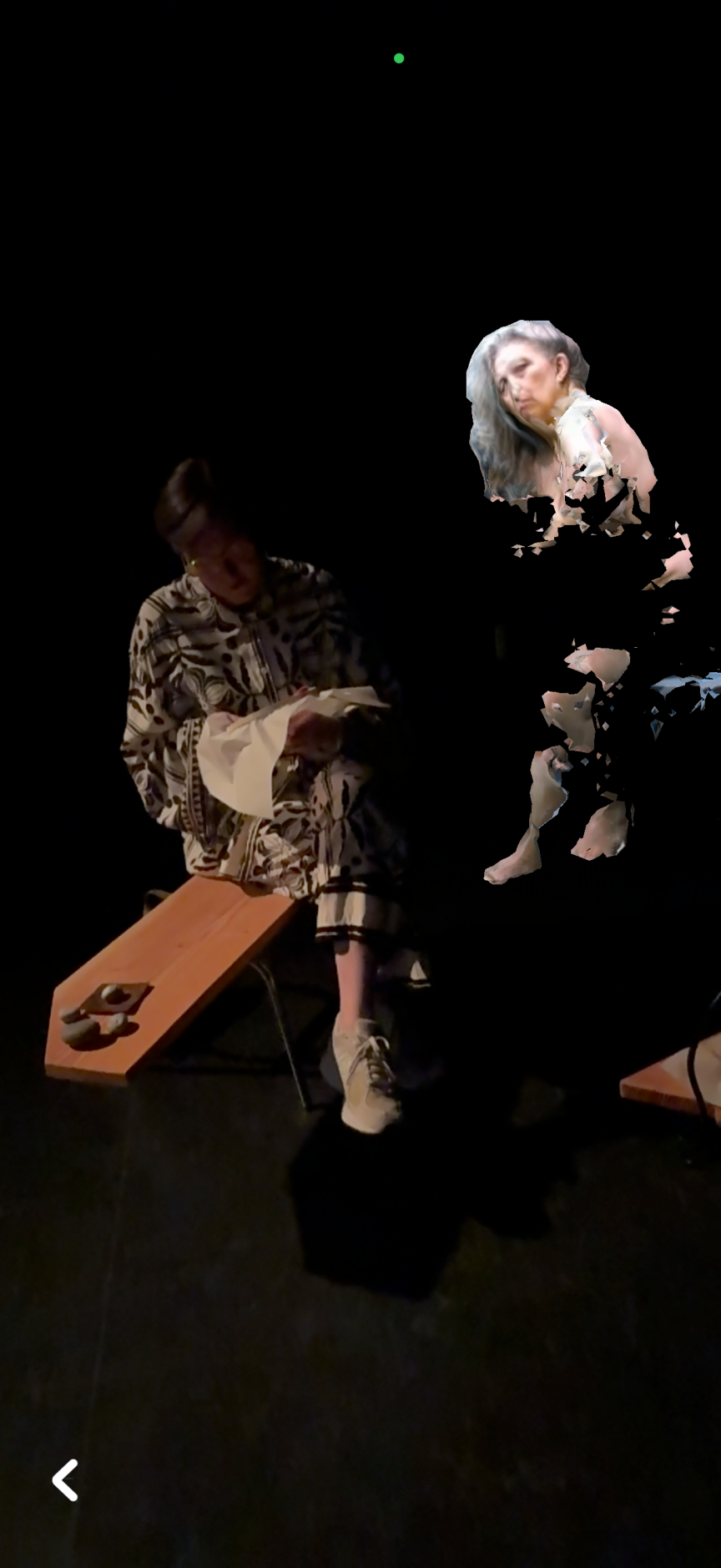
I also attended the launch of Line Tjørnhøj’s app installation PORTRAIT at Teater Refleksion. The work celebrates living women in positions of power and challenges our notions of how we think about monuments. Holding an iPad in my hand, I moved through the room when violinist Christina Åstrand suddenly appeared on the screen.
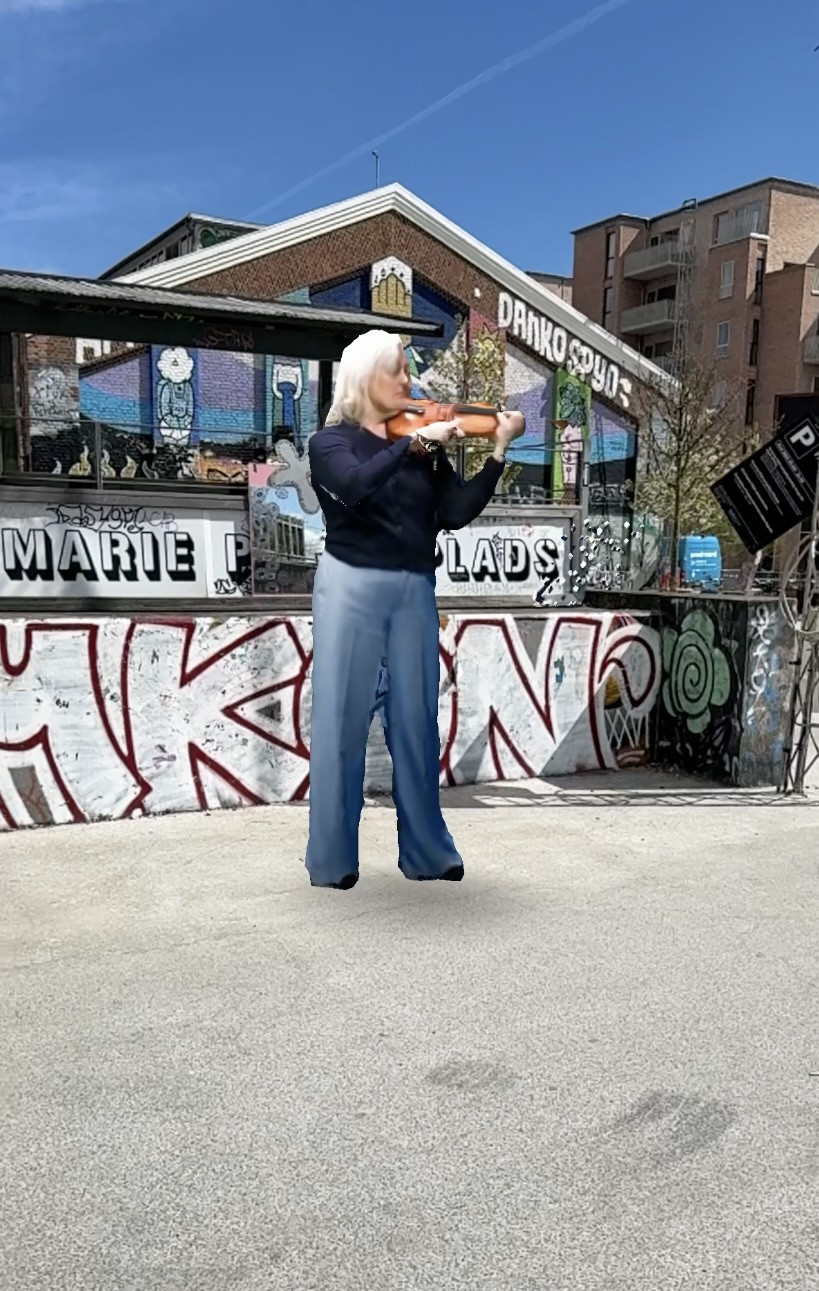
In this hybrid universe, I became part of the performance myself, able to walk around the figure and step into the artwork. »Line is always a little ahead of the rest of us,« said Allan Gravgaard Madsen (I can confirm that the young Spot guests have seen him driving a camper van to Bayreuth on television), before it became his turn to try the installation.
»Line is always a little ahead of the rest of us,« said Allan Gravgaard Madsen
You understand why composers and musicians from the classical world flock to Spot.
Therese:
What I don’t understand is why Spot divides venues according to genre when so much of the music actually worked towards transcending genre. In that sense, Spot also became a place where genre divisions were reproduced.
Andreo:
True, at Spot you can sometimes experience rave cynicism and eurodance on the same stage. I also saw a folk band with three women in sensible shoes singing a poem by Danish poet Sophus Claussen. But it was also the best piece I managed to hear at Teater Filuren.
The string ensemble Who Killed Bambi practically won Spot this year
Naughty baroque for the people
Therese:
The string ensemble Who Killed Bambi practically won Spot this year. The ensemble did not promote themselves, but constantly elevated others. Together with She Can Play, they presented new female talents, among them SOVI, who sang with rare sincerity. And in BAROK in Store Sal, the ensemble created a theatrical and rhythmic reinterpretation of the grotesqueries, excesses and transience of the Baroque alongside artists including Brimheim.
Andreo:
And Asbjørn! Sensual choreography, decadence, desire and drama. He twisted himself around the stage like a queer baroque prince with hips running wild. Let’s have more naughty baroque for the people. If Gustaf Ljunggren’s shoulder is not ready for next year’s Naked concerts, Spot already has a worthy alternative waiting in the wings. I think it was during the BAROK concert, presented by Aarhus Baroque Festival no less, that genres, formats and institutional boundaries really started dissolving in a truly exciting way.
He twisted himself around the stage like a queer baroque prince with hips running wild
Therese:
In general, there was a lot of stage time devoted to instrumental music sliding into rhythmic genres. FLUX, organised by Art Music Denmark, is an important initiative, especially because of its focus on artists rather than composers – very much in the spirit of the festival itself.
Dybfølt in the Chamber Music Hall was an intense and energetic duet between cello and double bass, with clothespins attached to the E string creating a distorted bass sensation. There was experimental oscilloscope music drawing lines across the screen, and deep gazes exchanged between the two musicians, radiating throughout the concert that they themselves were having the time of their lives.
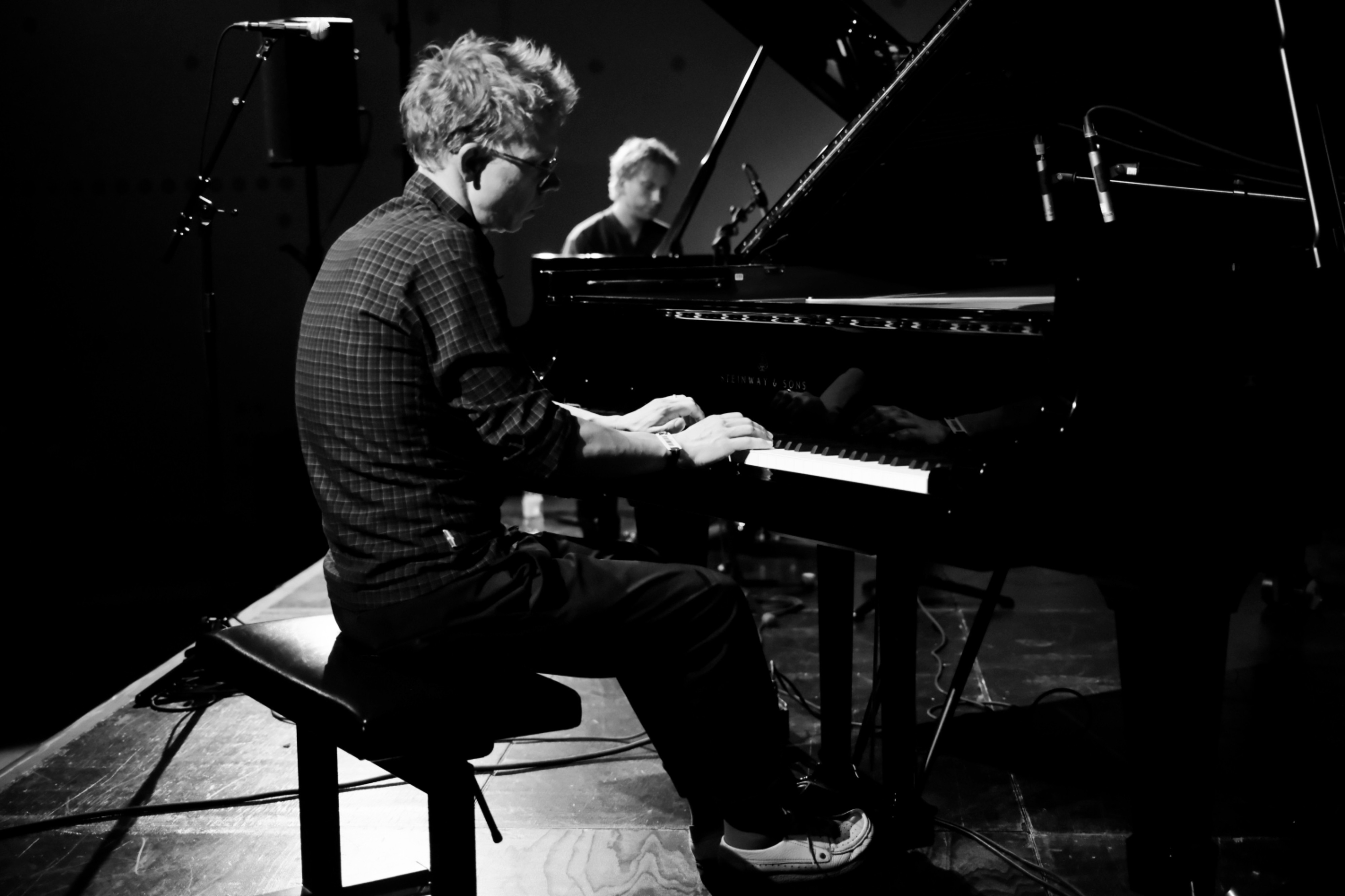
Matt Choboter and Simon Toldam sat at separate grand pianos, improvising themselves into a different sense of time
Andreo:
And Matt Choboter and Simon Toldam sat at separate grand pianos, improvising themselves into a different sense of time. The notes moved hesitantly forward, like tiny elastic shifts in space and time. Amid the constant stream of impressions at Spot Festival, the concert felt like a quiet sanctuary.
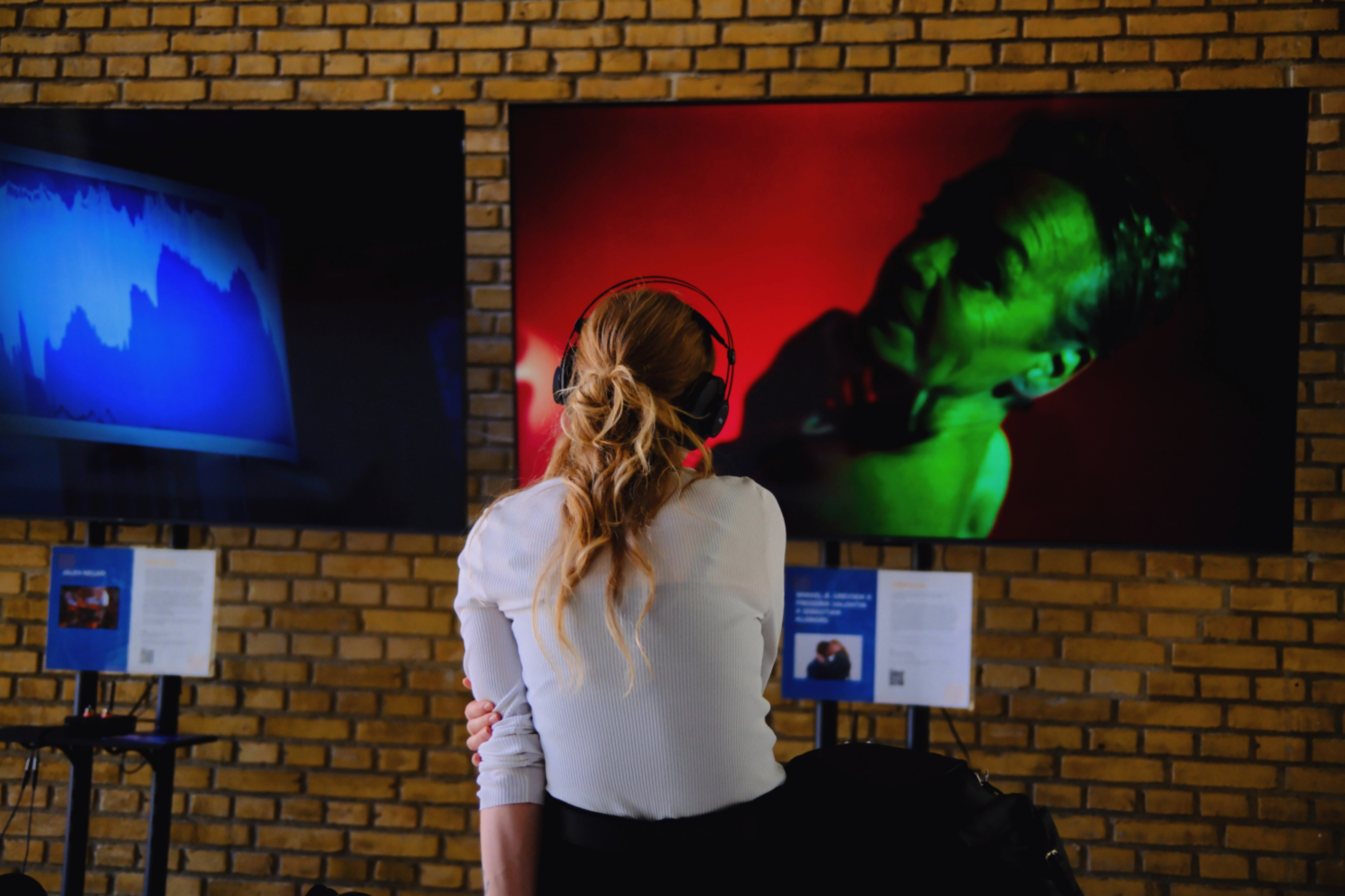
Just outside the Chamber Music Hall, the future flickered from three screens showing experimental film works. Several times I passed people sitting with headphones on, absorbed in Rikke Benborg’s films Mani.Matta (2019) and Dark Radiance (2023), featuring percussionist and composer Ying-Hsueh Chen. Another screen showed DRENGE, which, with music by Mikkel B. Grevsen, attempts to formulate a vision of future masculinity, accompanied by a vulnerable, searching trumpet soundtrack.
Ida&Astrid perhaps need a sharper artistic name, but they proved themselves to be excellent musical communicators
Therese:
Ida&Astrid perhaps need a sharper artistic name, but they proved themselves to be excellent musical communicators, inviting audiences into a musical culture staged as cosy French living-room intimacy through their four-hand interpretations of works including Ravel – where it was precisely the communication of the music, rather than its compositional innovation, that stood at the centre.
Andreo:
It’s so great that conservatory students are part of Spot. The duo Isho were genuinely original with their pop-infused dreamscapes, birdsong and singing in several Nordic languages.
Therese:
Scottish musician Lucie Hendry placed her harp front and centre with dizzying folk- and jazz-inspired grooves, while people crowded together to hear Club Coyote’s desert music featuring banjo and trumpet in the oppressive heat. Their music – like Hendry’s and Den Lille Dør’s (and many others’) – felt like interpretations of landscapes and our connectedness to nature.
One of the most striking things about this year’s SPOT was how many artists revolved around nature, landscapes and ecological connections.
On the other hand, the interest in the music industry’s green transition was almost invisible. A panel debate on sustainability had more participants on stage than in the audience.
Still, an interesting discussion emerged between music industry professionals and artists from the association EKKO system, which works with music about ecological crises. Why is the music industry not the industry leading the way?
That said: the programme was exceptionally sharp this year. I remember how it often used to be impossible to get into the foyer at Musikhuset. This year I only queued in a few places. Everything ran completely smoothly.
Why was that particular audience expected to sit on the floor?
Andreo:
The tropical weather probably helped too, since more guests stayed outside rather than sitting in the darkness of the halls.
Therese:
On the other hand, it was difficult to understand the logic behind the floor seating in the Chamber Music Hall. Why was that particular audience expected to sit on the floor?
Sonic journeys to the Arctic, Persia and the future
Andreo:
At a festival otherwise celebrating new formats and communities, it felt surprisingly old-fashioned. It was difficult to concentrate during Copenhagen Contemporary String Quartet’s otherwise beautiful, quiet and global sonic journey Let Us Burn to both the Arctic and Persia.
Rumpistol Ensemble, on the other hand, propelled the audience further into the future at A-Huset. Spacy and dreamlike electronic music with Arendse Nordtorp Pedersen’s violin serving as an earthly anchor.
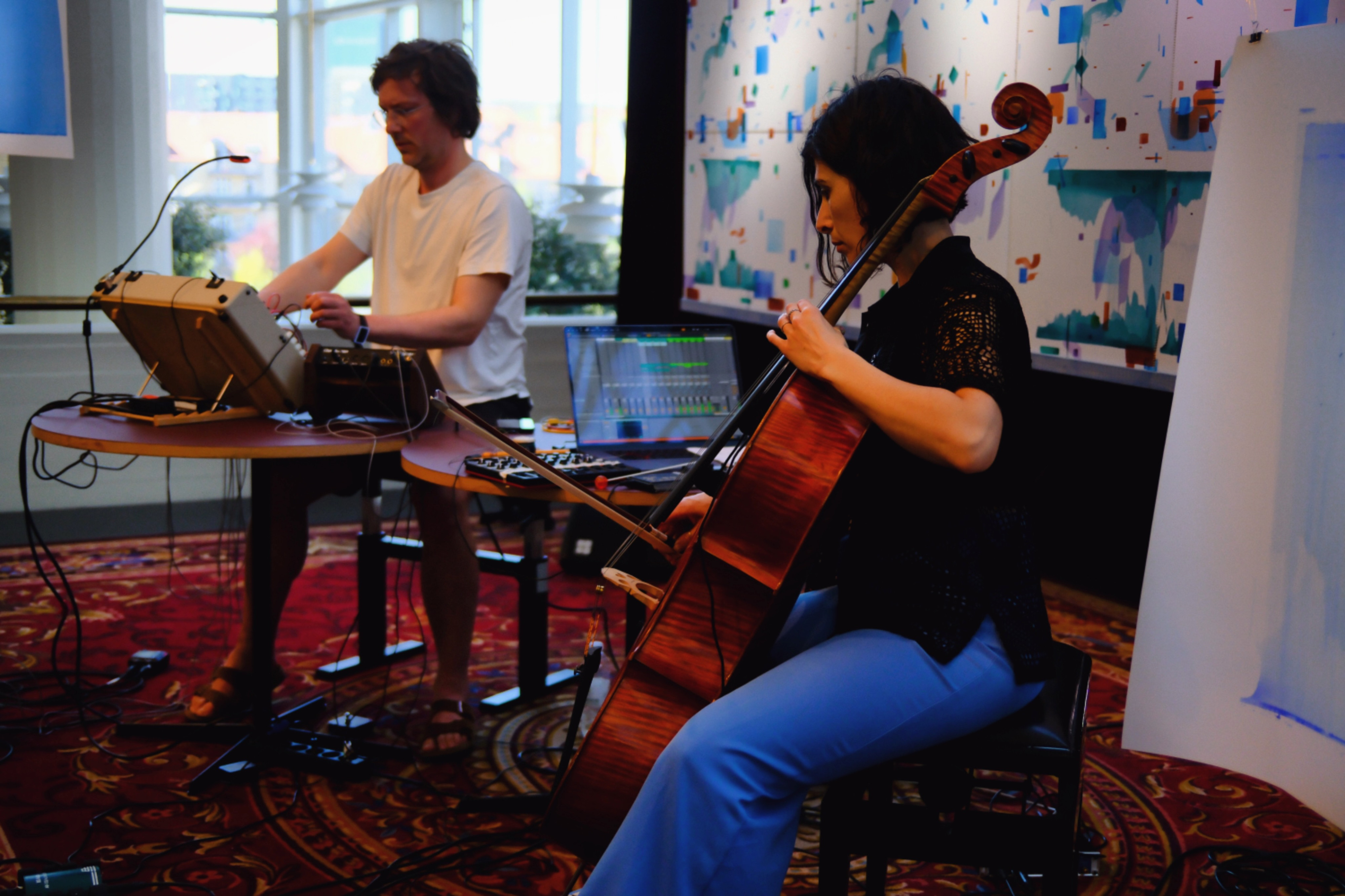
Some of the strongest experiences at this year’s Spot were precisely the kinds of music fighting against being boxed in. One of the strongest aspects of this year’s Spot Festival was precisely the music that refused to be placed within familiar categories. Take Jaleh Negari’s Earthly Bonds, which uses visual art, sound, and movement as silent sign systems for experiences of migration, displacement, and identity. A work about people who dance other dances with the earth.
At Spot, audiences only experienced fragments of the piece, following its earlier presentation in Bergen. But it felt important that the festival dares to create space for art that forges entirely new connections between sound, body, and experience.
And speaking of the future: Von Quar could easily become the next The Minds of 99
Therese:
And speaking of the future: Von Quar could easily become the next The Minds of 99. Downtown July was the least pretentious thing I experienced all weekend – refreshingly relaxed and delivered with razor-sharp precision.
Andreo:
During one debate, someone claimed that half of all music in 2030 will be created by AI. Maybe. But the most interesting thing at Spot was everything that felt far too physical, fragile and human to be reduced to data: the screams in the bowling hall, the trembling baroque, the fumbling improvisations and the hybrids between concert, installation and performance. Did they actually say whether AI can headbang?
Spor Festival, Aarhus, 1–2 May 2026
English translation: Andreo Michaelo Mielczarek