



Oh, to Lose Yourself in Moers
What kind of festival was this, really?
That question kept returning throughout the days at the Moers Festival in western Germany. The festival consistently defied the categories I tried to approach it with.
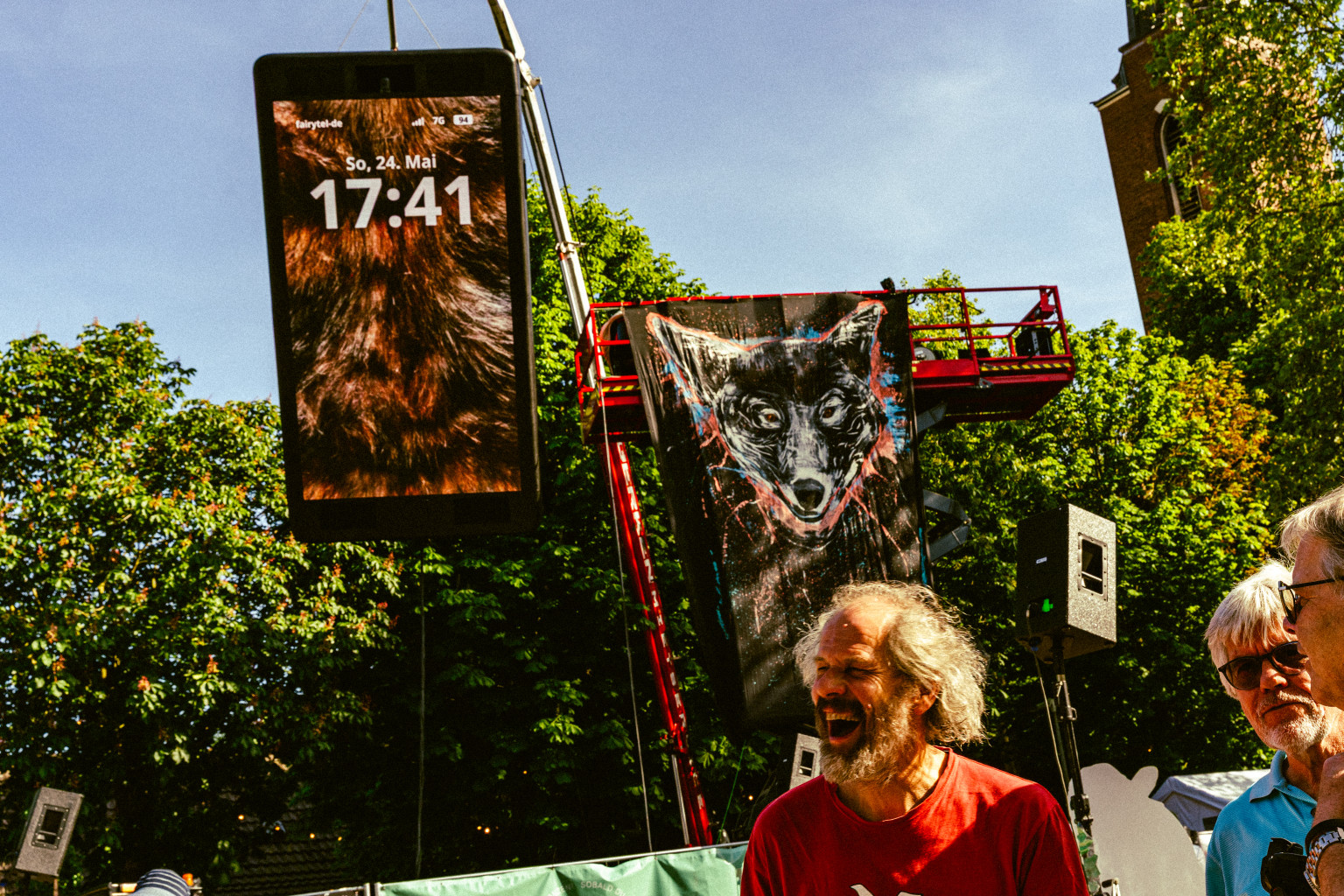
A Donald Trump impersonator emerged on a giant mobile phone suspended from a crane above the festival grounds
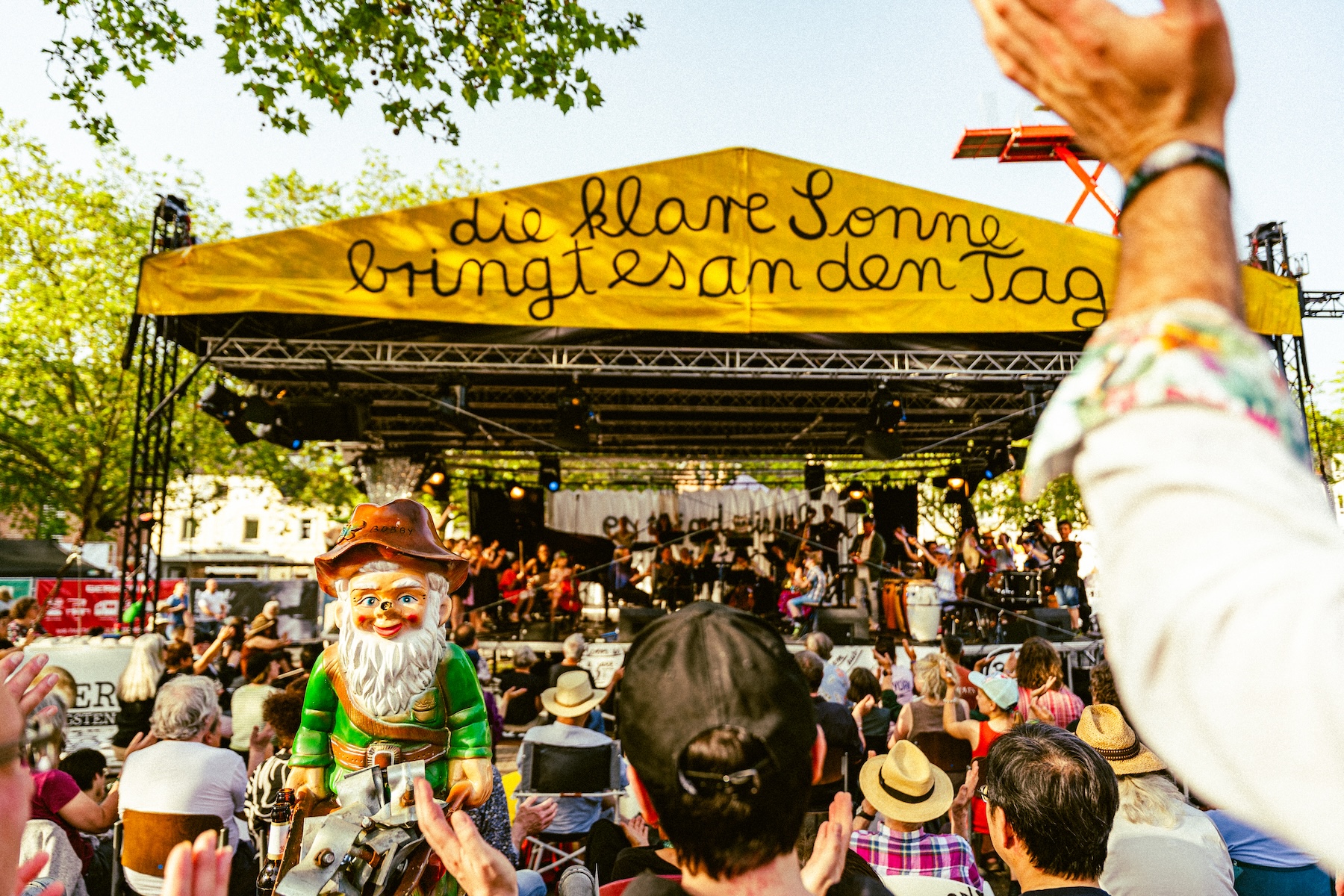
Everywhere there were hand-painted signs reading »Moers ist politisch« and »Not a jazz festival.« The festival began in 1972 as one of Europe’s most important jazz festivals, but today it seems more concerned with escaping definition than affirming it. This year’s theme was Märchen – fairy tales. Plastic garden gnomes appeared as absurd signposts between Kastellplatz, the palace park, and the small paths through the town.
A Donald Trump impersonator emerged on a giant mobile phone suspended from a crane above the festival grounds. Between concerts, recordings of the US president’s speeches streamed across the square. No one explained why. That, precisely, seemed to be the point. A clarinettist struck rhythms with a whisk, while another musician later that night set a bamboo flute on fire. The absurd – I quickly learned – was not just an element, but a method.
The absurd as working method
No concert embodied the festival’s logic better than Gellért Szabó’s Ideal Orchestra. Several times during the festival, the ensemble appeared as a wandering manifestation of Moers’ own self-image.
»Ich bin der König. Ich bin der moderne Mensch. Wir alle sind der moderne Mensch,« he shouted
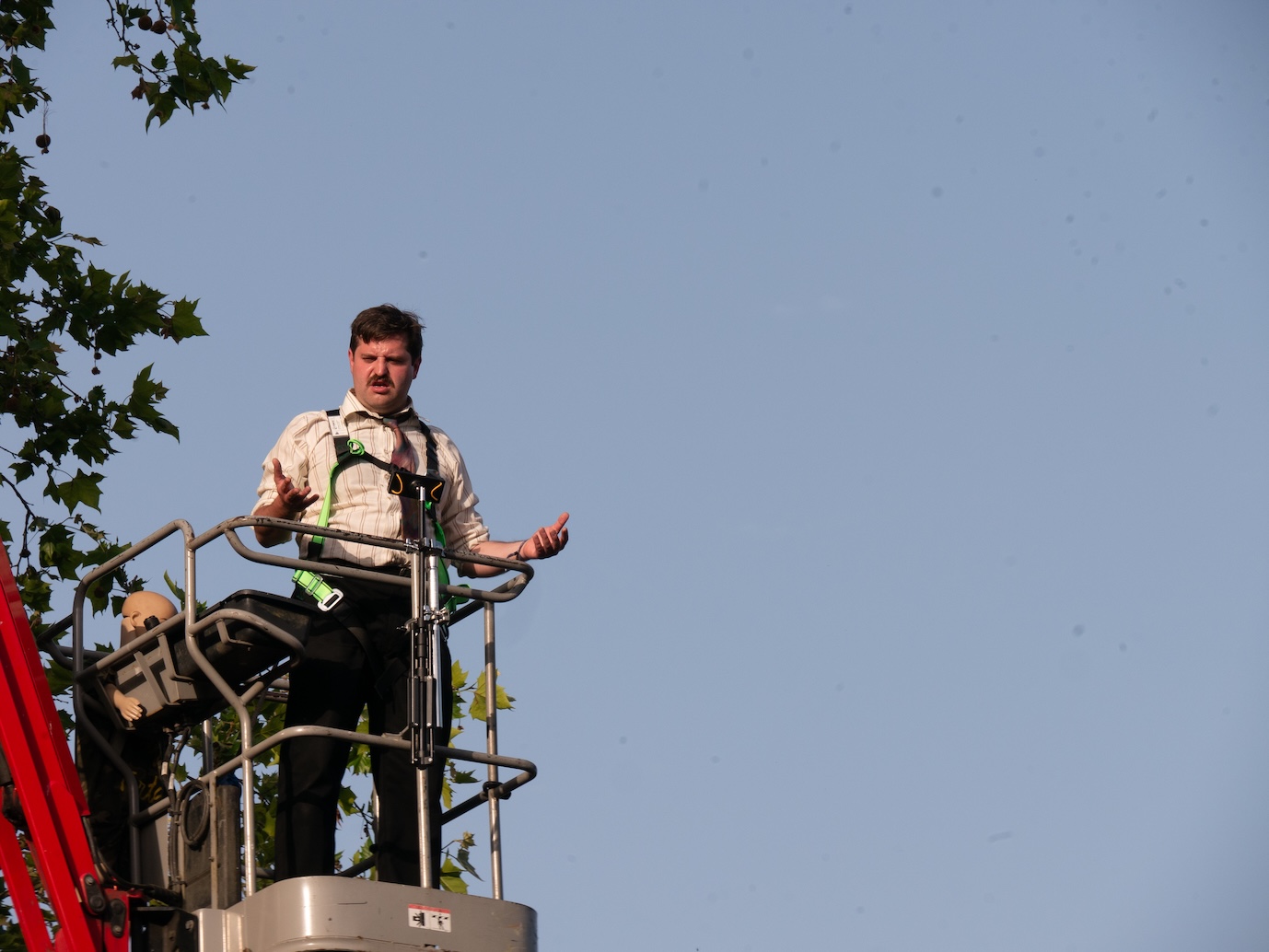
From one crane Szabó conducted the musicians, who stood on another, while voices, winds, and noisy sound masses collided above the audience’s heads. »Ich bin der König. Ich bin der moderne Mensch. Wir alle sind der moderne Mensch,« he shouted, while the square for a moment resembled a collective ritual, a demonstration, and a Dadaist procession all at once.
The same openness shaped the rest of the programme. The Dwarfs of East Agouza built long, hypnotic structures from hand-played electronics, psychedelic guitar patterns, and desert-blues grooves. The audience swayed slowly in front of the stage, many wearing homemade paper crowns from the festival’s children’s workshops.
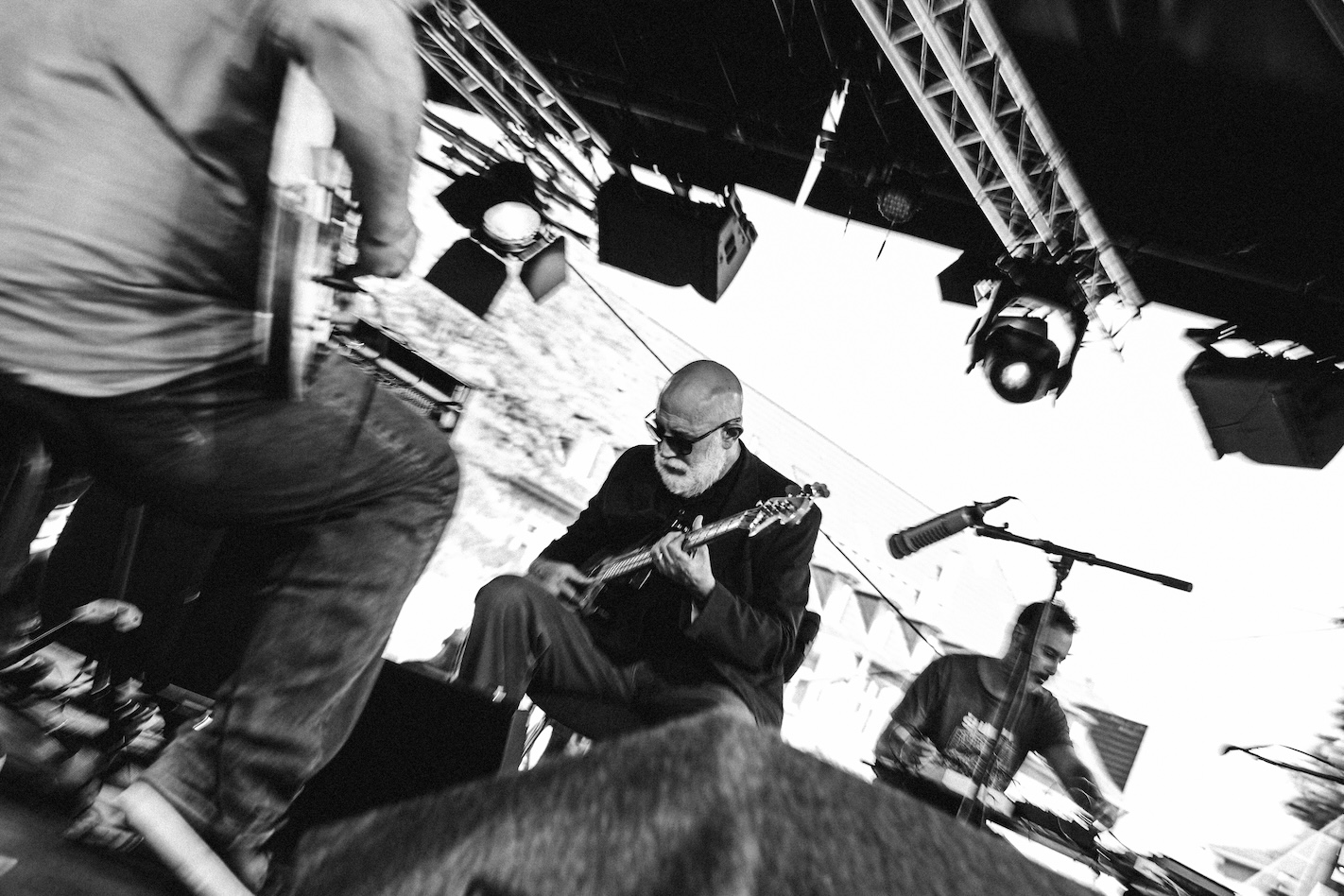
Later, a man danced wildly in front of a garden gnome during Evi Filippou’s inEvitable Extended. The music darted restlessly between folk song, skewed rhythmic displacements, free improvisation, and abrupt stylistic shifts. Different traditions interrupted and fertilised one another. Frank Zappa, I thought, would have felt at home here. »In difficult times we need each other. But you know all that,« Filippou said. The line sounded almost like the festival’s own motto.
Frank Zappa, I thought, would have felt at home here
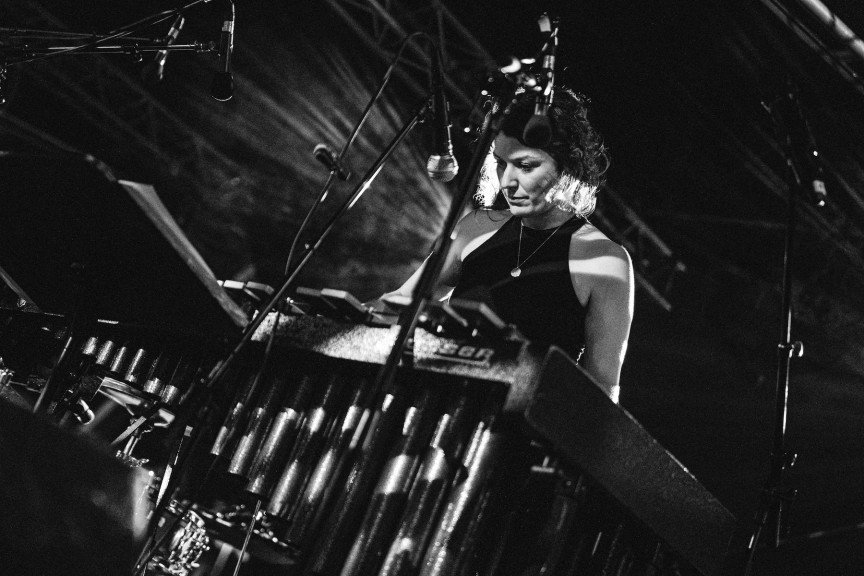
I only caught a glimpse of Icelandic artist Lilja María Ásmundsdóttir’s sound sculpture Hulda – a handmade instrument of strings, shadows, and light, responding to the tones played around it. I did, however, attend the full concert by Bonbon Flamme, where Portuguese guitarist Luís Lopes delivered a broken, dismantled version of Scott Joplin’s Ragtime Dance. »Our lives will never be the same after this,« said cellist Valentin Ceccaldi with a crooked smile. It sounded like an exaggeration, but fit Moers’ own self-understanding well.
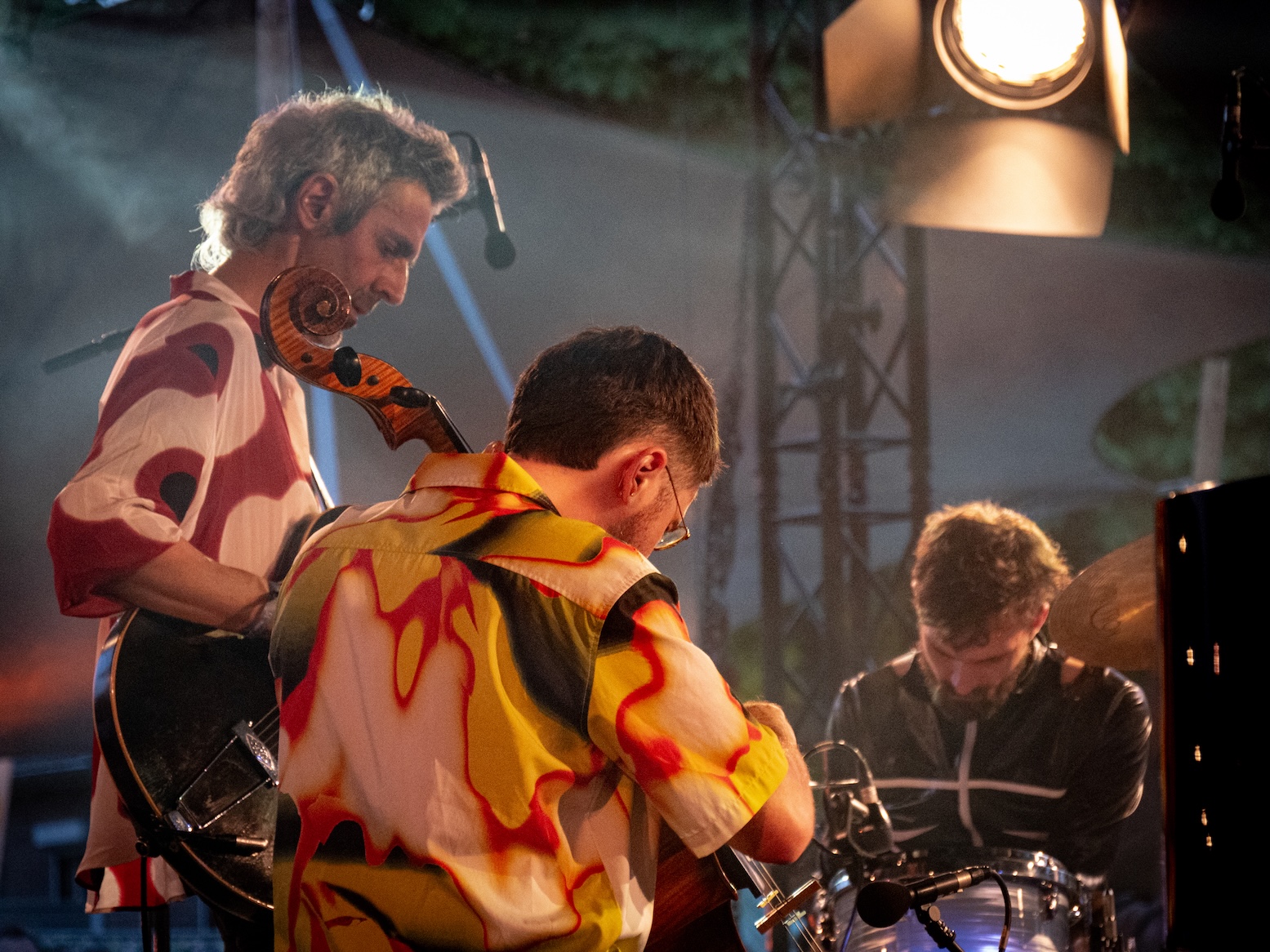
»Our lives will never be the same after this,« said cellist Valentin Ceccaldi
Silence as counterpoint
At the same time, Moers insisted that experimentation can also be quiet. The festival marked the centenary of Morton Feldman and György Kurtág. At midnight, one could choose between two churches with Feldman on the programme. I chose Rothko Chapel, where time seemed to stand still and yet continue moving. After the day’s carnivalesque excess, it felt almost radical to be placed in a space where music withdrew and left only breath, resonance, and waiting.
Tara Khozein’s interpretation of Kurtág’s Kafka-Fragmente pointed in the same direction. The short movements appeared as isolated flashes, yet gradually formed an emotional whole. Suddenly, Moers itself began to resemble a Kafka fragment: unpredictable, fragmented, full of strange figures – and yet held together by a hidden inner logic. Georgy Kurtág Jr. and the Moment’s Notice Trio later extended the same legacy in a cool encounter between electric improvisation, jazz, electronics, and Central European avant-garde.
The city as score
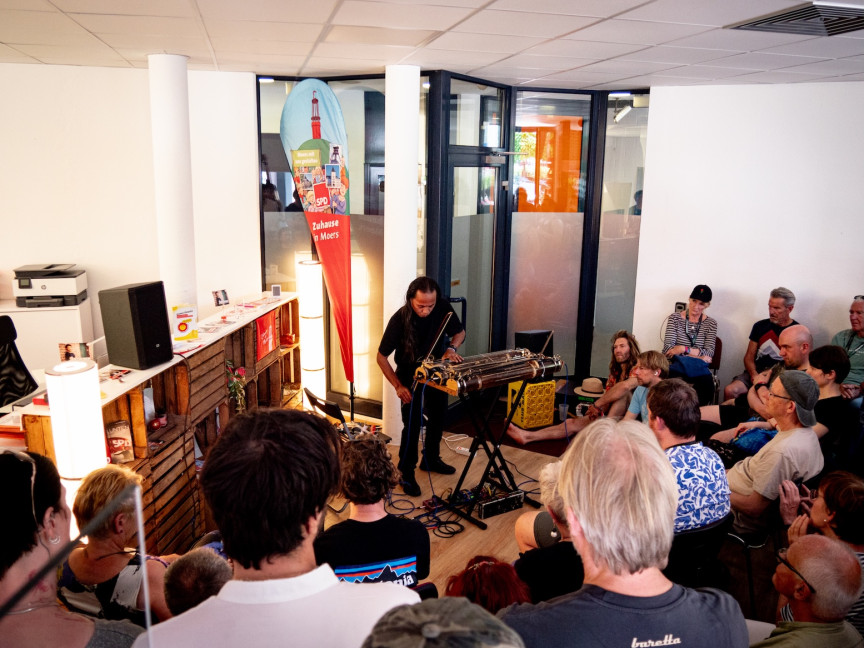
The strength of the festival also lay in its geography. At the local SPD party office, Indonesian musician Wukir Suryadi conjured droning ritual music on his self-built instruments, while Senyawa sounded as if ancient ceremonies had been sent through a modern amplification system.
As so often in Moers, it felt like a visit to a temporary universe with its own rules
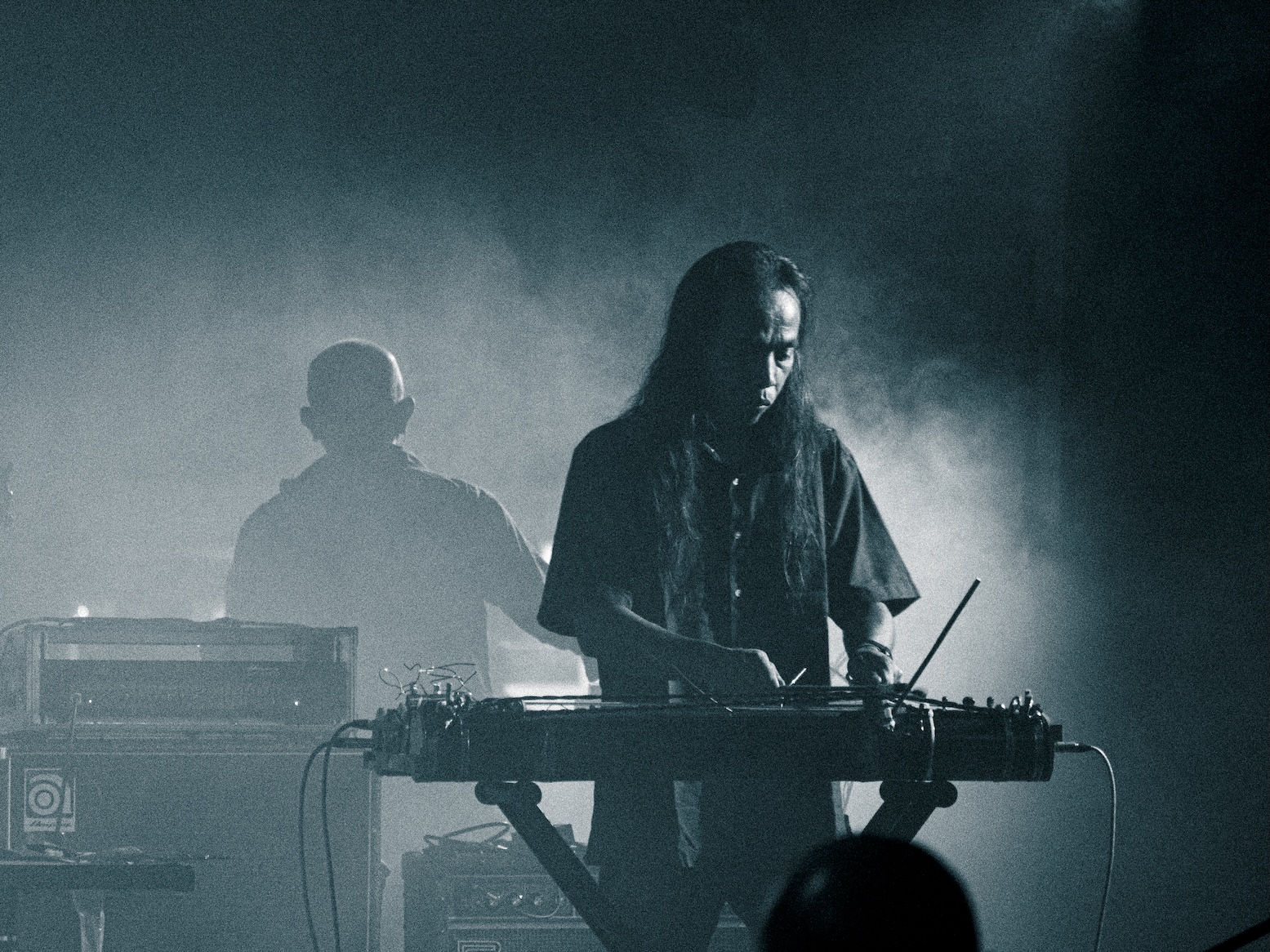
On the stage Wo die wilden Frösche klatschen – yes, that is its name – Mia Dyberg’s raw saxophone playing traced lines toward Ethiopian jazz and funk.
Moers also offered unusual ensembles. Trumpeter Nate Wooley and the Yarn/Wire ensemble performed After Nan Shepherd, inspired by the Scottish writer Nan Shepherd’s The Living Mountain. With trumpet, soprano, two pianos, and two percussionists, the work had the character of a slowly breathing narrative made of equal parts composition and improvisation.
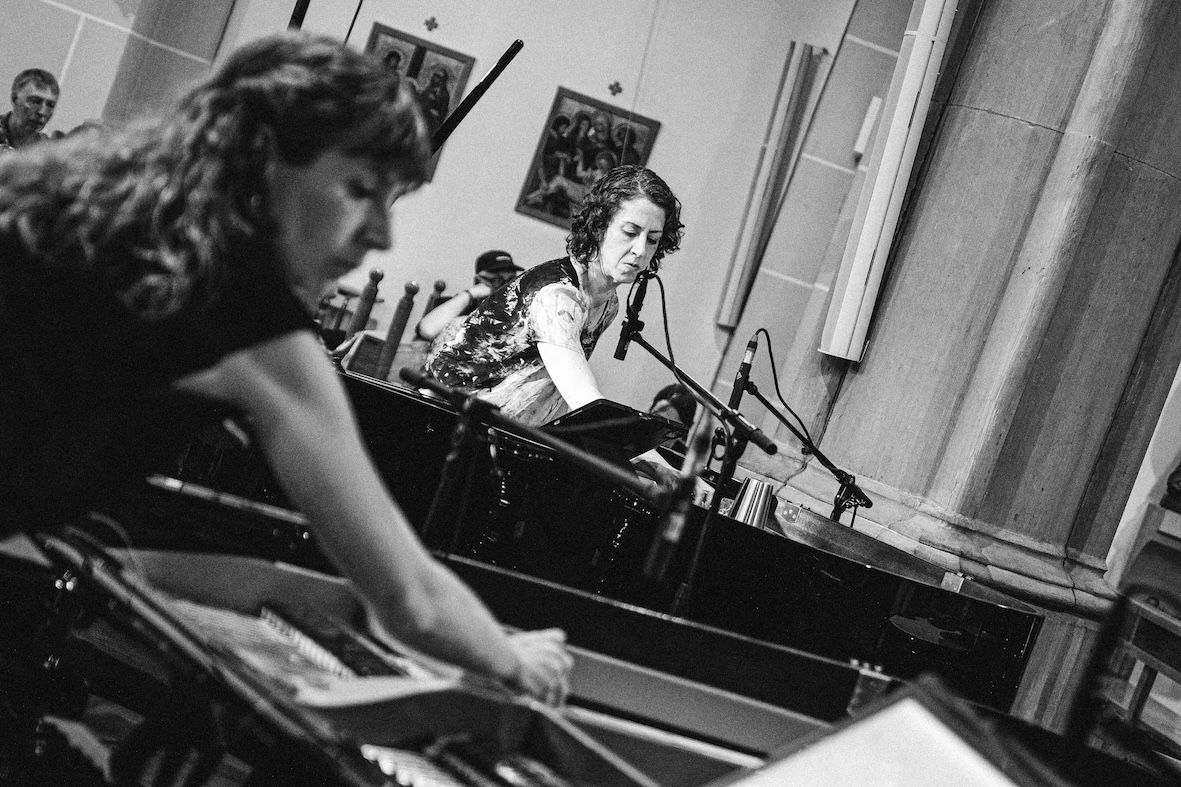
At a later concert, Yarn/Wire performed a new work by Icelandic composer Bergrún Snæbjörnsdóttir. Pianos and percussion created a sonic space of humming resonances, fragile surfaces, and piercing whistle tones, as if the music were drifting up from an unknown underwater world.
As so often in Moers, it felt like a visit to a temporary universe with its own rules.
The point was not variation alone, but the absence of hierarchy: Feldman did not stand above free improvisation, Kurtág did not compete with Egyptian psychedelia or Indonesian rituals, and performance art was not treated as a decorative appendix to »real« music.
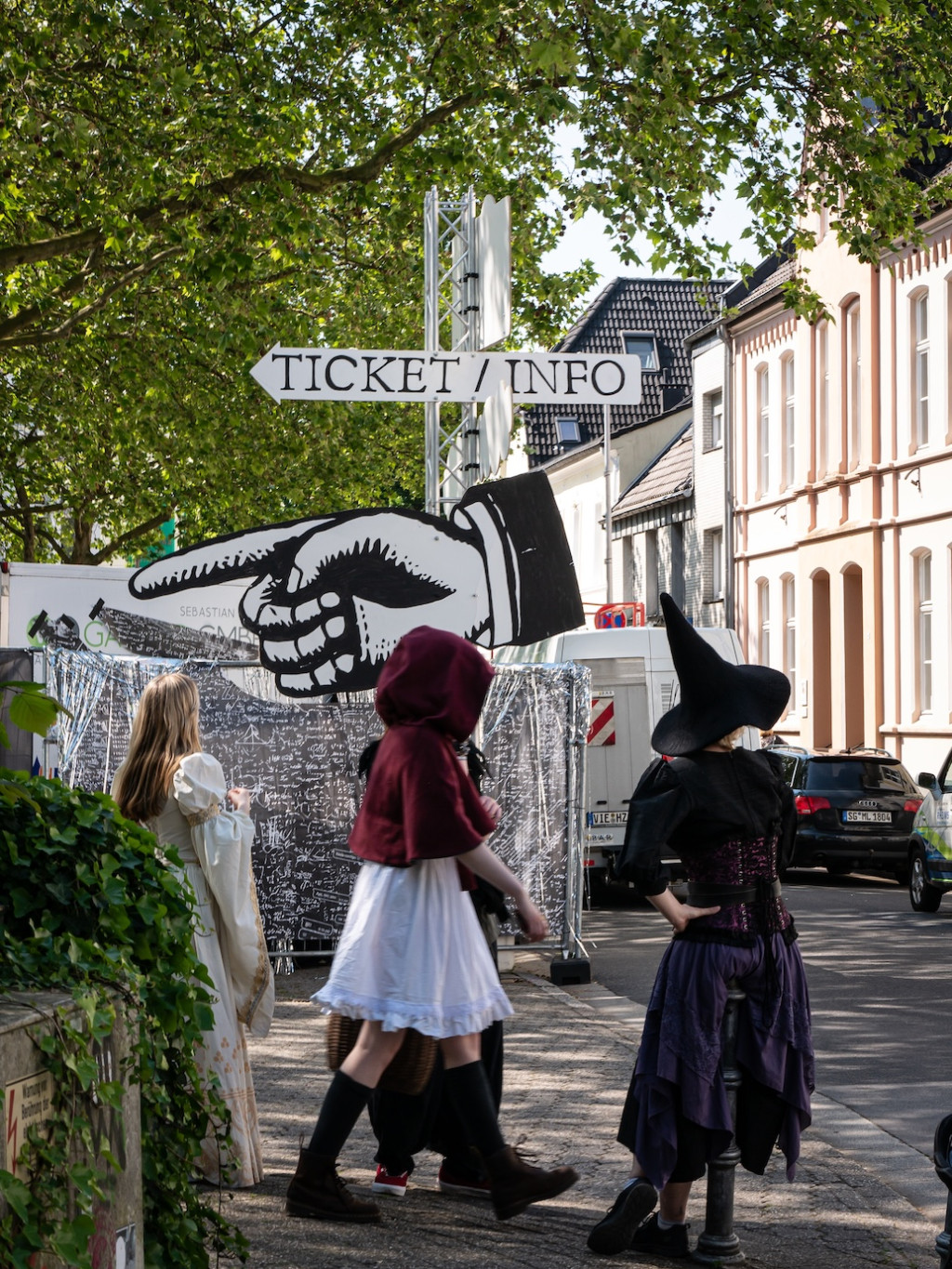
I kept getting lost in the festival’s logic. Only on the way home did the map begin to make sense
Getting lost as understanding
It is precisely here that Moers touches something many European festivals talk about, but rarely realise. It does not merely programme broadly; it attempts to create a temporary society in which different musical languages can coexist side by side without immediately being ranked. This makes the festival unpredictable, sometimes uneven, and occasionally a little self-enamoured with its own eccentric energy. But it also makes it unusually alive.
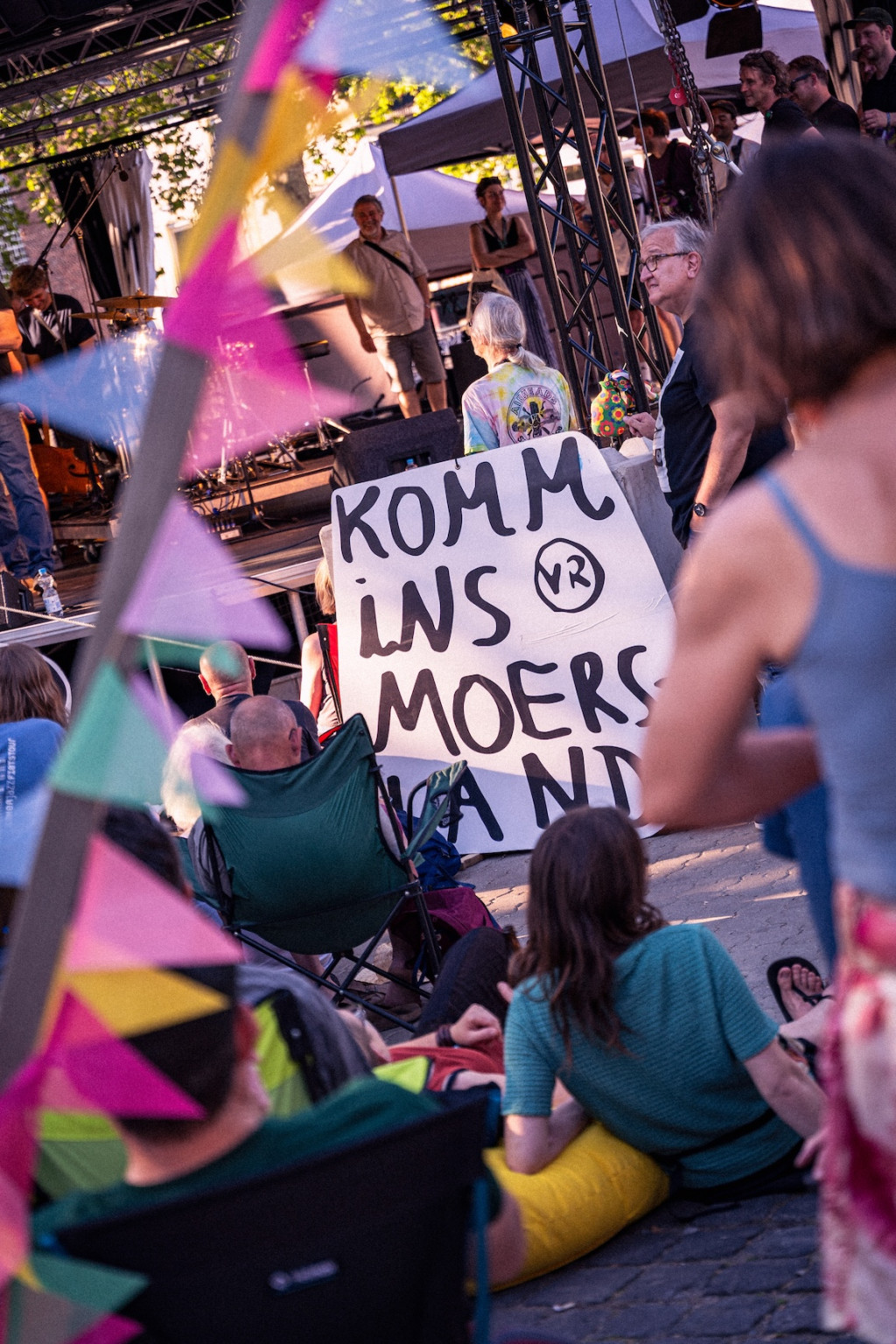
So what was Moers? A temporary society in which experimental music is not confined to a reserve for initiates, but allowed to spread across the entire city. I kept getting lost in the festival’s logic. Only on the way home did the map begin to make sense.
Moers Festival, Moers, Germany, 21–25 May 2026