



In a Forest Without a Path
For the past three days, I have been in my garden pruning a couple of wild-growing apple trees. It has given me occasion to appreciate the trees’ calmness, their vitality, their presence: the weight of the branches, their materiality, their very nature as living things are all aspects I have engaged with actively during those hours outdoors. Perhaps that is why it leaves such a strong impression on me when, on my way into Osmosis, I am greeted in the foyer by a kind of decapitated trees, reduced to trunks and roots.
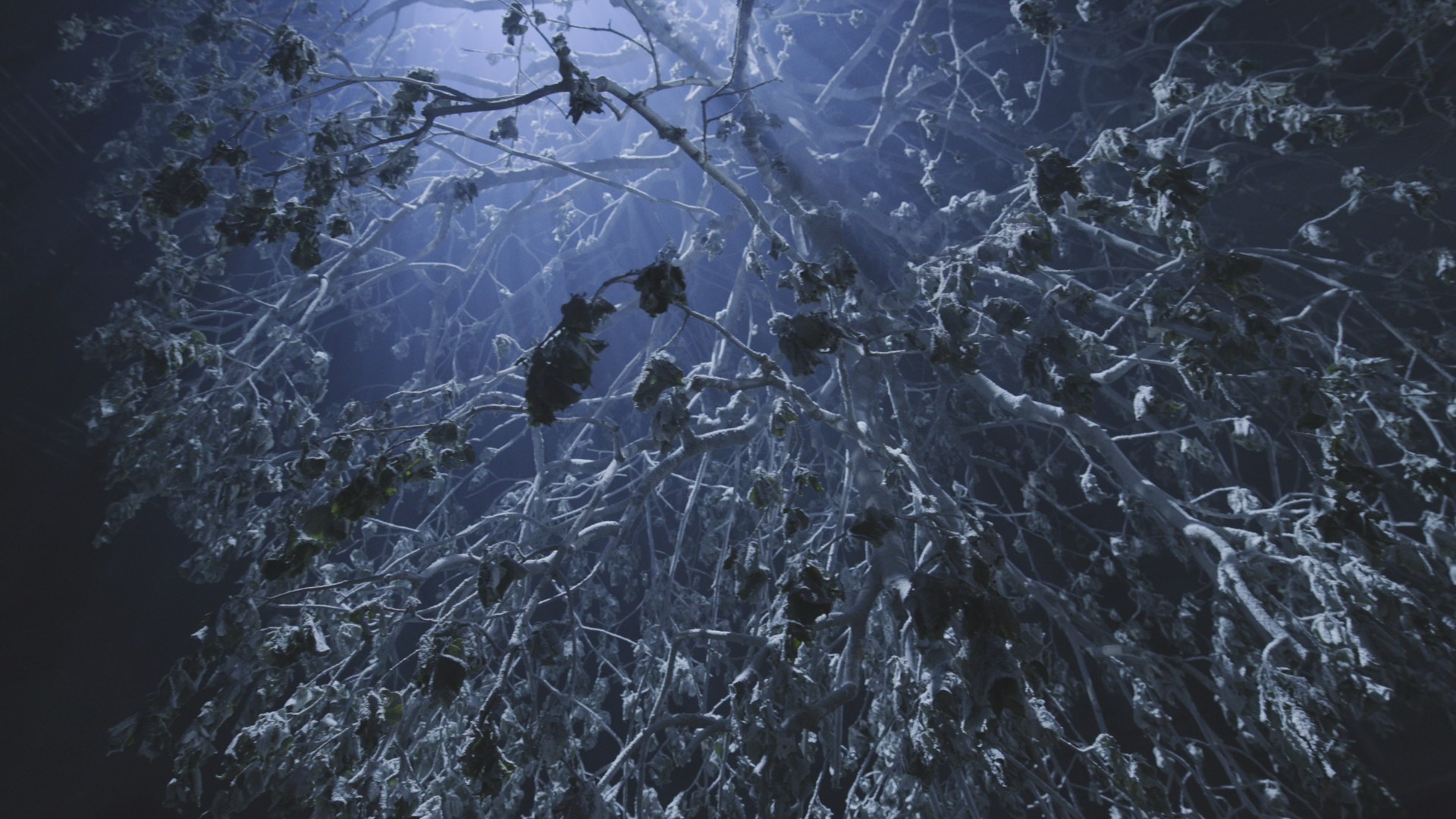
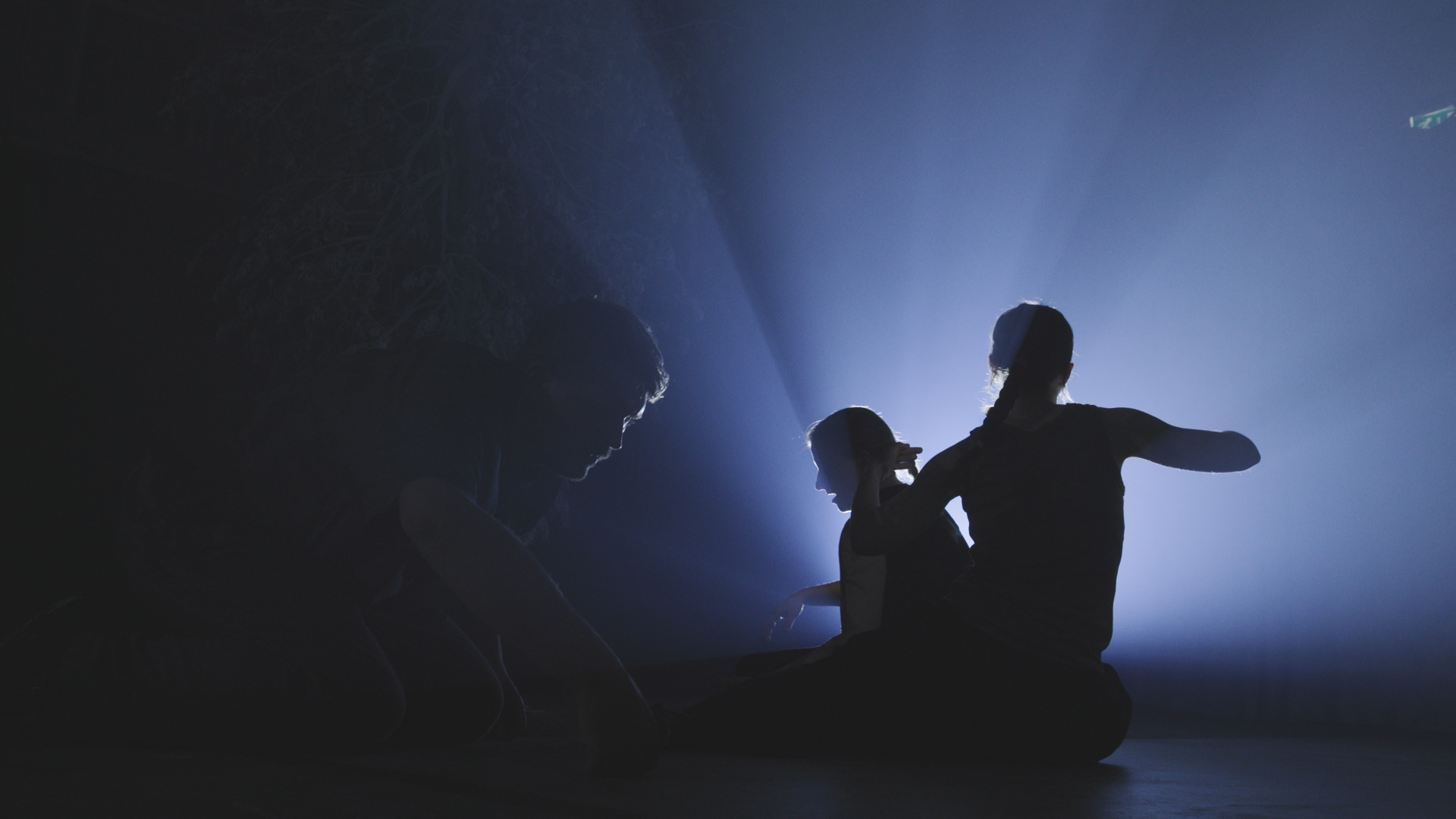
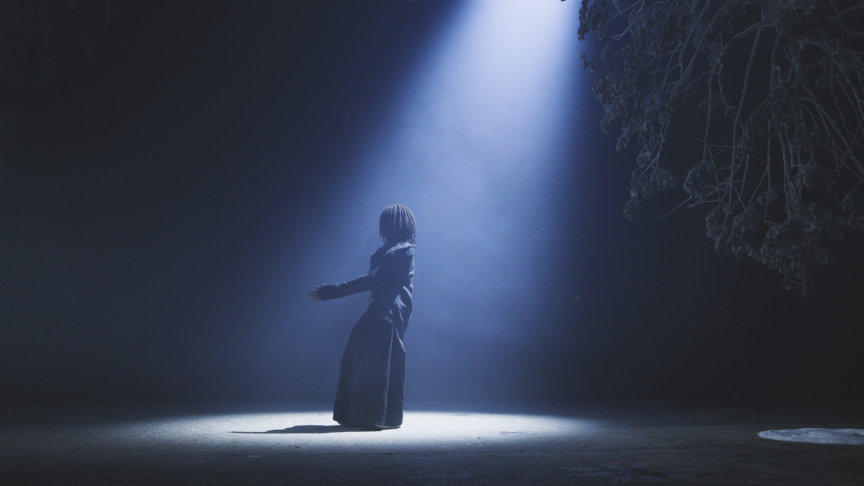
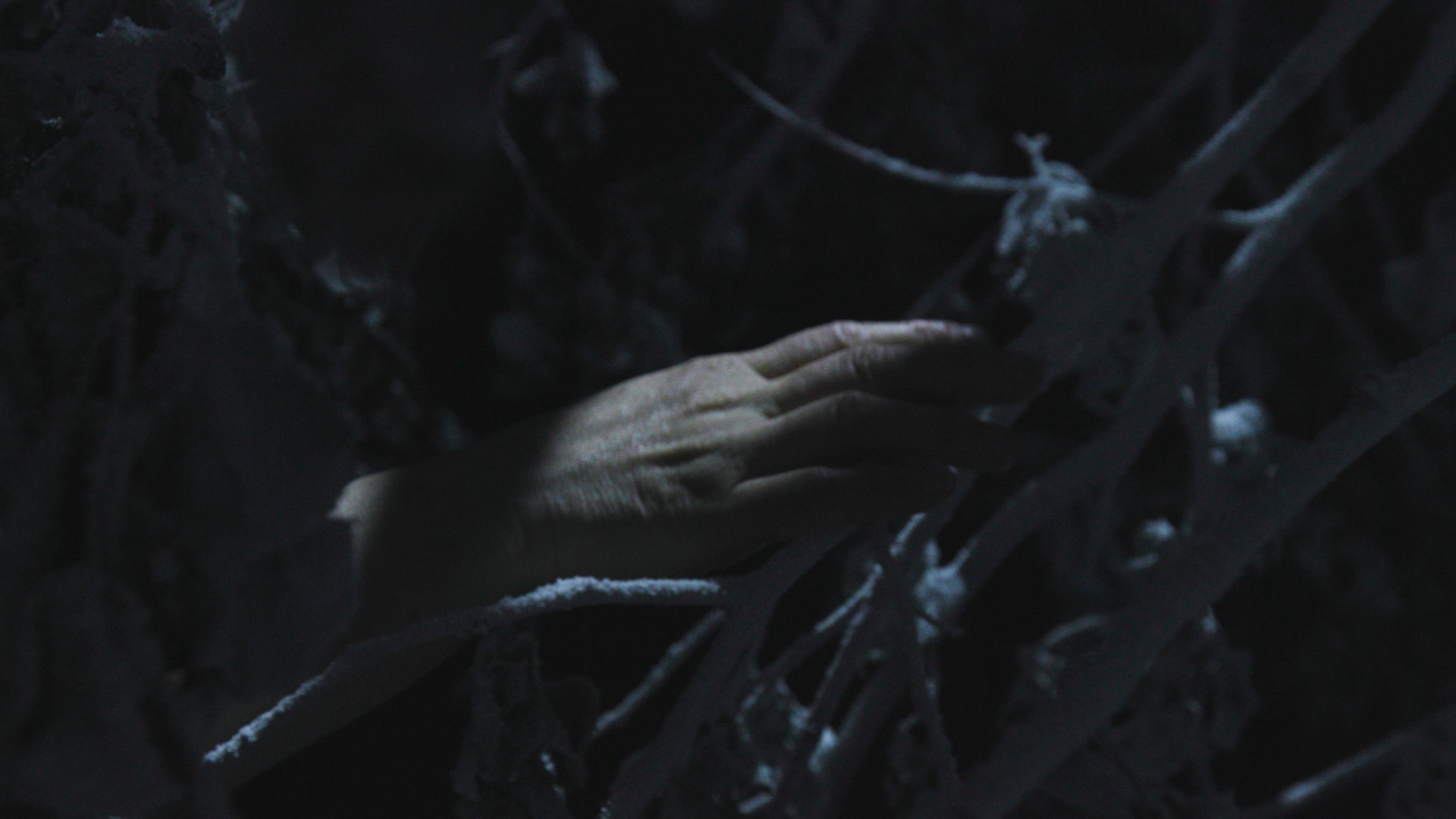
These trees foreshadow what awaits inside the darkness of the performance space, illuminated only by a few scattered lamps. Here, other trees stand upside down in what the press material aptly describes as »an inverted nature.« The trees seem to grow not from the earth but from the ceiling, almost from the sky, and at times they even rotate. It is both beautiful and strange to behold. The eloquent silence of the trees is contrasted by two equally silent dancers whose bodies, on the floor below, find one another in tightly entwined and occasionally contorted positions.
The trees seem to grow not from the earth but from the ceiling, almost from the sky, and at times they even rotate
The entire room effectively serves as the stage, and the audience is invited to move freely among and around the performers. For many of us, our intermittent movements toward whatever is currently unfolding become part of the experience itself. A monotonous, drone-like synthesizer sound establishes the atmosphere, only to be interrupted after some time by the sound of a plectrum-played bass performing solo over a tight chord progression repeated again and again.
Voices in the dark
There is something solitary about this music, a quality that also foreshadows the ascetic yet yearning character embodied by the sound of a single bass and, later, a single electric guitar. Soon a pair of singers joins in with a song that is sometimes wordless, typically moving melismatically between two neighbouring pitches.
There is something solitary about this music
Yet the instrumentation and musical design – built around riffs, repeated four-bar chord progressions, and extensive processing through effects pedals – lend the work a distinctly rock-oriented aesthetic, even though its vocal elements are rooted in a more classical, homophonic mode of expression.
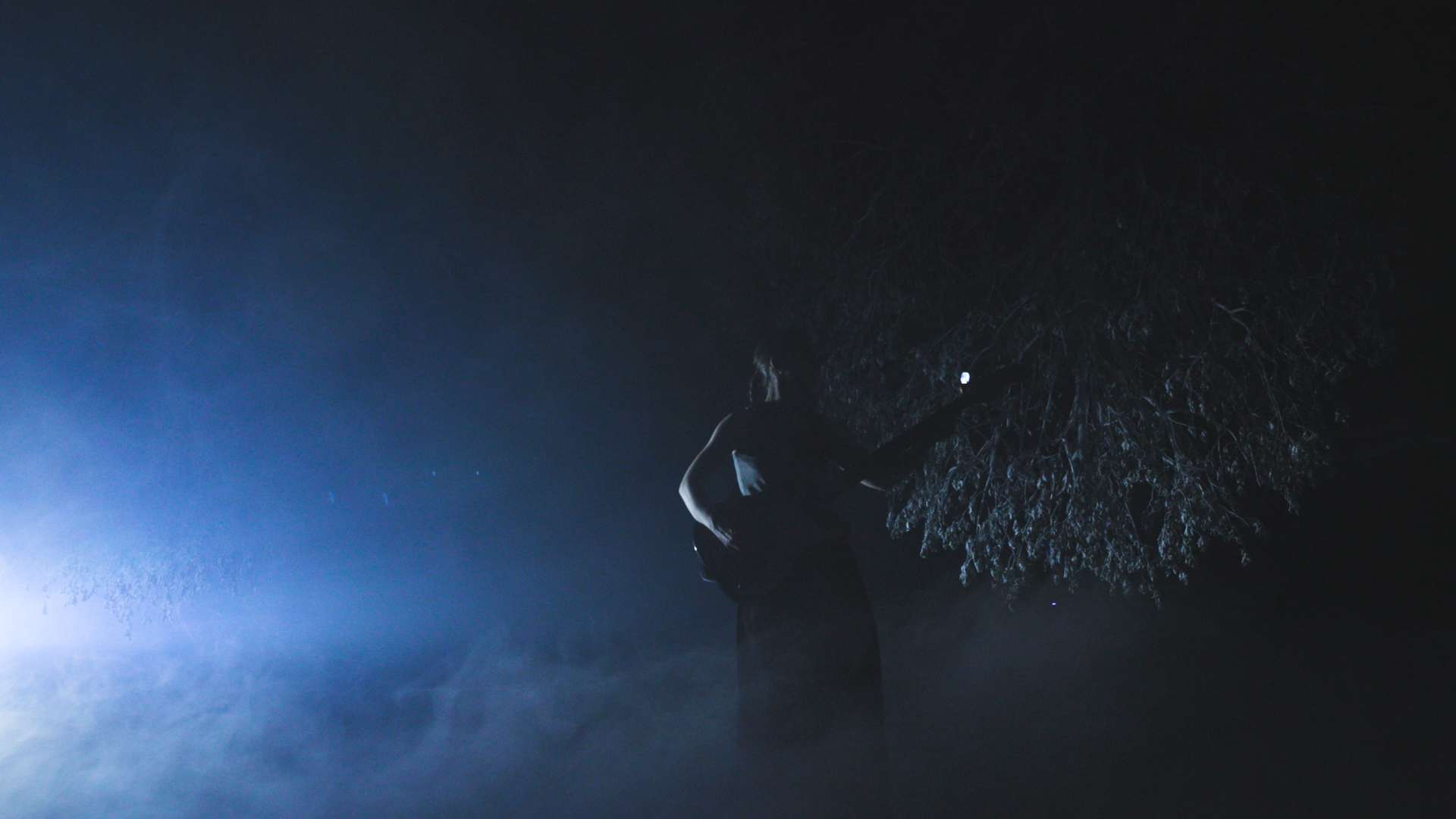
It is Niels Rønsholdt, the composer behind the work, who plays the guitar. The extensive use of digital effects and loops gives the sonic landscape a mechanical quality that on the one hand contrasts with the organic voices, while on the other complements them by challenging them both sonically and categorically. The result is something cold and distant placed at the centre of a longing for intimacy that I simultaneously hear in the music – not unlike the melancholic and plaintive musical language Rønsholdt employed in his 2022 music-theatre work Memoriam.
When I reviewed Memoriam for Seismograf, I noted Rønsholdt’s approach, which he called »method composing« (in reference to »method acting«), whereby, as I wrote at the time, he »immerses himself in specific stylistic idioms, resulting in works that explore familiar modes of expression and conventions in unfamiliar ways.« I am not entirely certain whether that approach is present in this new production, although the mere fact that Rønsholdt himself plays the guitar here could be seen as an expression of it.
In any case, Osmosis, much like Memoriam, operates within a metamodern framework, playing with the very notion of what a »contemporary« work can be said to be.
The singers sat beneath the trees, scooping sand from the floor and letting it trickle through their fingers
Sand between the fingers
In several sequences, the singers sat beneath the trees, scooping sand from the floor and letting it trickle through their fingers. The world’s oldest pastime? Perhaps. Yet at times I felt as though I, as a member of the audience, had become that sand myself.
For the performance occasionally struggled to sustain my attention, not least because the English-language text – which accompanied the wordless passages – proved difficult to follow over time.
Given both the varied and at times powerful soundscape and the striking staging, it was no easy task simultaneously to engage with the text. After all, we were constantly moving around the space and were not always close enough to the singers to hear the words clearly. The libretto, also written by Rønsholdt, was mentioned neither on the theatre’s website nor in the press material, even though either would have been an obvious place to help audiences decipher it or at least provide a few clues as to its content.
The elusive encounter
The singers’ seriousness of purpose left no doubt that the text was important to understanding the work. All the more frustrating, then, that it was inaccessible (or at least remained so to me, if access was in fact possible).
Thus, when the theatre’s website states that Osmosis offers »new ways of thinking and feeling together« – implicitly between audience and performers – I find myself sceptical of the claim. Rather, those words reinforce a creeping sense that the work ultimately communicated only slightly updated versions of rather traditional ways of relating audiences to performers.
I return home to my apple trees
In fact, it was sometimes difficult to inhabit a space where someone constantly seemed to want something from you, while that something remained hard to grasp because of the absence of narrative, which came to function as a kind of negative red thread running through the entire performance.
For instance, what exactly the »osmotic« quality of the work consisted of, as suggested by the title, remained entirely unclear to me. I return home to my apple trees.
Editorial note: Following the publication of this review, Seismograf was informed that the work’s libretto was available via QR codes placed at several locations throughout the venue. However, these could easily be overlooked, which was the case for the reviewer. At the same time, the assessment remains that the communication of the libretto’s availability could have been clearer for audiences and given greater prominence, for example on the production’s website.
»Osmosis«. Music-theatre performance by Scenatet. Composer and librettist: Niels Rønsholdt. Choreography: Tim Matiakis. Staging: Anna Berit Asp Christensen. Cph. Stage / AFUK, 2–6 June 2026.
English translation: Andreo Michaelo Mielczarek