



A Dance with the Site-Specific: Simon Steen-Andersen at 50
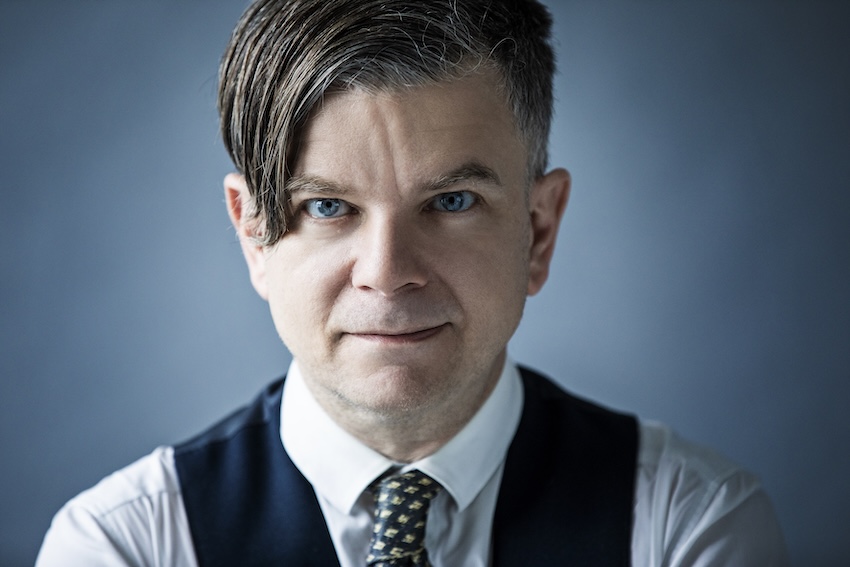
He is busy. Constantly on the move, touring his performances across Europe. And in April Simon Steen-Andersen turns 50. At the moment, he is working on a revival of his latest production, Run Time Anomaly (2025), which will be staged at the Akademie der Künste in Berlin in July. I catch him on a dark afternoon via a Zoom call to that very city, where he sits ready in his apartment.
»I’m extremely excited about the second round«
Simon Steen-Andersen – who over time has developed into as much a scenographer and director as a composer – premiered the work last November, and, as he says: »I’m extremely excited about the second round.« Like many of his other works, Run Time Anomaly is created as an extension of the work series Run Time Error (2009–2022), which he describes as »a concept for site-specific video compositions, performances, and installations.«
Now based in Germany, the composer has made a significant contribution to 21st-century music as well as to how we understand it. This has happened through a series of works situated at the intersection of music, performing arts, video installation, and choreography, where the artistic approach is dominated by a consistent focus on what might be called »spatial presence«. Alongside this, he teaches composition at the Hochschule der Künste Bern. Previously, he taught at the Royal Academy of Music in Aarhus, influencing many from a new generation with his way of thinking about music.
In his works, Simon Steen-Andersen can be said to pose highly relevant and compelling questions – not only about what music is, and what it can be in interaction with other art forms – but also about how music is consumed at all. The consumptive aspect of music has perhaps never been greater or more pervasive in world history than in the 21st century, and the often kaleidoscopic and fragmented sound collages heard in many of his works function as both reflections and sedimentations of the »music-on-music« reality most people inhabit today.
»I have always perceived the performance of a work as part of its creation process, and therefore saw it as natural to follow my works through to completion«
The composer himself emphasizes that he is more concerned with how we experience music than with what music »is«. More generally, he is interested in how we can perceive new aspects, meanings, and connections in what we already know.
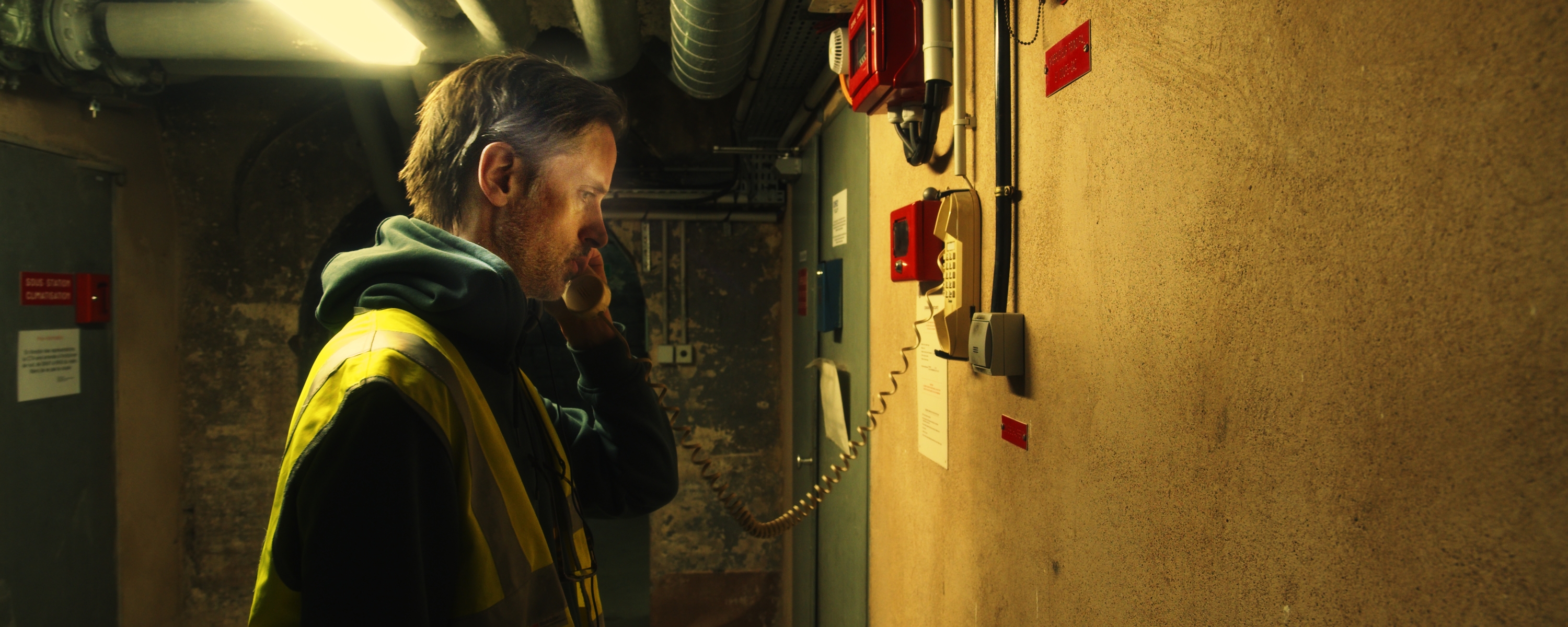
Since the first versions of Run Time Error, many of his works have had a documentary aspect by exploring specific sites, where the countless potential sound sources of each location function as a kind of objets trouvés: well-known – even legendary – opera houses and concert halls, as well as museums and libraries in Bayreuth, New York, London, Salzburg, Helsinki, and elsewhere have been subjected to such investigations.
According to the composer’s website, Run Time Anomaly, as a continuation of Run Time Error, is in part about making architecture itself the protagonist – a musical instrument, a scenography, and a compositional form. Why architecture? I ask, and he replies:
»I have always perceived the performance of a work as part of its creation process, and therefore saw it as natural to follow my works through to completion, so to speak. This led me to regard all factors in the performance situation as potential compositional elements. Whenever possible, I tried to find ways to adapt the works to the performance sites, so that one might ideally get the sense that the work was created for that place or occasion. I felt that this could both give the experience something unique and blur or incorporate the framework of the work. In Run Time Error, I took this a step further and let the work and the site merge. Architecture and everyday objects proved to be the perfect material – not least because the former often has a clear division between front and back, such as public and non-public areas, as well as specific functions, limitations, expectations, and histories that can be activated. In Run Time Anomaly, there is of course another protagonist: the group of 14 young dancers from Youth Dance Company Sasha Waltz & Guests. One could say that the work is an exploration of both, through – or subjected to – each other…«
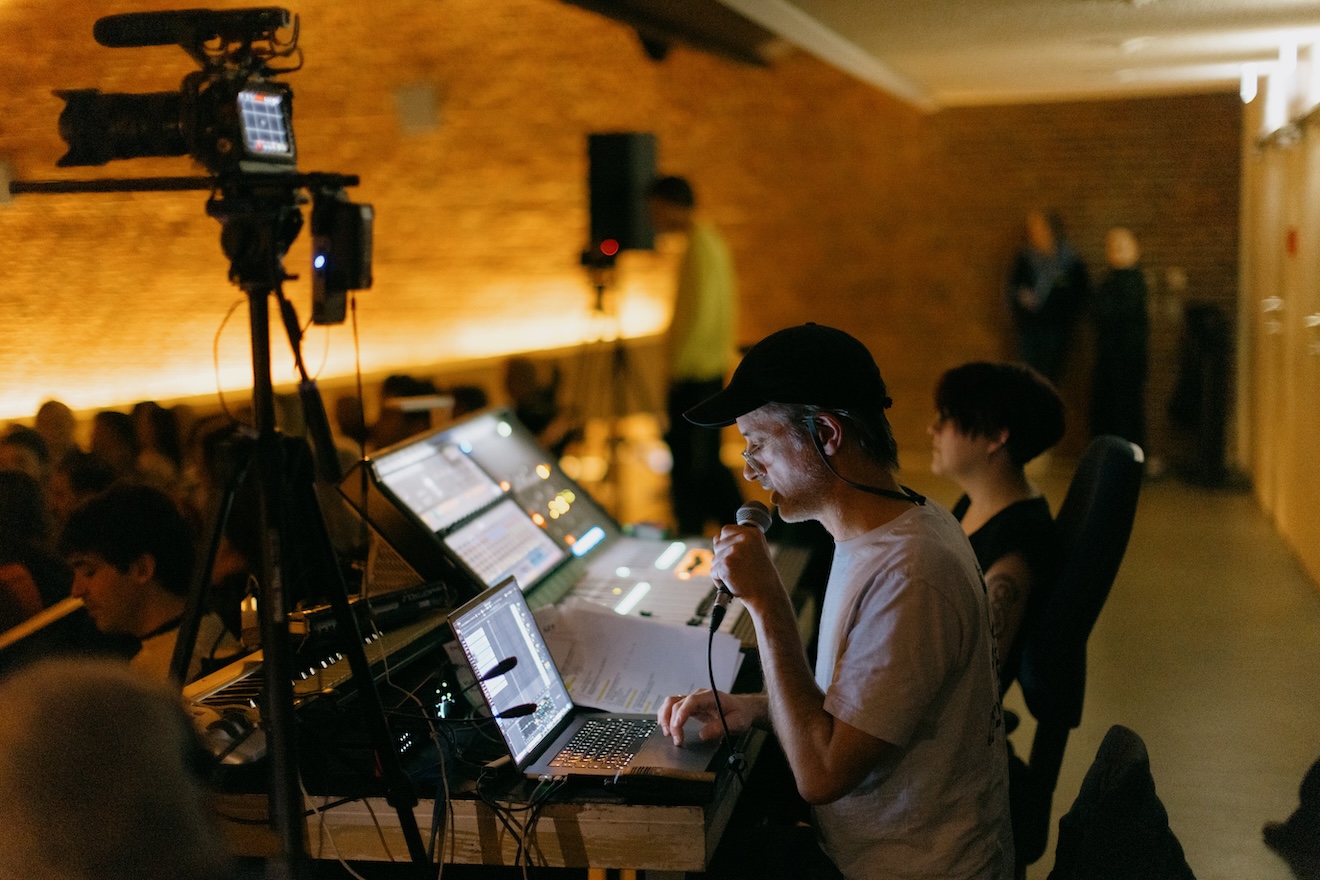
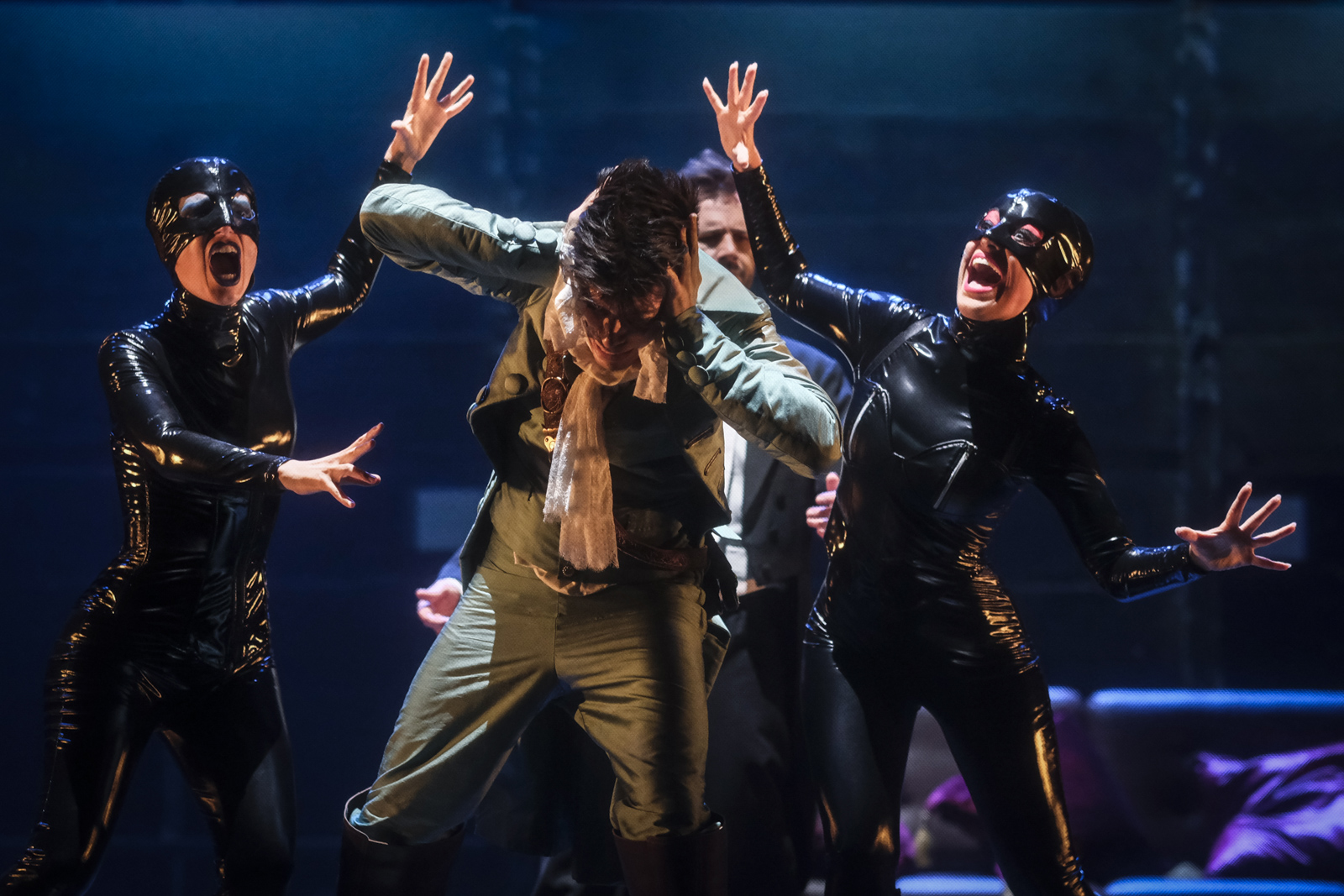
Steen-Andersen does not change buildings through his works, but he does change the audience’s experience of them. One can imagine how regular subscribers, for example at the opera house in Strasbourg or the Old Stage in Copenhagen, after experiencing an opera such as the Reumert Award-winning Don Giovanni’s Inferno (2023–24), will subsequently perceive the recontextualized operas in a new light. Of this work, he says:
»You of course experience sides of the house you haven’t seen before, and the building itself becomes the set for the stories that are usually told in constructed and imported environments, so to speak. But even more important is the changed perspective on the operas – the material – which, through recontextualization and transformation, is cast in a new light, acquires new meaning, and reveals new facets of itself. In a way, I also imagine the opera repertoire as a location, much like in Run Time Error, and explore everyday objects, interesting or hidden corners, back sides, and so on – only here in the form of characters, scenes, stories, themes, sentences, words, stage directions, anecdotes, stylistic peculiarities, and compositional ideas. In other words: opera as objet trouvé. Opera as an artifact.«
He continues:
»In this way, it also becomes an exploration of opera history and opera as a phenomenon. It becomes about opera – about artifacts that reflect the times, ideas, and societies in which they were created. My »opera-devil«, Polystopheles, is composed of no fewer than 19 devils, demons, and rulers of underworlds, each based on a particular conception and treatment of the demonic. Literally a composite personality containing facets from 400 years of development – sometimes evil, other times mischievous, foolish, pompous, gracious, hateful, in love, depressed, or poetic. Sometimes accompanied by regal and continuo, other times by a late-Romantic orchestra.«
In a certain sense, the transformative power of Steen-Andersen’s site-specific works can be compared to the acrobat Philippe Petit’s world-famous happening in 1974, when he walked a tightrope strung between the two towers of the World Trade Center. According to a local stand-up comedian, the two tall and imposing – but also unimaginative and dull – skyscrapers could be seen as the enormous cardboard boxes in which the Chrysler Building and the Empire State Building had once arrived.
This negative perception changed radically after Petit’s enchanting performance, which brought morning traffic in Lower Manhattan to a standstill. The buildings took on the aura of his extraordinary act; the World Trade Center was no longer the same. It had acquired a mystique that made it easier for New Yorkers to accept it as part of the city’s architecture. Although opera and concert halls hardly need image improvement, the parallel is striking: our perception of architecture can change when it is placed within a new artistic context.
The differences, however, are equally evident: whereas Petit created a happening relating primarily to the building’s scale and character, Simon Steen-Andersen creates works that deconstruct function, history, expectations, and more – including architecture itself.
»Over time, I have come to think of site-specific work more as a kind of alternative documentary method«
The composer reflects further:
»Offering a new perspective on something is not, for me, in competition with the originals or conventional productions. On the contrary, I feel that the experience of the shift in perspective plays a major role and becomes stronger the better we know – and the more specific expectations we have of – the material. I see it as a dialogue, ideally in both directions, so that one can also bring something back to the experience of the original.«
He returns to the origins of Run Time Error:
»In the beginning, it was important for me that Run Time Error be shown and experienced precisely in the place where it was created. That gave listeners an aha-experience when they recognized the space they were sitting in – and thus also the new perspective on the things immediately around them, as well as the exploration of non-public backstage areas. Later, this became more of a kind of festive bonus, and in fact most presentations have taken place elsewhere than where they were created. Over time, I have come to think of site-specific work more as a kind of alternative documentary method, expanding the exploration beyond what is materially present. In a way, I now feel that the more specific it becomes, the more value it can have independently of the place.«
He continues:
»When I created The Loop of the Nibelung in 2020 at the Festspielhaus Bayreuth, many aspects began to merge – the inclusion of the house’s history, myths, and ghosts, and the idea of using the house itself as the set for the stories it was built to present. A kind of self-referential extra loop, so to speak, breaking down the boundary between fiction and documentation: the Festspielhaus becomes Valhalla, Wagner becomes Wotan, and so on. What is being examined folds back onto itself, and the format becomes a documentation or consequence of what is found and explored.«
We return to Run Time Anomaly, which currently occupies Steen-Andersen deeply as he works on a revised version for Berlin this July:
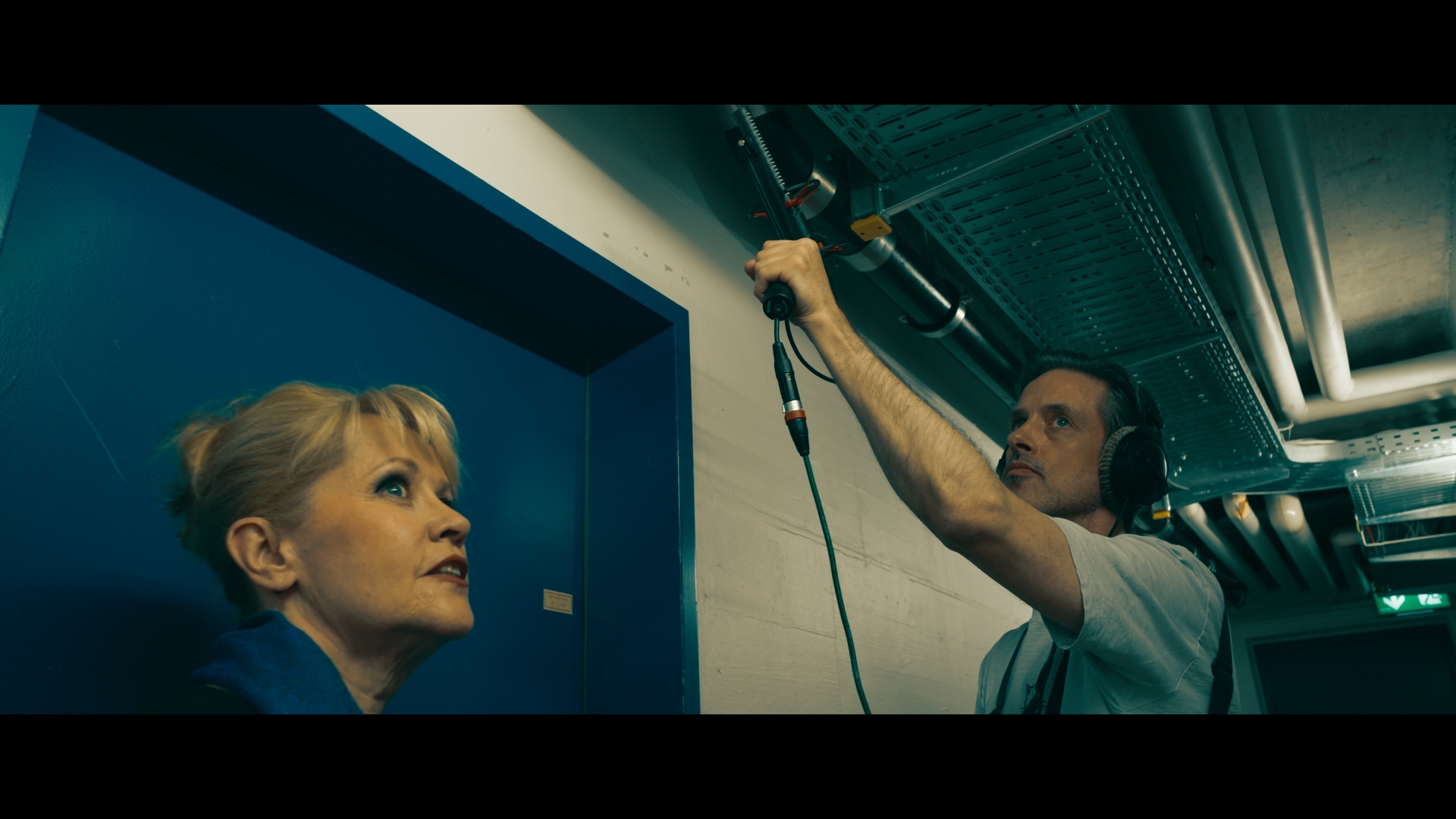
»In my last two productions, Wie du warst! Wie du bist! and Run Time Anomaly, the documentary aspect becomes more pronounced, but in both cases it is subjectivized and made fantastical through the performers. In Wie du warst! Wie du bist!, the story and career of the nearly retired mezzo-soprano Liliana Nikiteanu merge with opera history and the Zurich Opera House, where she has worked for 35 years. When she sings, they are memories and characters from her subconscious and dreams, and I try to dissolve the boundaries between past, present, opera, opera house, and opera singer.«
»When she sings, they are memories and characters from her subconscious and dreams, and I try to dissolve the boundaries between past, present, opera, opera house, and opera singer«
He continues:
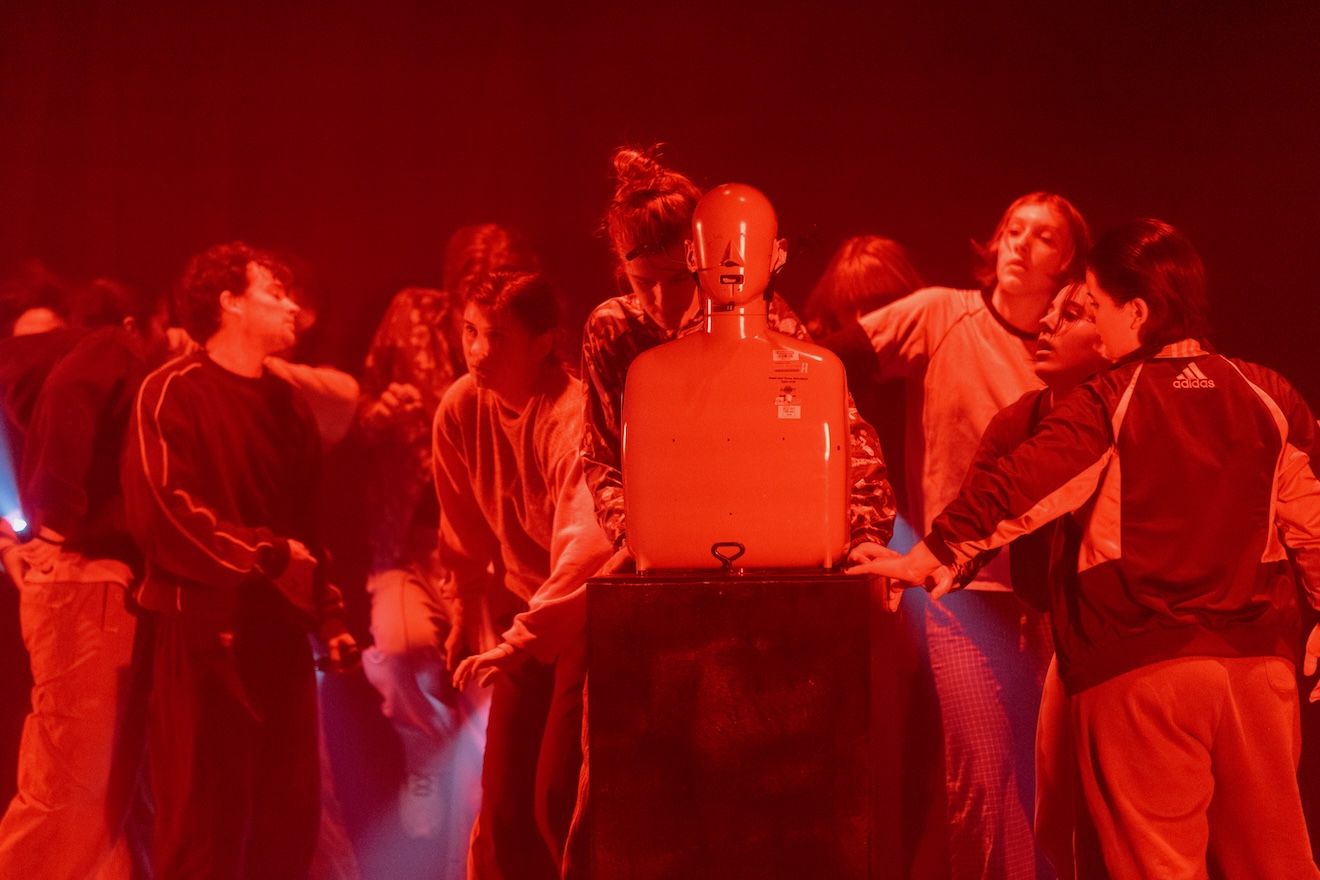
»In Run Time Anomaly, the Youth Dance Company Sasha Waltz & Guests and the iconic Akademie der Künste building on Hanseatenweg in Berlin are, so to speak, portrayed through each other. My working method and metaphor was to expose the young dancers to the unfamiliar architecture and music from the building’s electronic studio archive, document the process, and stage their experiences as if they were dreams or fantasies after long, intense production days. The performance differs from many of my earlier works in that sound and music are no longer at the center of the investigation. At the same time, it was clear from the outset that it should not be a dance performance either. On the one hand, the starting point was an exploration of direct connections between sound, body, and architecture; on the other, the question of how the Run Time Error concept could be used if it were not sounds but dancers that created the shift in perspective. The former led, among other things, toward sub-frequencies that could make the building and bodies vibrate, as well as toward pirouettes and choreographies with boom microphones and binaural dummy heads, and stage mechanics played and amplified as an instrument. The latter led to experiments with shifts in orientation using bodies and cameras, allowing architecture to be experienced in new ways.«
When I later ask about the musical dimension of Run Time Anomaly, he replies:
»Part of the music is based on a specific work from the electronic studio archive, which is transformed in the direction of the images and associations the 14 young dancers had while listening – this, in turn, also forms the basis for staging the architecture. In addition, there is music inspired by the dancers’ playlists. It’s my own take on and play with genres, but it still sounds more like a nightclub than a concert hall. Then there is a choreography with and around a boom microphone, where the dancers sing and produce sounds – a kind of manual, human step sequencer, one might say. And there is also the building’s own music: background noise, doors opening and closing, polyrhythmic patterns between a dripping tap and a backstage wall clock, as well as all the loose materials in the concert hall vibrating when their resonance frequencies are triggered by the subwoofer.«
Other factors also played a role:
»Due to practical circumstances, the production and rehearsal process were scheduled as one continuous stretch, and unfortunately it was far too tight. Everyone involved was aware of the risk, but it was still frustrating when the premiere caught up with me before I was fully ready. Although we more or less managed to carry out the planned performances, the music and sound in particular suffered. Fortunately, it was possible to schedule a revival at the same venue – the Akademie der Künste in Berlin – in July.«
His response makes me reflect on the artistic foundations he works from. While he broadly draws on elements from avant-garde music and music theatre of the late 20th century, much else is also at play. I ask about the significance of his teacher at the Royal Academy of Music in Aarhus, the prominent composer Karl Aage Rasmussen, known for his work with »music on music« – composing with existing music or quoting it in ways that foreground a conscious sonic relationship to other music.
»It’s funny you ask, because I’ve also been thinking about how many aspects have ended up overlapping with Karl Aage Rasmussen’s work with existing music, which began in the 1970s with works like Genklang or Berio Mask. When I studied with him from 1998 to 2003, I was of course familiar with these works, but I wasn’t particularly interested in them and pursued entirely different directions. It shouldn’t come as a surprise that history moves in a kind of spiral, repeatedly returning to similar tendencies in a different light. Still, it almost caught me off guard when I realized the connection to his works. Back then, I felt I was moving in the exact opposite direction, and my motivation and path here have been quite different. I have never identified with the conventional musical definition of postmodernism, although I can see why one might apply that label to my music. Instead, I had a sense that music could be both radical and immediate, both ironic and sincere at the same time – qualities often presented as mutually exclusive opposites. »Dead serious playfulness« was the concept I arrived at and found best described what I was doing – also as an attempt to bring immediate opposites together.«
»In that way, my work with opera has also been a personal journey of discovery, where through various strategies and deconstruction I have found my own way into the genre as a listener and experiencer«
He concludes:
»In that way, my work with opera has also been a personal journey of discovery, where through various strategies and deconstruction I have found my own way into the genre as a listener and experiencer. For me, Don Giovanni’s Inferno has been the ultimate confirmation that humor, irony, Verfremdung, and self-reference do not exclude – but can coexist with – and, in my case, opened the door to – deep emotion and goosebumps.«
As I hear it, Simon Steen-Andersen’s works are, among many other things, a kind of survival and experiential guide to the audiovisual reality of the 21st century. In his work, sound almost always interacts with the visual and can therefore neither stand alone nor should it: music on music, but also music on image – or image on music. In other words, he reminds us that sound is no longer just sound, and music no longer just music – for our interactions with music today are inescapably shaped by the ontological conditions of hypermodern life in an age of sensory bombardment. That is the premise to which Simon Steen-Andersen’s works respond.
Simon Steen-Andersen turns 50 on April 24. The day before, his work »grosso« (2024) will receive its Danish premiere with the Aarhus Symphony Orchestra, while Piano Concerto (2014) will be performed in May at Festspiele Herrenhausen and in September at TRANSART. A revival of »Wie du warst! Wie du bist!« (2025) will take place in July in Zurich. Also in July, »Run Time Anomaly« (2025) can once again be experienced at the Akademie der Künste in Berlin. The new multimedia performance »UR!«, with and about Michael Schmid (ICTUS) and Kurt Schwitters, will premiere in October at Donaueschinger Musiktage and will subsequently tour to Festival d’Automne in Paris and Transit Festival in Leuven. »TRIO« (2019) can be experienced in November in Brussels and Bruges.
English translation: Andreo Michaelo Mielczarek. Proofreading: Seb Doubinsky