




The Comfort of Art
»After the performance, the audience is invited to stay with the performers to share impressions, thoughts, and feelings together – both in conversation and in silence. Anne Cecilie’s famous Røst fish soup and a vegetarian alternative will be served to warm our bodies. Together, we can reflect on what has unfolded on stage, process the loss of biodiversity we are witnessing, and perhaps sow a seed of hope.«
Even as a lover of nature – and who isn’t these days – it was a performance that took effort to sit through
Welcome to Borealis. Here, we do everything together. Before the opening performance Vedøya – Laments to the Birdmountain Who Lost Their Voice, we were invited – following Pauline Oliveros – to greet one another and look each other in the eye in the foyer of Cornerteateret.
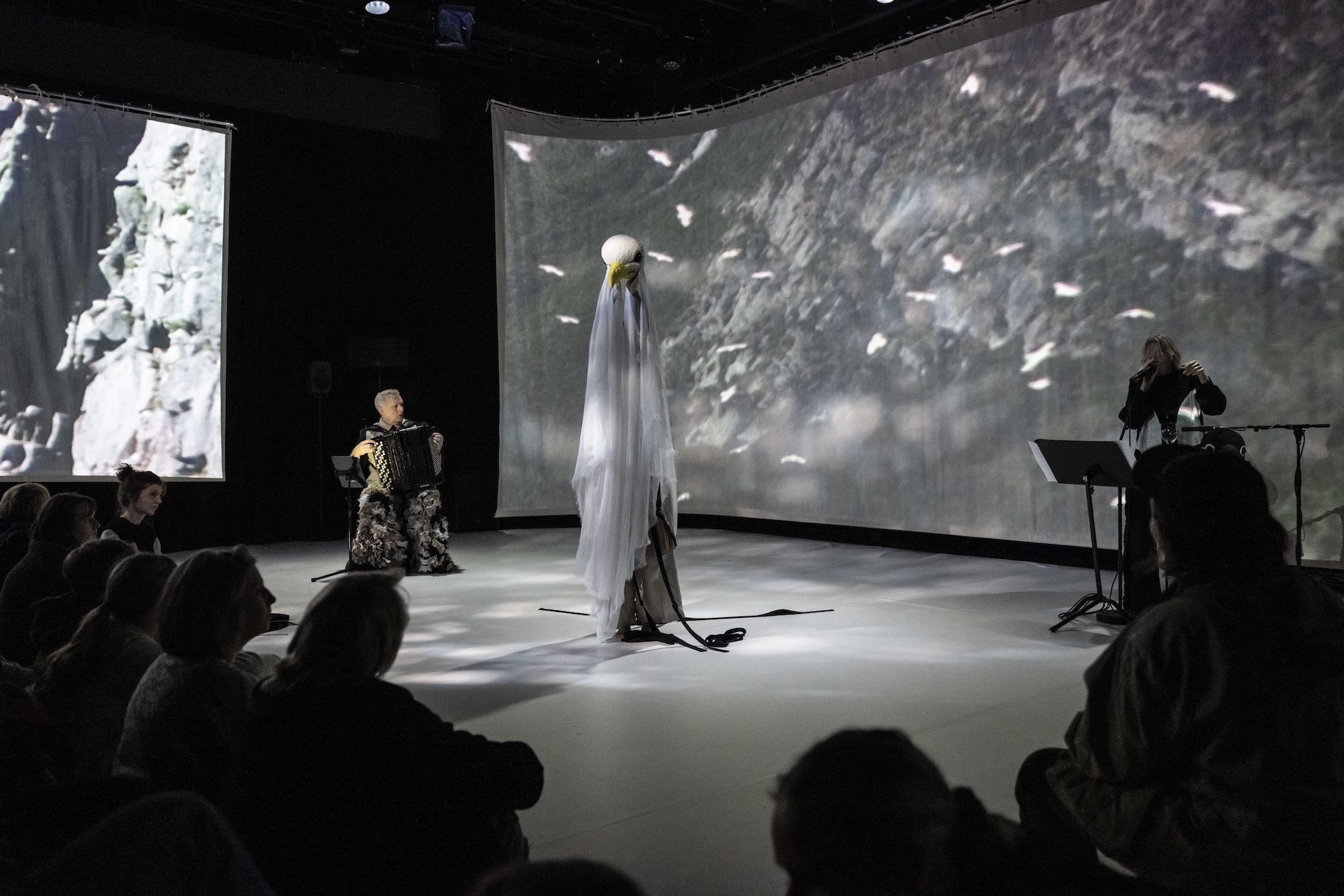
The performance itself functioned as a live soundtrack to Vedøya, once one of Northern Europe’s noisiest bird cliffs. Elin Már Øyen Vister wove together field recordings, new compositions, Northern Norwegian folk tunes, and Sámi vocal traditions with images of nature. Fish was cut on stage. Afterwards, we ate the soup together.
But even as a lover of nature – and who isn’t these days – it was a performance that took effort to sit through.
Experiences rather than works?
In Seismograf, Borealis has often been described as a festival moving at its own pace. In 2015, Sanne Krogh Groth highlighted its unpretentious yet carefully curated programme, while Sune Anderberg noted an »almost claustrophobic feel-good atmosphere« around the festival’s »safe space policy and communal winter bathing.« In 2017, Robert Barry called it an »inescapable warmth«. And in 2025, Patrick Becker wrote that »Borealis promises experimental music but falls short within traditional concert formats.« The question remains whether, as Jan Topolski suggested, it ultimately offers experiences rather than works.
Trance Bath drowned in guided meditation, small chimes, and too much talking
At this year’s edition – the last under the direction of Peter Meanwell, who has led the festival since 2015 – rituals of togetherness were omnipresent. Once again, we found ourselves in a sauna together. Canadian artist and hypnotherapist Julia E. Dyck invited audiences to Trance Bath: »Drawing on hypnosis, queer bathhouse culture, and Finnish traditions, Trance Bath uses sound and ritual to investigate how bodies can synchronise, release tension, and attune to one another.«
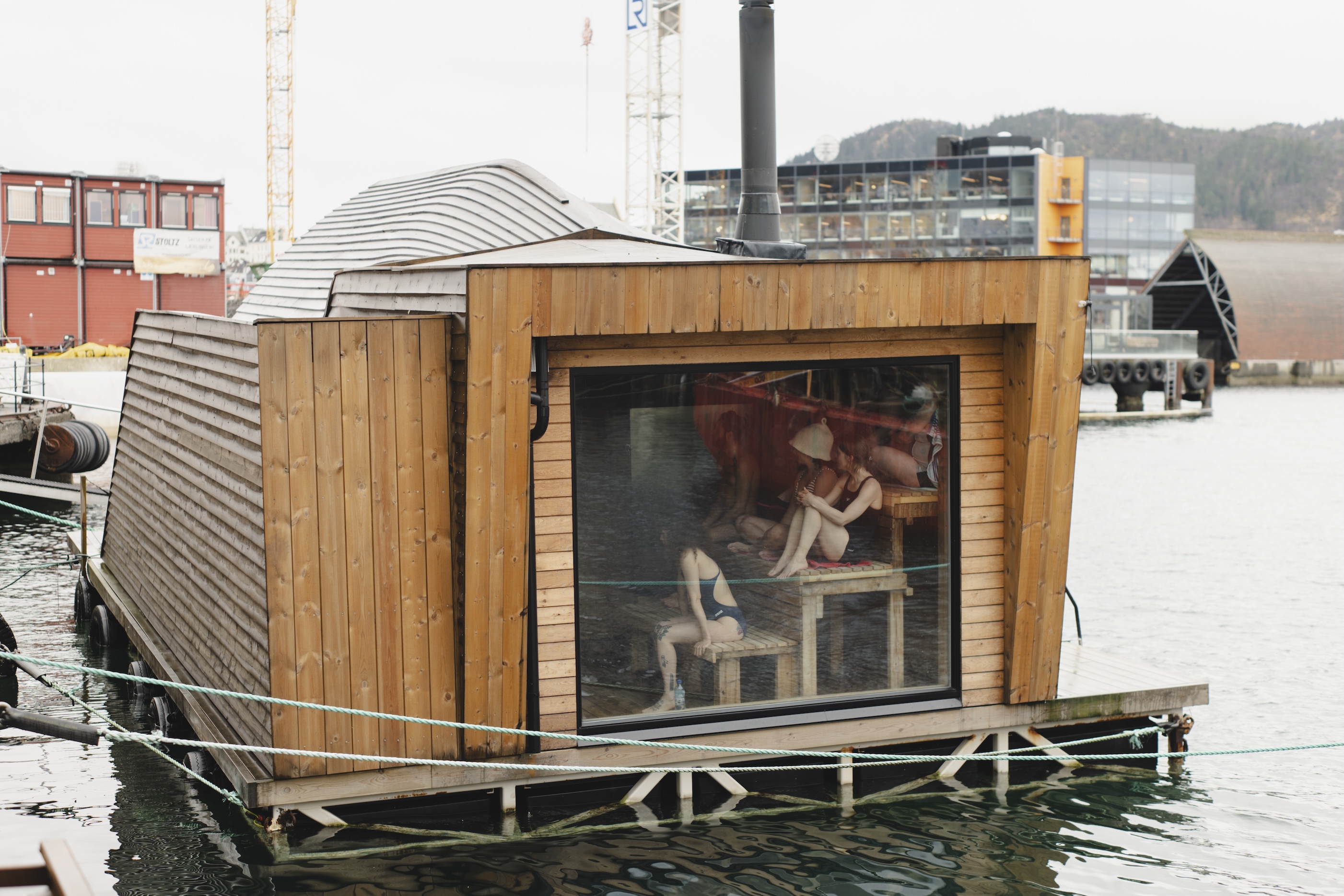
The floating sauna Laugaren is beautifully situated by the fjord. Designed by the architects Utopic, it is built from exquisite wood and resembles a work of art in itself. But Trance Bath drowned in guided meditation, small chimes, and too much talking.
At Sardinen USF, the Norwegian quartet Tøyen Fil og Klafferi set out to explore the sound of community through two new works. Yet the music remained oddly static in Martin Taxt’s A Decade Dancing in the Eternal Echo.
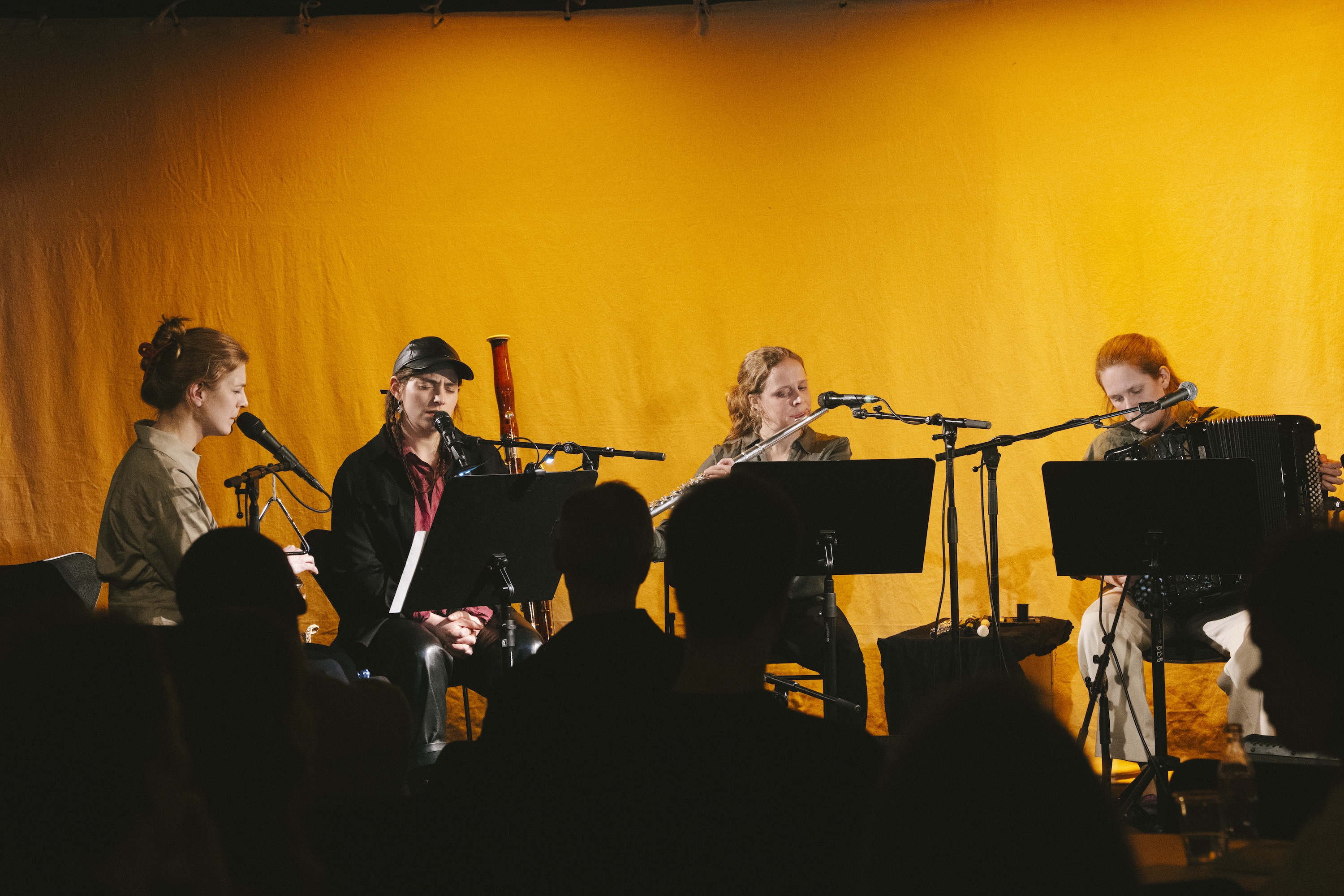
Small gestures accumulated without direction, and even when the duo Propan, in Sister of Simple Song, found a delicate, understated tone with trembling recorders and echoes of 1960s folk, it felt more like an idea of community than a musical necessity.
When it finally happens
At its best, the festival did the opposite.
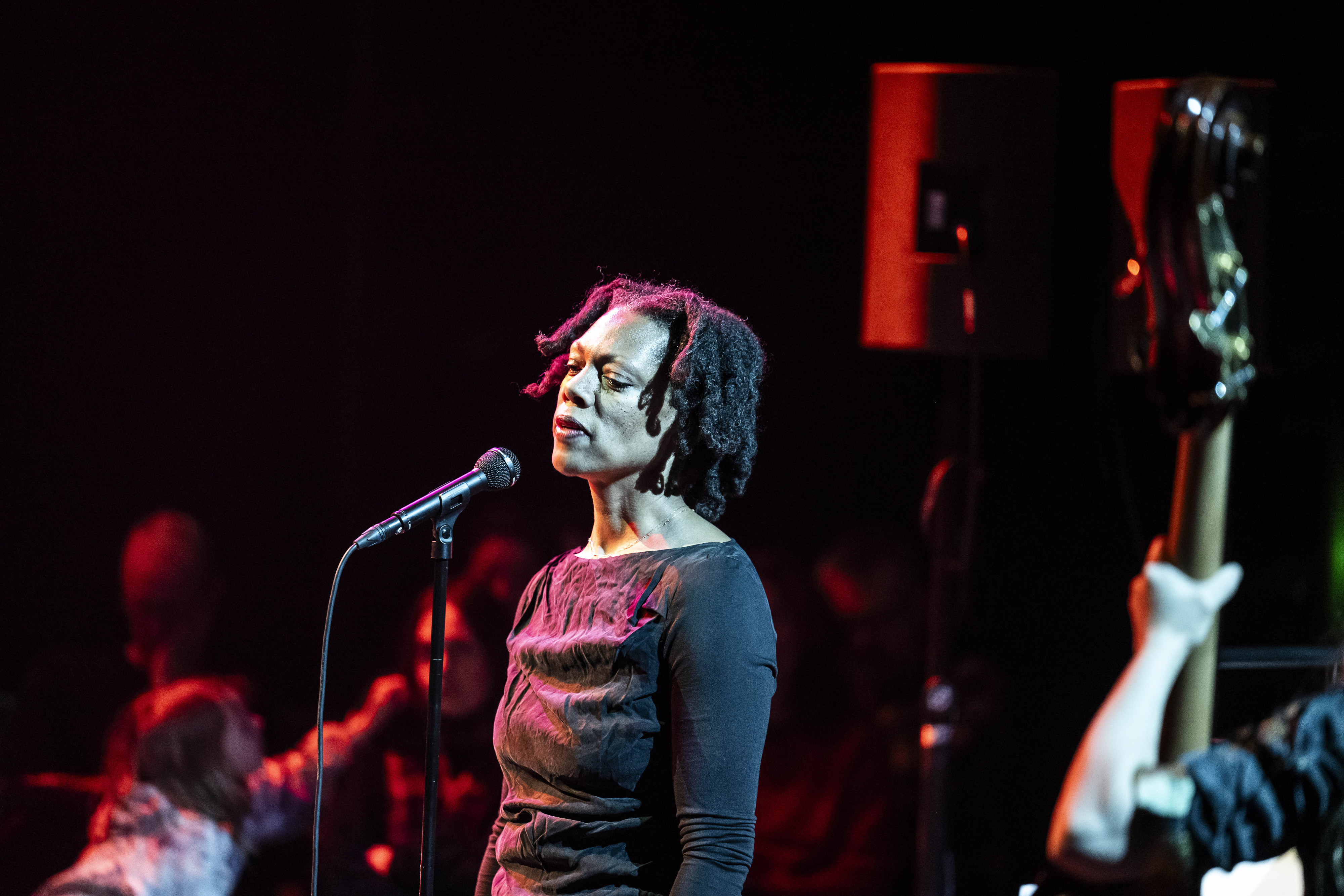
Multimedia artist Camille Norment drew on Bertolt Brecht’s famous lines: »In the dark times will there also be singing? Yes, there will also be singing about the dark times.« Musicians stood at the centre, surrounded by the audience, creating a dense, ritualistic space. Norment’s work with »cultural psychoacoustics« became physically tangible as sound grew in an organic flow: from mouth clicks to soulful vocals, sudden noise guitar, percussion, and Laura Madaliso Beer Kumwenda’s deft handling of the viola d’amore, played with trembling bow strokes.
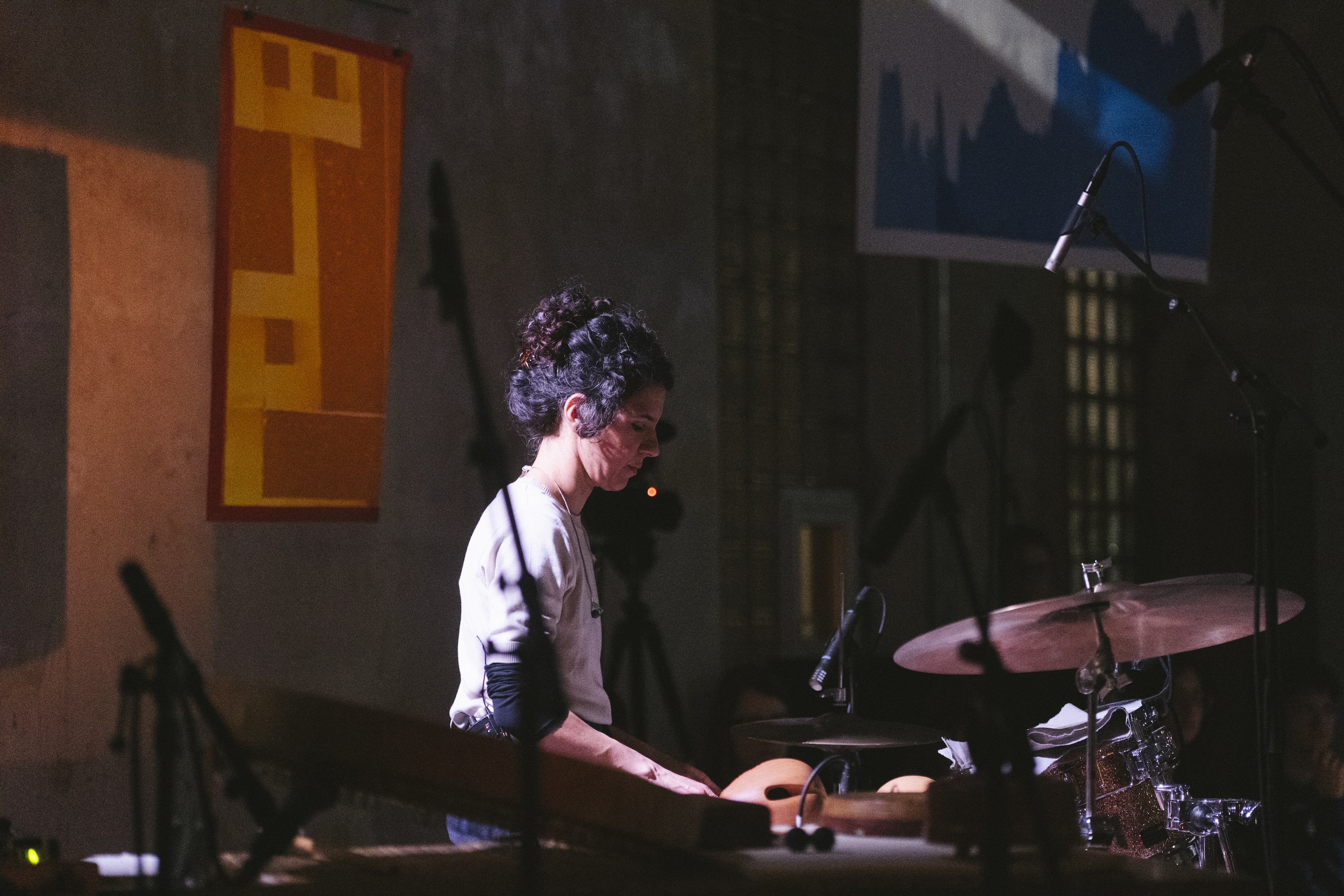
Similarly, Iranian-Danish drummer and sound artist Jaleh Negari transformed personal experience into a fragmented yet pulsating fabric of drums and electronics. Known from Selvhenter and Eget Værelse, Negari collaborated with Andreas Pallisgaard, Rosanna Lorenzen, and Zeki Jindyl, and together they allowed rhythms to collapse and form new connections at Bergen Kjøtt.
Elsewhere, things fell flat. In Troldsalen, Johan Sara Jr.’s The Eight Sámi Seasons promised a meditative journey through Sámi conceptions of time but remained one-dimensional. Eight times the musical ideas ran out of steam, the rhythms of nature never became a musical necessity despite expert playing from pianist Marina Matsuoka and Bergen Strings.
With BIT20 Ensemble, it was especially Øyvind Torvund and Hannah Kendall who stood out. Torvund, presented as something of a local hero, is clearly in demand. His Neon Forest Space bore a playful unpredictability: dissolving melodies, an almost romantic dialogue between clarinet and cello, followed by abrasive guitar sounds and synth textures pulling the work in skewed directions. One never quite knew where it was heading – for better or worse.
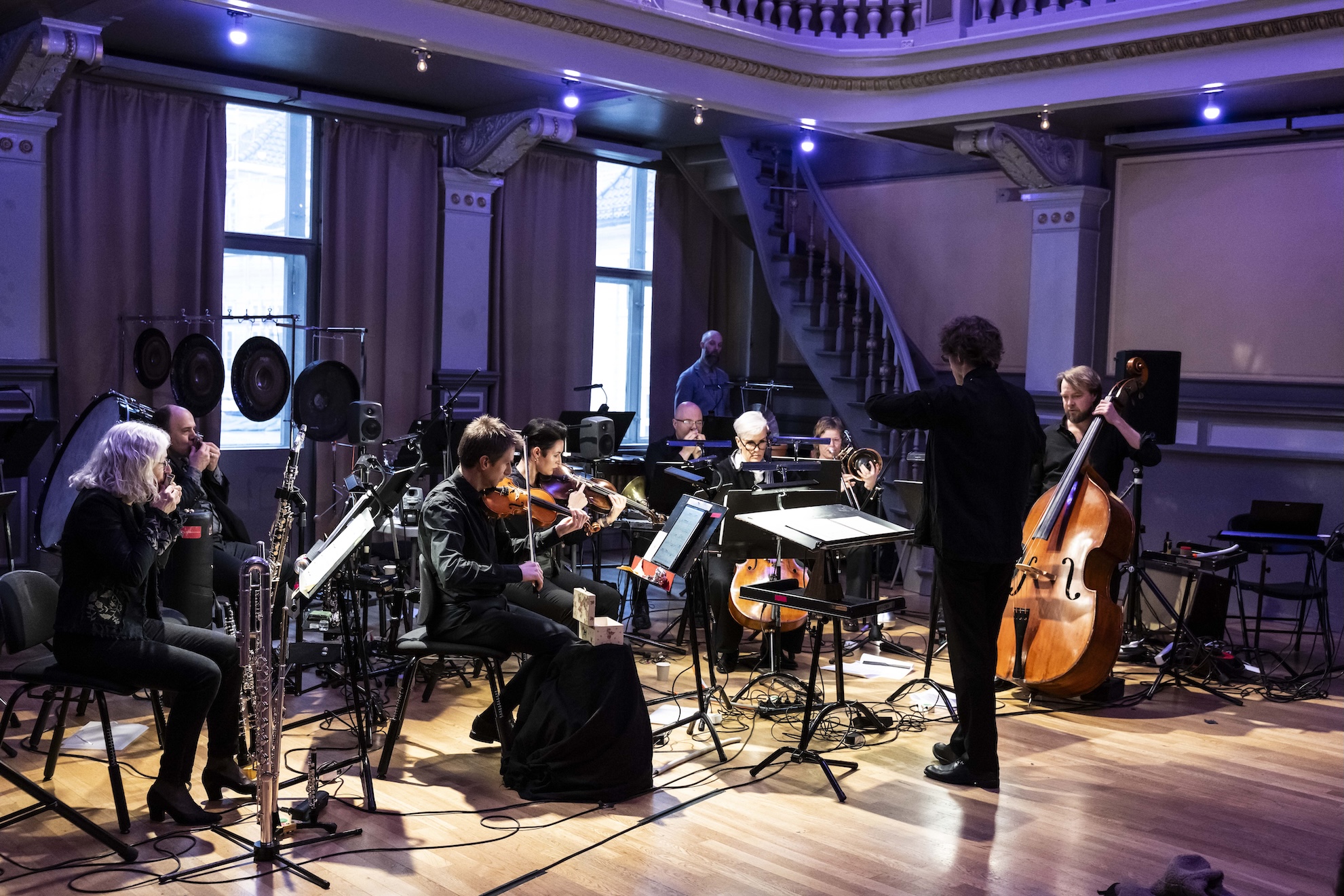
Kendall’s Even Sweetness Can Scratch the Throat resembled the busy soundscape of a train station. Voices filtered through megaphones and radio signals intersected in a dense, vibrating space.
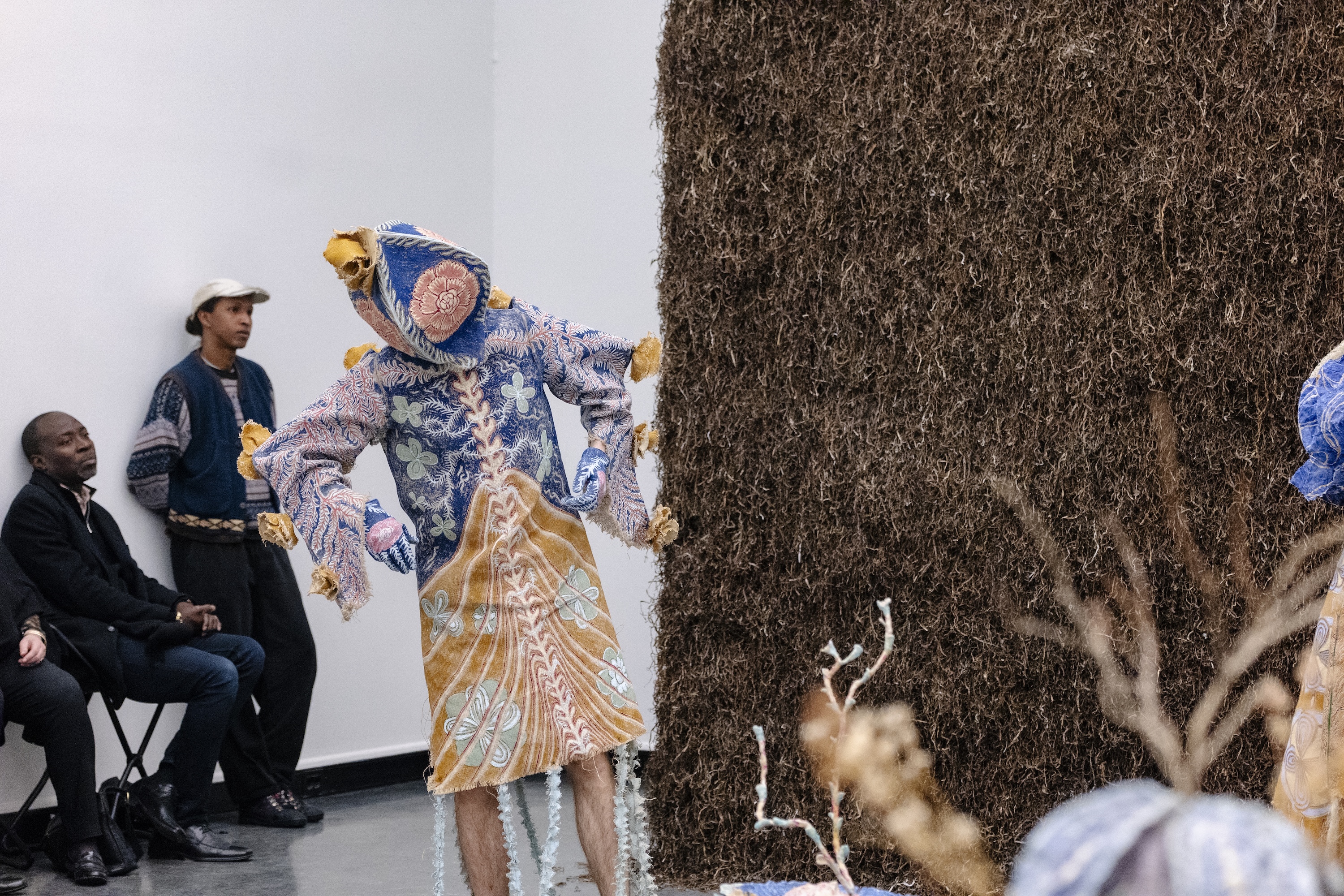
At Bergen Kunsthall, the exhibition Iter Subterraneum reinterpreted Ludvig Holberg as an ecological fable. Danish artist Cecilia Fiona’s Infinite Pollination unfolded as a meditative ritual – half mourning ceremony, half fertility rite. Performers moved among the sculptures holding small, enigmatic creatures, while voices hummed, trembled, and vibrated like a swarm of insects. Sensuous, yet enclosed within its own symbolism.
For me, Holberg’s vision of other worlds emerged more clearly in the silent, intense figures of the Danish outsider artist Ovartaci, also included in the exhibition.
Fragile bird-like tones – these small creatures with superpowers – forced their way into the dense sonic mass. Wow
It was at Østre, however, that Borealis’ almost insistent niceness was truly challenged. In Saturday’s double bill, the ever-intriguing Bergrún Snæbjörnsdóttir, together with John McCowen, presented Roföldur. Here, the multiphonics of the contrabass clarinet grew into organic formations in the twilight of sound, until fragile bird-like tones – these small creatures with superpowers – forced their way into the dense sonic mass. Wow.
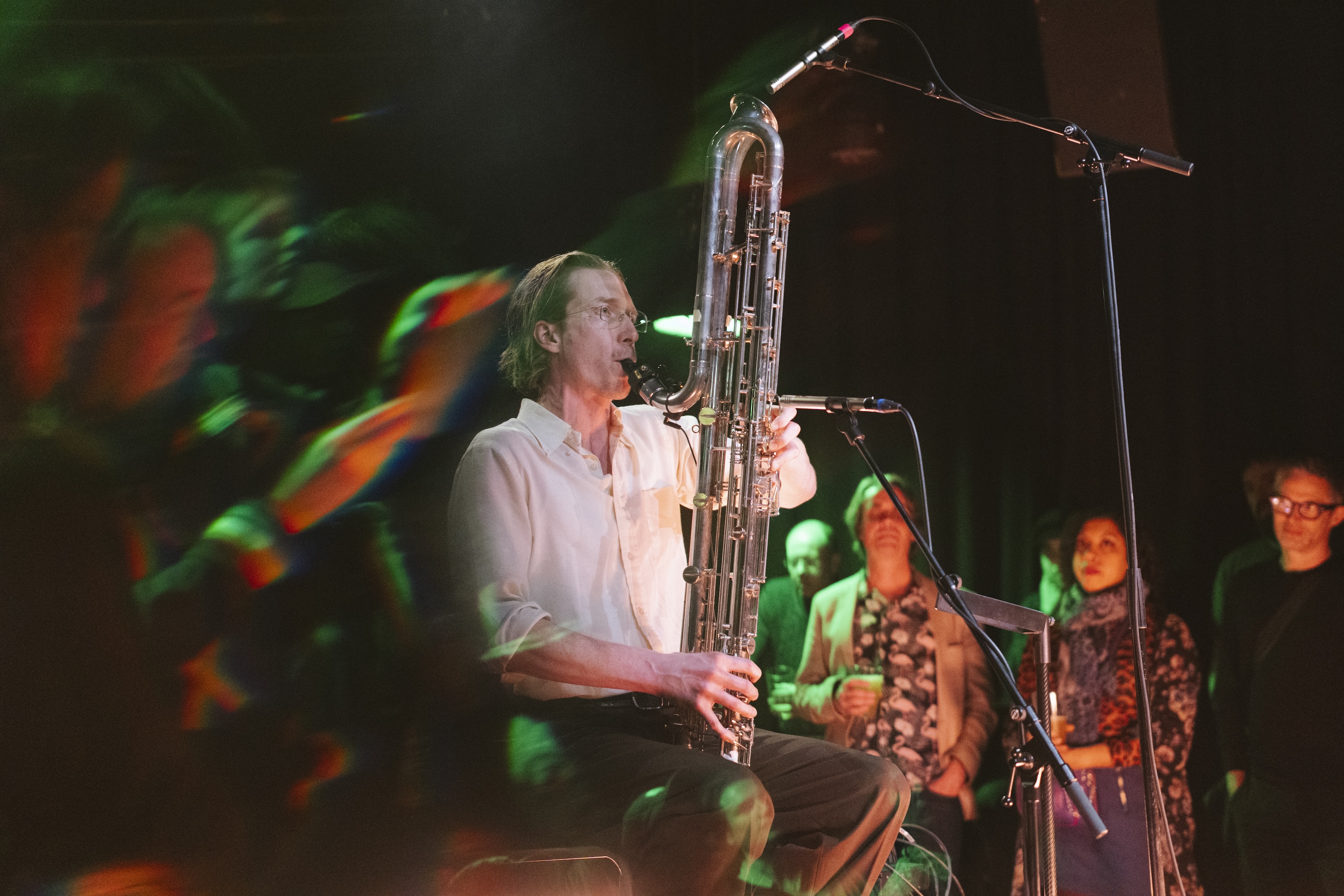
Afterwards, Hilde Marie Holsen and Mariam Gviniashvili allowed calm and unrest to coexist within the same field of tension. The trumpet’s warm, elongated tones drifted in and out of dense electric noise surfaces, where glitch and drone unfolded into a slowly pulsating, trance-inducing soundscape.
Community worked best outside institutional settings. High up in the mountains. In small groups, we climbed to the listening hut Jiennagoahti, took off our shoes, and sat on reindeer skins as a Sámi woman introduced Sara Marielle Gaup’s Nana Nannán – Solid Soil. Wind and rain pressed against the hut’s walls. We drank tea and listened.
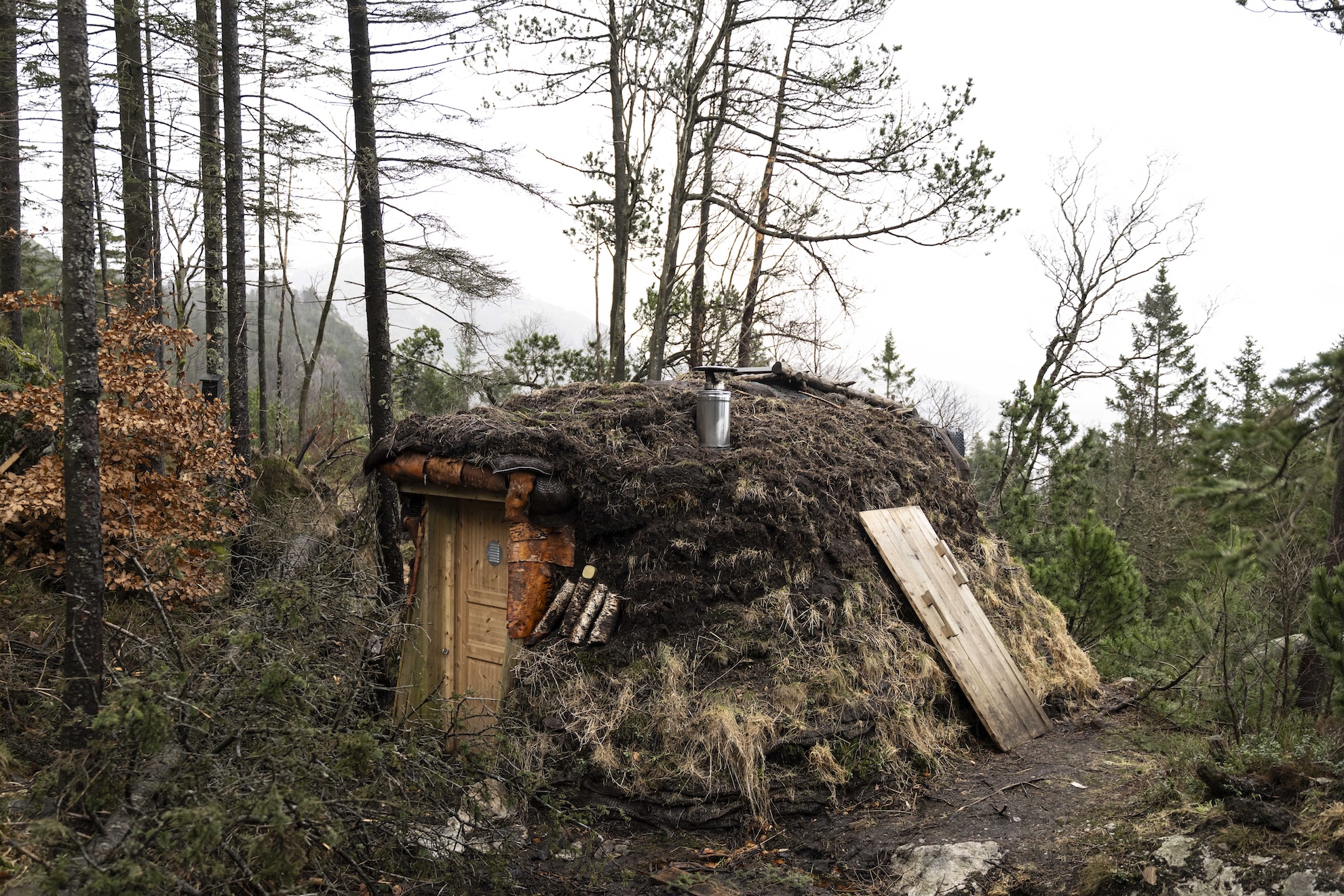
Up in the listening hut, it truly felt good
Sounds from the work and from nature merged, at times indistinguishable. The wind settled into a kind of basso continuo, the crackling fire became a raw, industrial beat, and birdsong intertwined with Gaup’s joik. Afterwards, we spoke quietly about what we had heard – and about Sámi languages, which contain an astonishing number of words for »bear« and »snow«. Some experiences only make sense in a shared space.
Warmth as a filter
At Nordnes Sjøbad, Benedicte Maurseth and Håkon Mørch Stene created one of the festival’s most memorable experiences. The audience floated in the historic pool from 1910, while the two musicians began what initially resembled a polite ambient concert.
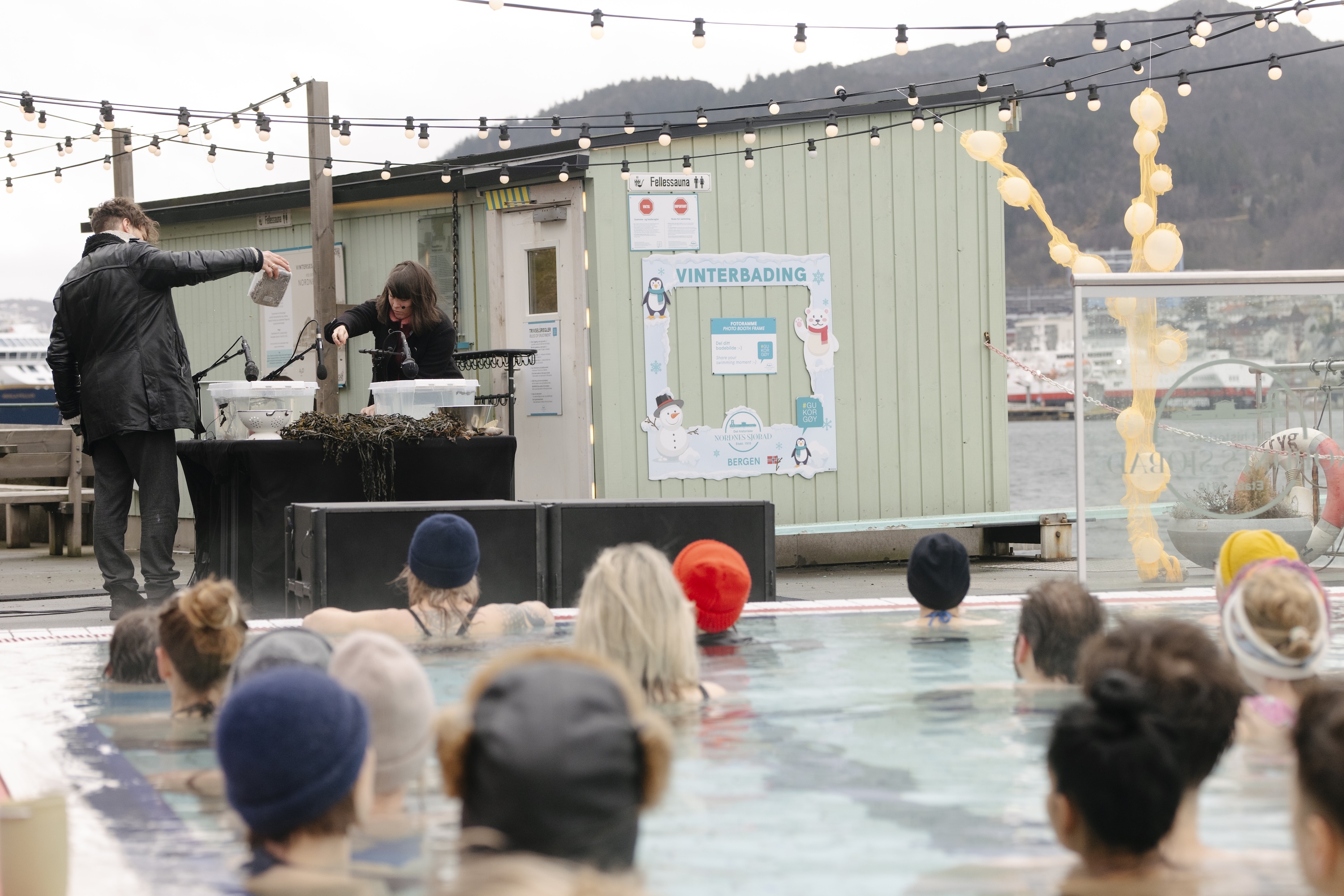
But Maurseth’s Hardanger fiddle gradually steered the drifting textures into more folk-inspired territory. Midway through, the musicians turned to plastic crates filled with treasures from the sea – shells of all sizes and seaweed – which they lifted from the water and dropped back in. Two microphones amplified the sounds, and perhaps because I was floating in the water myself, I received them as grand sensations. They surged forward like whale calls, deep-sea rumblings, and distant earthquakes – as if the ocean itself were speaking.
Borealis is a paradox. In a time marked by constant noise and fragmented attention, the festival insists on presence, the body, and community. Here, we are not just meant to listen – we are meant to listen together. Up in the listening hut, it truly felt good – perhaps because the sounds of the work and of nature merged, and the sense of community did not feel imposed, but simply natural.
Borealis could benefit from more friction
It was less convincing when good intentions and enveloping warmth became a filter through which everything had to pass. A sauna can be a magnificent concert space – but only when the music itself makes you sweat. Borealis – with the subtitle »a festival for experimental music« – could benefit from more friction. How the new artistic director, Tze Yeung Ho, will navigate that balance will be crucial to follow.
Borealis – a festival for experimental music, Bergen, Norway, 11–15 March 2026
English translation: Andreo Michaelo Mielczarek