





How Did You Get Here?
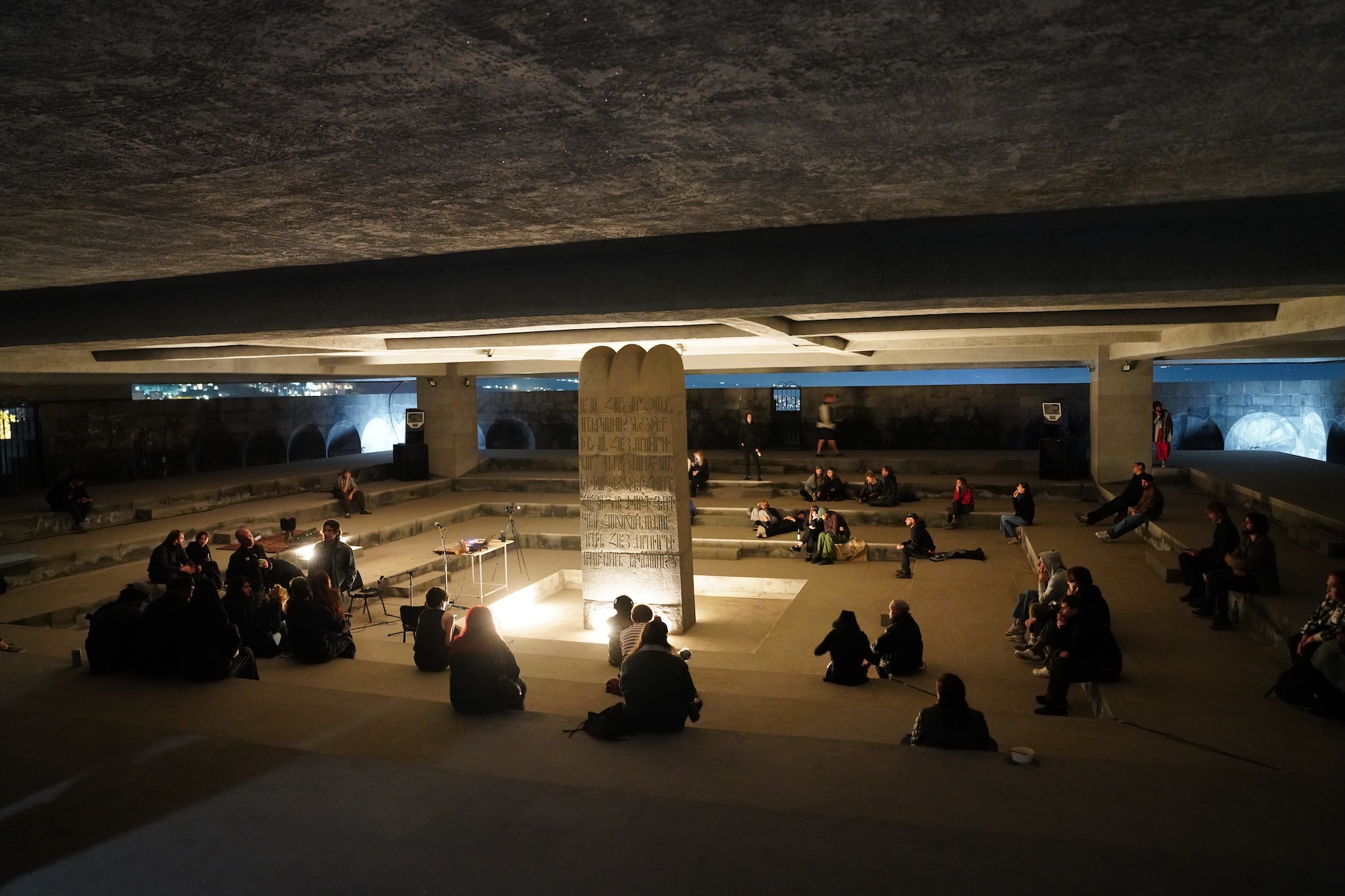
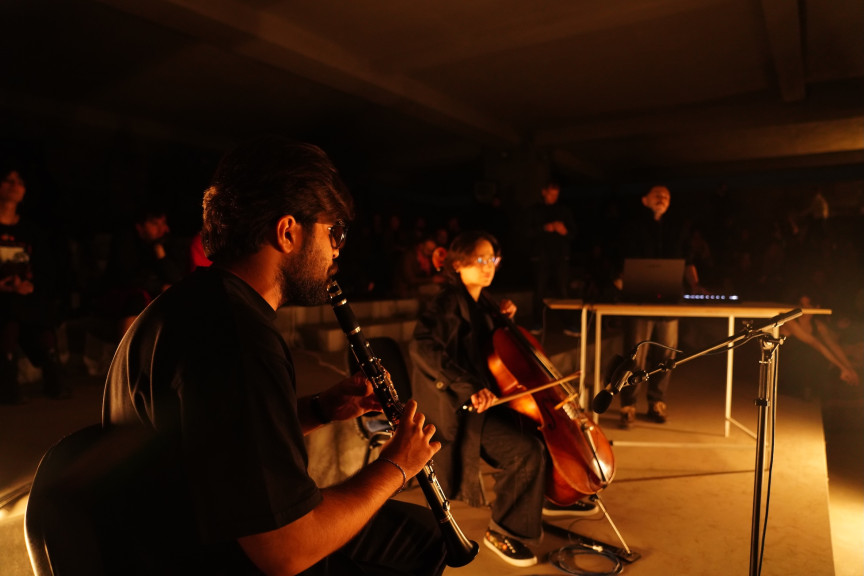
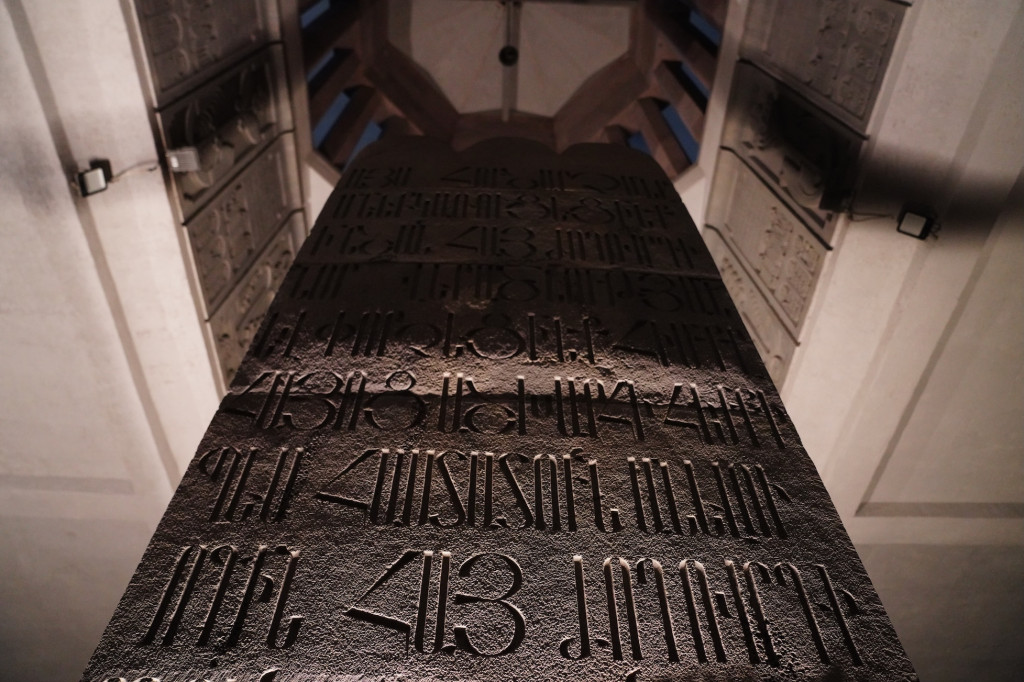
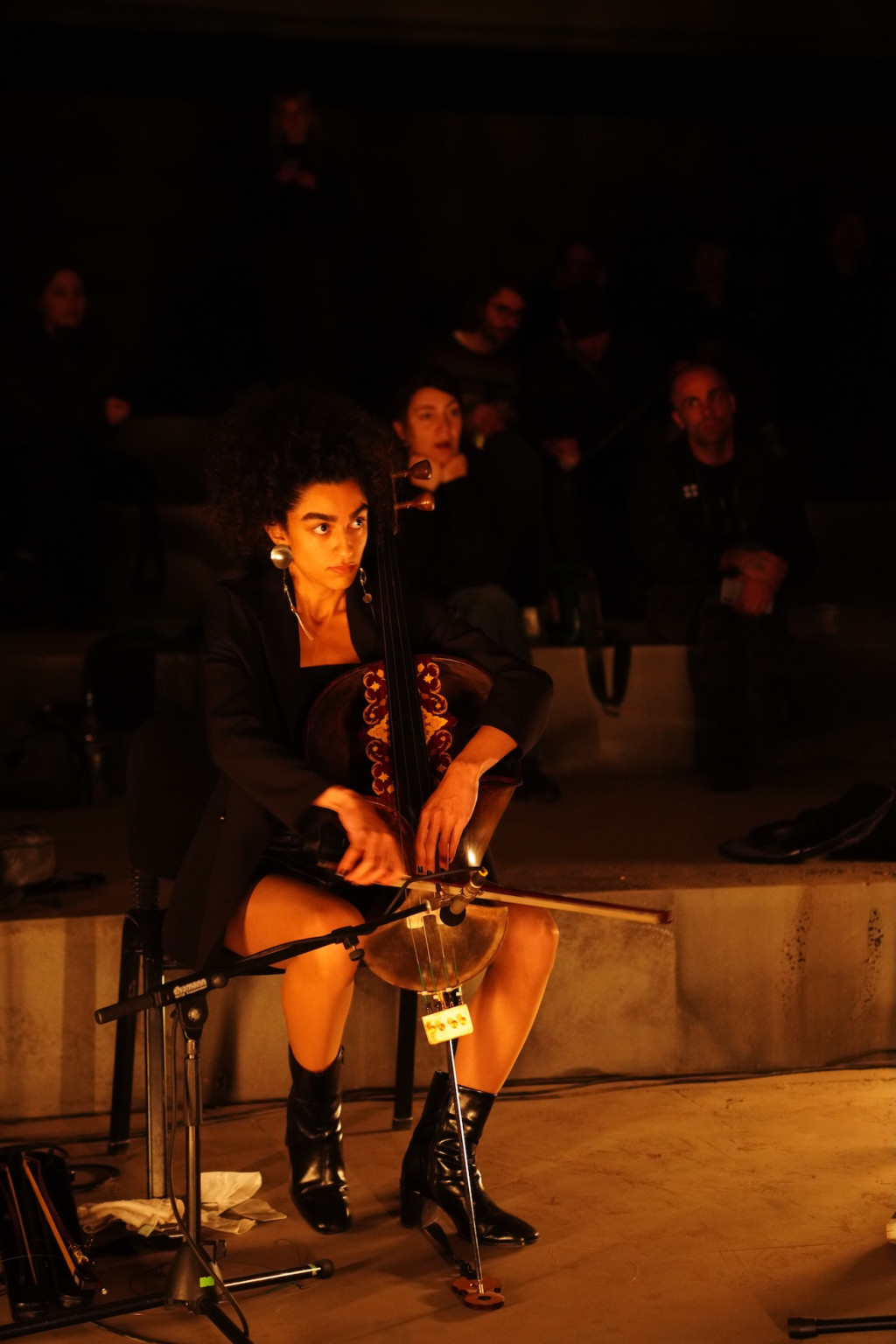
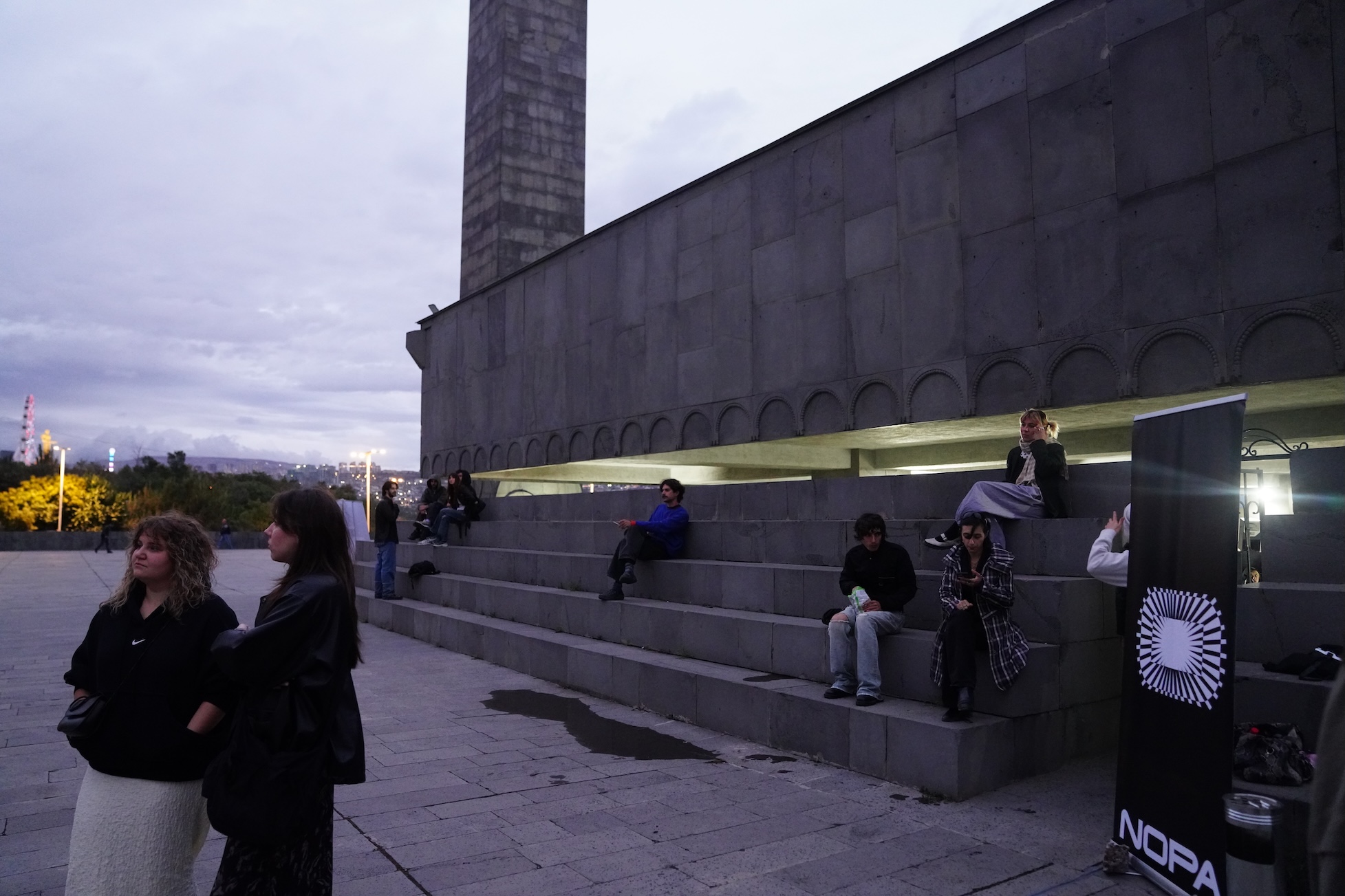
The overwhelming applause following FIE’s (Free Improvisation Ensemble) concert was undoubtedly the longest I heard at this year’s edition of NOPA Festival in Yerevan. The audience took a while to recover from the awe that the Iranian group had inspired through its forty-minute performance. The beautiful backdrop of the Cascade Memorial to the Victims of Soviet Repression atop Yerevan Cascade crowned the evening.
The performance meant the culmination of eight months of rehearsals under the supervision of composer and teacher Arshia Samsaminia. At the same time it also raised questions concerning the musical landscape in which it’s embedded and the institution from which it emanated. To put it into one reflection: What kinds of musical spaces can emerge in the gaps left by established institutions?
Knowing very little about the current Iranian contemporary music scene and virtually nothing about the School of Sonic Arts in Tehran (SSA), before coming across its name in the festival programme, prompted me to remedy this. Noticing the growing number of questions coming to my mind, far more than I could address in an informal conversation, I asked them whether they would be open to an in-depth interview. Due to a tight schedule and the prospect of a 26-hour bus journey back to Tehran, we settled on a video call after the festival.
The beautiful backdrop of the Cascade Memorial to the Victims of Soviet Repression atop Yerevan Cascade crowned the evening
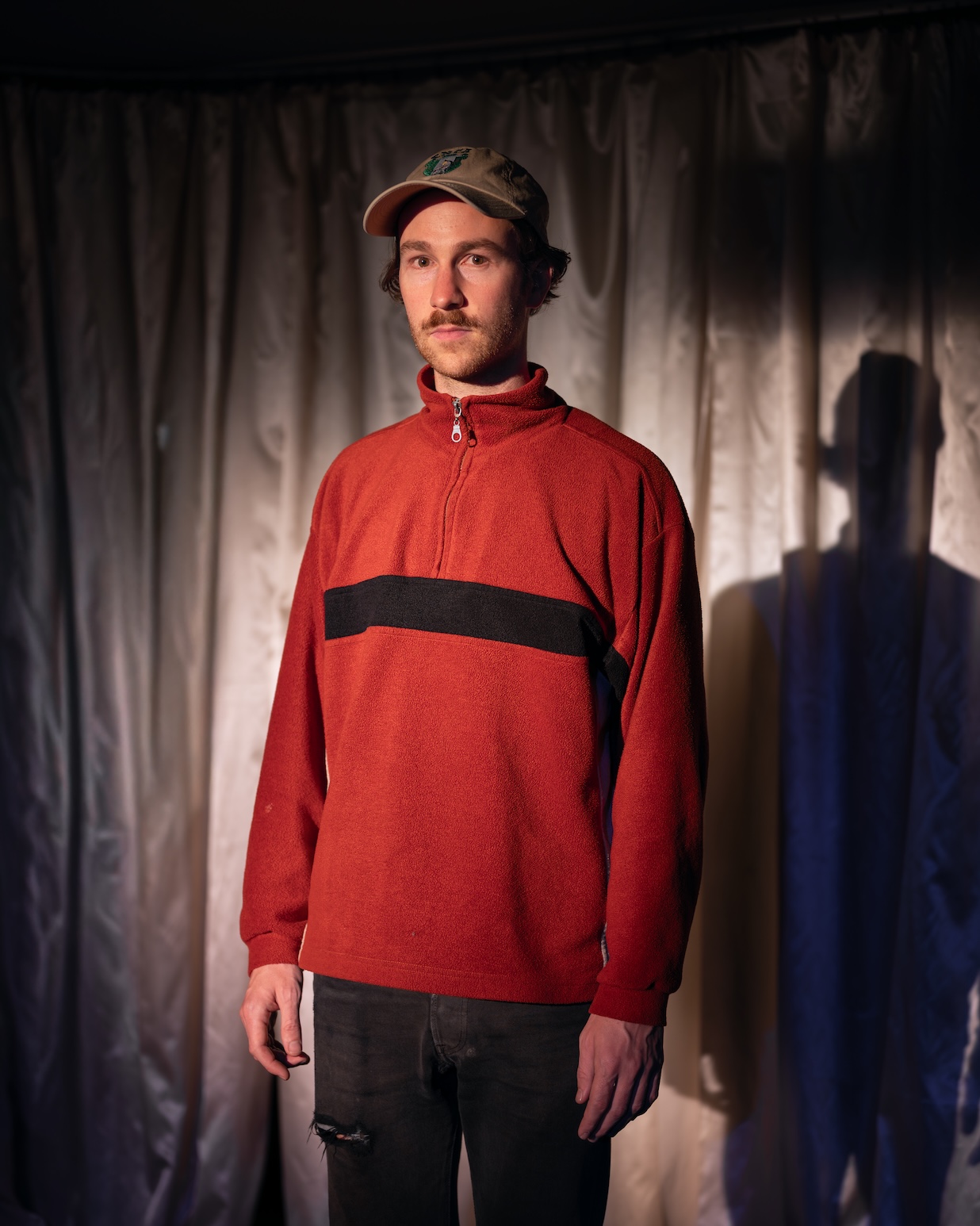
The SSA was founded three years ago by Shervin Saremi, Arshia Samsaminia & Shaahin Peymani. Shervin, who divides his time between Tehran and Berlin, graduated from the now-defunct Sound Studies programme at Universität der Künste and teaches sound design, algorithmic composition, and computer music. Arshia, a PhD candidate at Aristotle University, teaches composition, while Shaahin, also a Sound Studies alumnus, oversees sound studies and other theoretical subjects.
Learning how to learn
Shervin: »I think something like an academic sound art program is not a very trendy thing anywhere in the world right now. Iran is no exception. We had this idea, having studied abroad, of wanting to bring this to our country. There are already people practicing sound art here, though. We're not saying we are in any way the pioneers of this medium in Iran.«
The school is currently welcoming its third cohort. So far, around twenty students have enrolled each year in the three-semester programme. As the SSA continues to develop, their plan is to introduce other majors and to incorporate more theoretical components to the sound art programme, e.g. a broader scope of composition or improvisation theory, while at the same time maintaining their foundational approach.
»We don’t want help because we are from Tehran or something along the lines of being perceived as exotic«
Shervin: »The premise of the school was to create something that would provide, as best as we can, the best foundation for anyone to use what they have learned and go on to further their own studies. Because in today’s world, studying can very much be done independently, with YouTube, books, etc., being available. So we curate the school in a way that people can learn how to learn.«
Despite its young age, the SSA has already established connections with institutions such as IRCAM and Aristotle University of Thessaloniki, which have offered its students generous discounts on music software and access to a full semester of online workshops via IRCAM Forum. For Arshia the wording used to describe these relationships is key, as they might otherwise be perceived differently from the outside.
Arshia: »We never ask for help but for collaborations. We will also provide workshops, for example, on electronic music or microtonal composition for students of the university in Thessaloniki or their works will be premiered at concerts we organise in Tehran and vice versa. So actually, when we approach different institutions such as IRCAM, we always suggest the idea of exchanging knowledge and resources. We don’t want help because we are from Tehran or something along the lines of being perceived as exotic. That's why I always have a problem with the term ‘help’.«
»We are not the first ensemble of our kind, I cannot claim that, but we are definitely doing something important«
Experimental music, contemporary music, and sound art have a history in Iran dating back at least to the 1960s. Consider, for instance, pioneering figures such as Alireza Mashayekhi and Dariush Dolatshahi. This remains true today, with the scene being particularly active in Tehran and, to a lesser extent, in cities such as Isfahan and Shiraz.
Arshia: »It's not just us who are active. There are other festivals, such as the Tehran Electronic Music Festival and the Tehran Contemporary Music Festival, which ran until 2019. The contemporary music scene is particularly active at the moment. Of course, we don't have a symphony orchestra that premieres pieces by new or young composers. However, some independent ensembles do perform contemporary music. There are also many venues in Tehran that organise festivals and concerts focusing on electronic and contemporary music. Regarding the improvisational side of things, I don't know of any other ensembles similar to FIE. But I do hope others will follow. We are not the first ensemble of our kind, I cannot claim that, but we are definitely doing something important.«
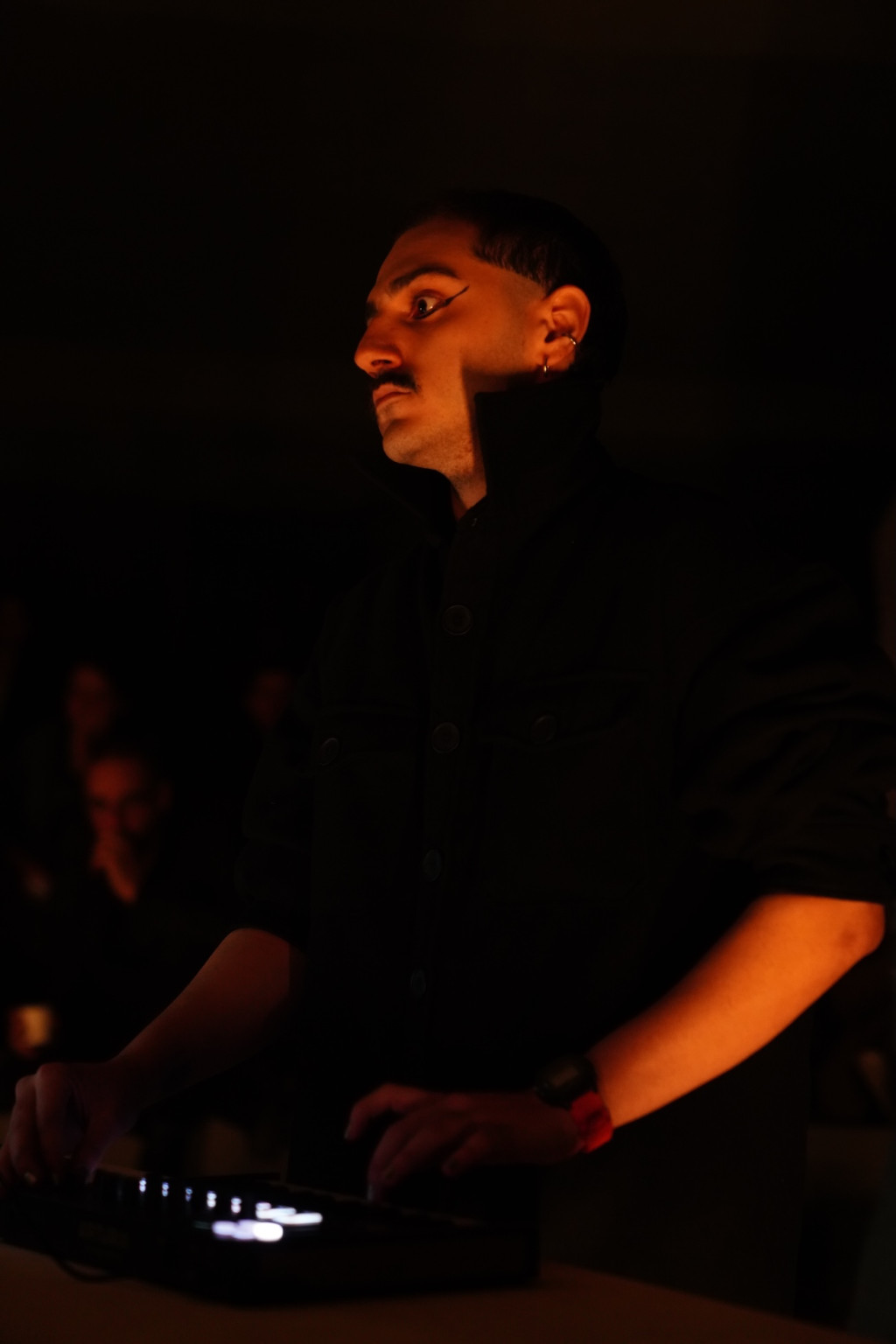
Three sessions were sufficient to make him feel the need to formalise it into an ensemble
An ensemble built on friendship
FIE was founded as a group through which students could develop their improvisational skills and gain musical experience by playing together. The performance in Yerevan marked their first public appearance. Having sensed the aforementioned lack of ensembles of this kind, Arshia organised a workshop on improvised music. Three sessions were sufficient to make him feel the need to formalise it into an ensemble.
Arshia: »It's a rotating ensemble, with the members changing as new students graduate. For the next concerts, we’ll have different setups. Maybe a laptop orchestra, or only acoustic or electronic instruments? The workshop was very collaborative, even between me and the students. We started to share ideas, they would be like: 'Arshia, we should try this'. What you heard at NOPA was the result of eight months of continuous rehearsals. I'm very happy with the outcome.«
So was alumna Nazanin Karami, who was one of the five students selected to perform at NOPA. She was part of the first generation of SSA. For her, the emphasis on friendship and the kinship formed there is integral to the way they work together.
»We brought our friendship into the ensemble, which made it very intimate«
Nazanin: »This is the first time a group project has worked out well for me. We were lucky that the first round of members got along so well with each other. We brought our friendship into the ensemble, which made it very intimate. That’s why I never really thought about what performing in front of an audience would be like. NOPA was really interesting in that regard, because until then, it had always been this intimate process of breaking down walls and trying out new techniques together every week.«
Shervin: »That part of knowing someone will add to improvising, because it's not just about hearing the harmony and taking it in and doing your own thing. The ensemble creates something very abstract, a sonic creation based on form and texture. So when you have an understanding of the other person, it adds this extra layer. It’s not a typical improvisation group where musicians hear the chord progressions and simply play along. So I think that understanding each other, both musically and in terms of personality, adds something.«
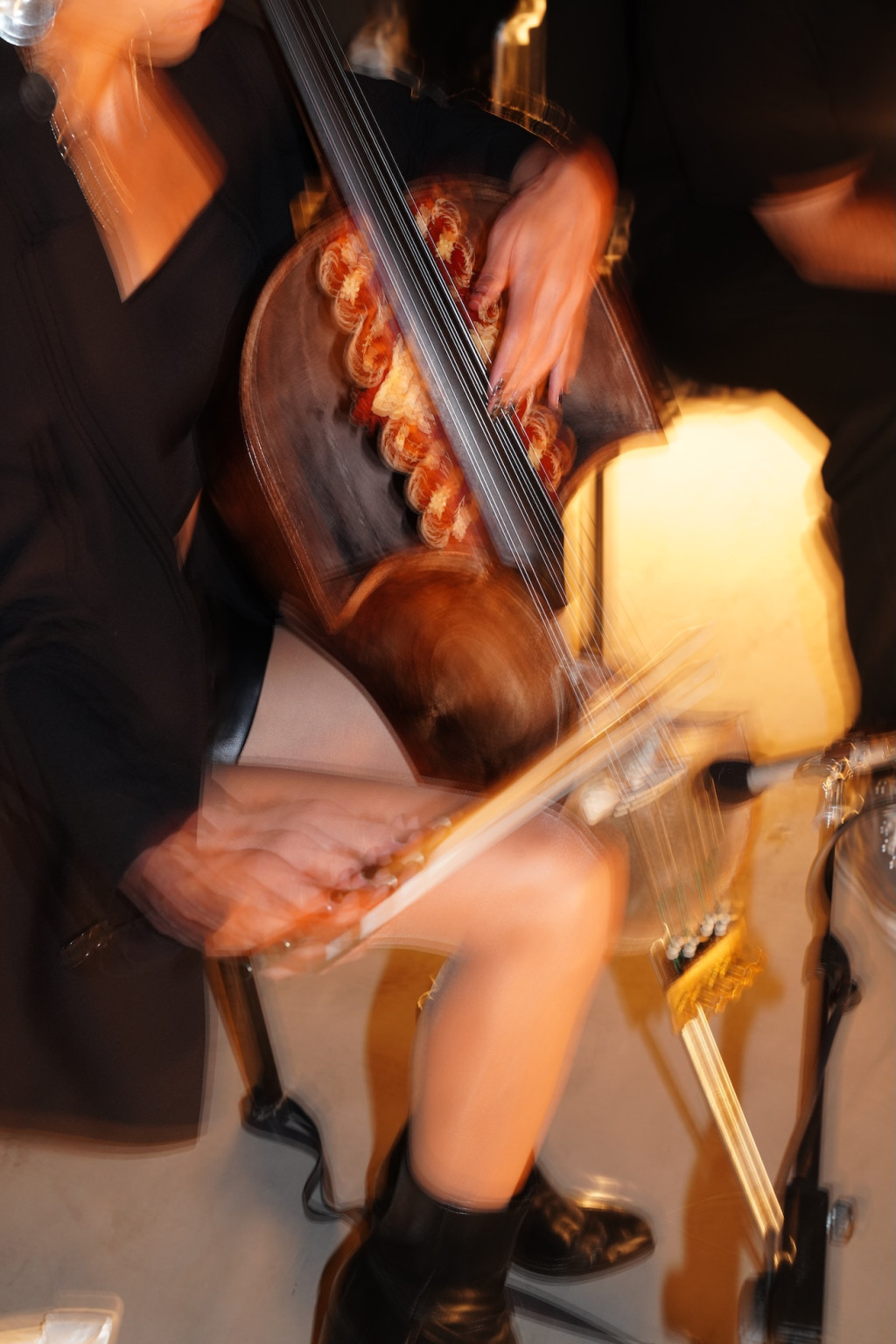
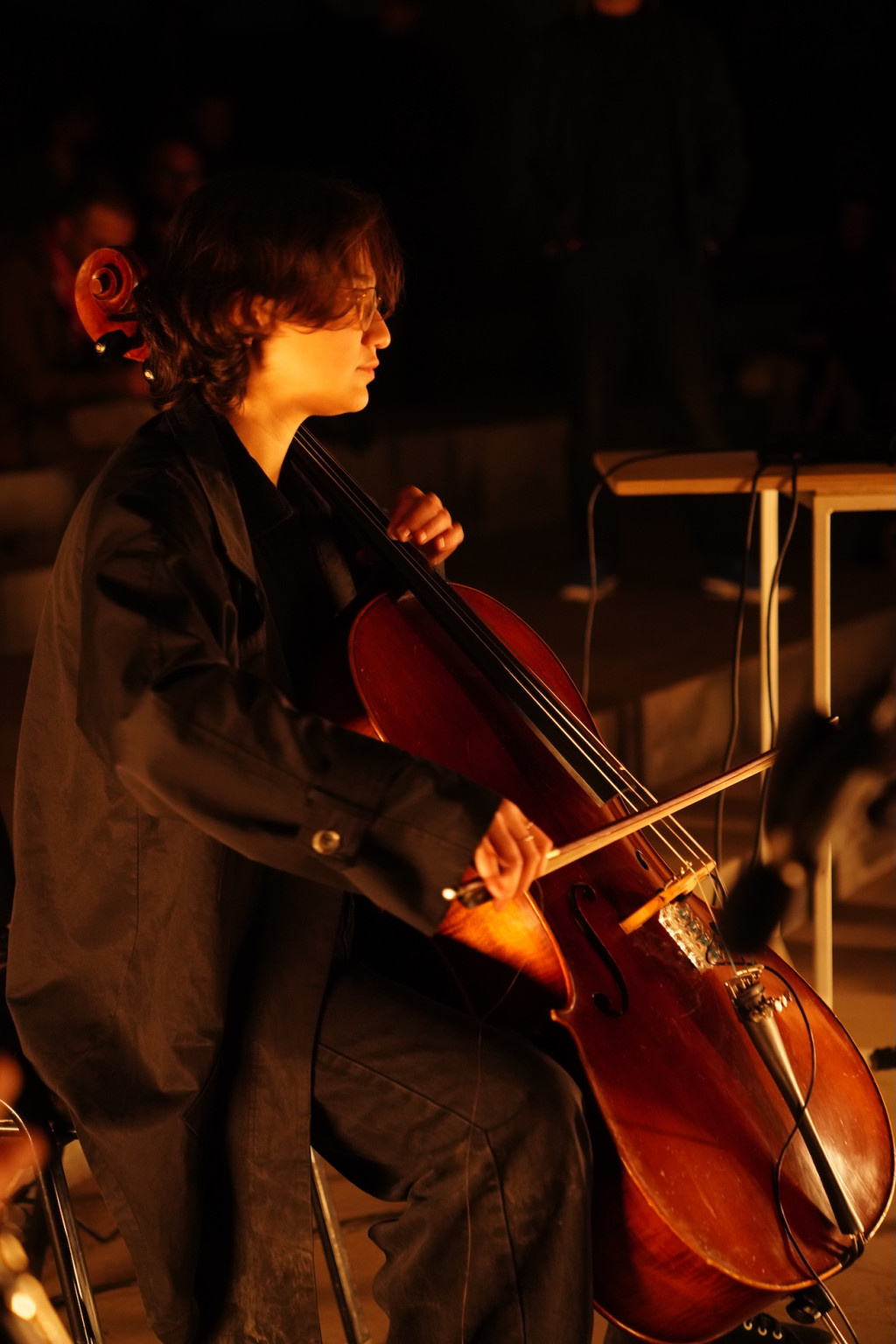
This clearly translated into the musical dimension. Their performance stood out at NOPA and easily became one of its highlights. The musicians’ constant visual and gestural communication translated into a tightly coordinated performance, allowing for collective crescendos and decrescendos, immediate attaccas, and moments of sudden silence after loud tutti sections. The perception of a composed work was palpable, as formal sections could be clearly discerned and a collective consensus on musical textures and material used at any moment was apparent.
Nazanin: »The most common feedback was: ‘That was improvised? We thought it was all composed.’«
Arshia: »I’ll take that as a compliment. They did a really good job. Many people in the audience thought the ensemble was going to perform my works because they know me as a composer. I explained to them that, no, it was entirely free improvisation. They played what they wanted, and that’s the essence of free improvisation.«
Why should a German composer only reference Beethoven?
Beyond the exotic
In aesthetic terms, they place no particular emphasis on their position as musicians and composers who grew up and live in Iran. Or, to formulate an analogous question: Why should a German composer only reference Beethoven?
Arshia: »It is important for me to use Persian musical material, but not in an exotic way, to show, for example, that I am Persian and that my music sounds like that. So whenever I receive a commission, I make it clear that they shouldn’t expect me to compose something Persian. Let's say that is my red flag. I don’t promote myself as a Persian composer. I avoid it. I use material in a spectral way or by thinking vertically, by asking, for example, how two different maqams can interact with each other. The idea is to systematise the Persian microtonal system so that you can use it in your own way of writing contemporary music.«
»I think the world has collectively decided that we should move on from the seventeenth century«
Shervin: »I think the world has collectively decided that we should move on from the seventeenth century, whether we’re German or Persian or from anywhere else. We are currently arriving at a kind of plaza, a musical plaza, where we're all gathering. We're talking to each other and asking ‘How did you get here? Oh, you too? Oh, me too.’ It's a conversation about the journeys we’ve pursued by leaving elsewhere. I think it's an interesting conversation that at least the four of us are having now, because maybe this is the beginning of our arrival to that musical plaza, and we're all kind of starting that conversation: How did you get here? And what's your story?«
NOPA. Festival for sonic arts, September 26 – October 4