
playlist20.09.2024
My name is Kristine Tjøgersen – would you like to see my playlist?
Experience with music involves contact between humans and something beyond it. With contact I believe that people are affected in a way that changes them




Use " " to search for an exact phrase. Use AND, OR, and NOT (in caps) to refine your search.
Experience with music involves contact between humans and something beyond it. With contact I believe that people are affected in a way that changes them
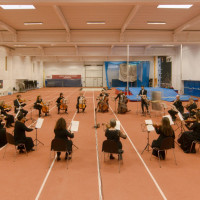
I was left with a somewhat flat feeling. The piece also ended so quietly that several people were unsure whether it had actually finished and whether we could applaud.
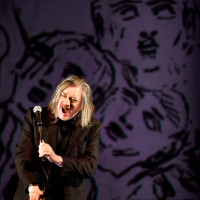
»And that is how it sounded. Cold. Like the saddest Instagram filter imaginable – with sound.«
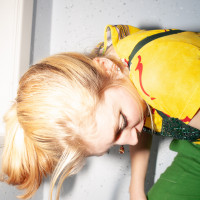
Music for me is bumping, rubbing, colliding, sliding and sculpting... in space-time. AKA the gift that keeps giving.«
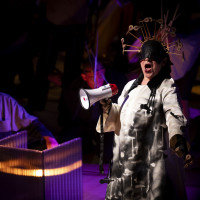
»It was as much the enchantment of Rumi’s poetry as the myth of the poet himself that drove the work.«
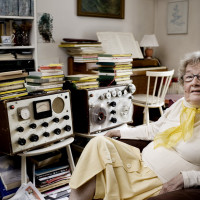
A good twenty years after the first rediscovery of Else Marie Pade as an electronic pioneer, she is now being branded as a visionary acoustic composer. It seems we never get tired of rewriting the story of this special artist – and writing ourselves into it.
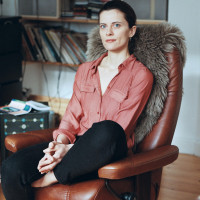
Music has always provided me with a clear pathway on which to navigate a meaningful life.
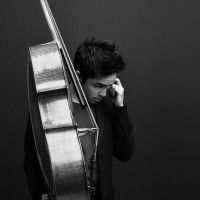
»Music is limitless, and its potential for meaning is infinite.«
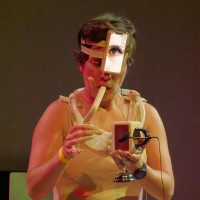
Powerful Rhythms and Empowered Voices dominated at the opening night of Heroines of Sound Festival in Berlin.
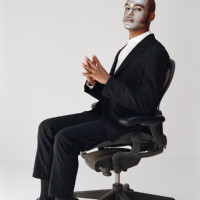
Sensitive jazz guys? Nope – suddenly Marsalis hurled himself into the seated audience with a somersault – and a scream.
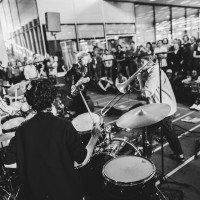
For about an hour we breathed together. And it is profoundly good to do something together at a festival.
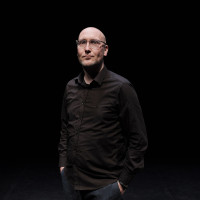
Music involves a mix of noise, of existing or fabricated instruments, of alternative worlds that the sounds and voices assemble.
What a strange release, nostalgically so in its way. And how creative.
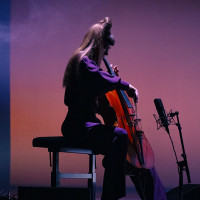
It is saturated, direct, and seemingly made for a grippingly intense choreography. A powerful partnership on the grand stage.
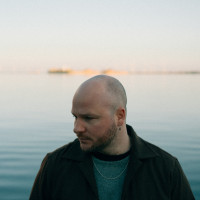
»Music is a full bodied, raw and physical exchange. It’s an absorption that is overwhelming, that sometimes grants you relief.«
With »Music for Lovers«, the Swiss drummer and electronic musician Samuel Rohrer gets many things right. But the songwriting, unfortunately, falls short.
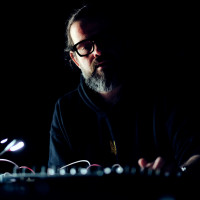
There was no affected distance or feigned coolness – only pure, unadulterated musical beauty.

For me music is an irregular yet life-long event that requires constant attention in the form of private preparation, rehearsals with others, and performances to audiences.
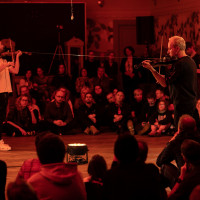
Heaven, hell, love and country – life’s biggest mysteries were studied at the Polish festival Sacrum Profanum. And it ended well for two Danes.

Emotionally potent, and filled with pleasing, warm synth tones that recall 1970s German Kosmische Musik.
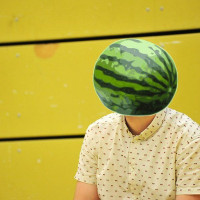
Music to me is a hyperdimensional portal.
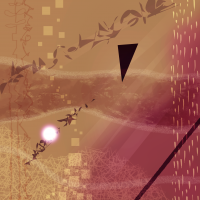
It is through knowledge of the art-form and skilful weaving of networks of symbols, that creatives can dictate the terms of storytelling and thus exert their power over the audience.

In the musical theater performance »Calls to this number are being diverted« Matthew Grouse puts the absurd working life of late modernity under the microscope.

In the musical theater performance »Calls to this number are being diverted« Matthew Grouse puts the absurd working life of late modernity under the microscope.
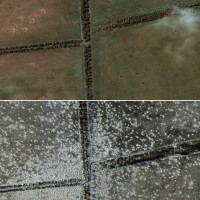
The essay probes poetics and the politics of a life-affirming operation in which Ukrainians have been self-engaged to resist subjugation and assimilation under Russian colonialism.