
playlist01.01.2024
My name is Bill Frisell – would you like to see my playlist?
I like when it's impossible to tell at first if something is black or white, or country or blues, or whatever




Use " " to search for an exact phrase. Use AND, OR, and NOT (in caps) to refine your search.
I like when it's impossible to tell at first if something is black or white, or country or blues, or whatever
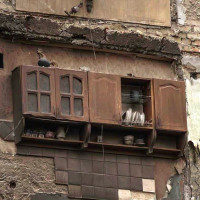
This audio paper narrates through the experiences and ambiences of Russian aggression to which Ukrainians relate a long history of Russia’s imperial statehood.
Democratic conversation and collectively improvised music have such pronounced similarities that improvisations can be discussed in terms of their democratic potentiality.
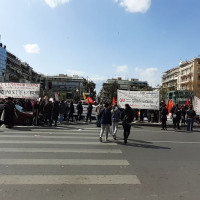
The sound of the slogans at the demonstrations touches the body, it is impossible to hide from. The vulnerability revealed through this touch creates immediate affective responses pointing at the limitations of sonic support and solidarization.
This article researches the role of the Human body in the production of sound art in the exhibition space. It focuses on the spatial path between body and sound in the exhibition space of sound art.
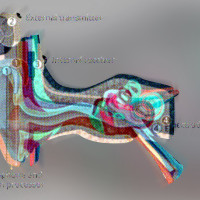
Operating rooms are typically noise filled environments, where polyrhythms and polyphonics of human and non-human sounds collide. In this paper the operating room soundscape is used for relational ethnographic exploration, framed in critical affect theory, and brings together insights from medical sociology and sound studies.
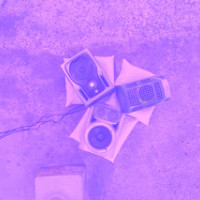
In the audio-paper »Fear of Weakness: Songs to Agitate the Man«, artist Morten Poulsen builds on his project »Boys Will Be…« (2022), in which he met with young cis-men to have conversations about vulnerability, intimacy and masculine norms
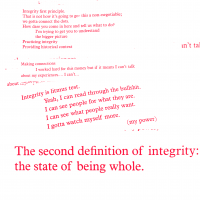
Following Ruiz and Vourloumis, this audio paper performance sounds a formless formation, exploring integrity and wholeness among Black and Indigenous collectives that organize via radical forms of togetherness outside state-sponsored institution
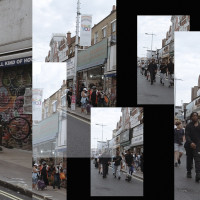
This audio paper explores the »acoustic territory« (Labelle, 2010) of Peckham Rye Lane through my sonic journey as a Peckham resident, practitioner, and researcher.
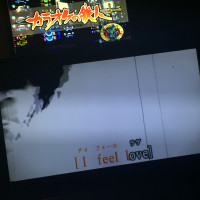
I went on an artist residency in Tokyo in 2018/19 for three months and ended up spending most of my time in karaoke boxes. I don’t remember what my actual project was but in the birthplace of karaoke, amateur singing of pop songs was all I could think of.
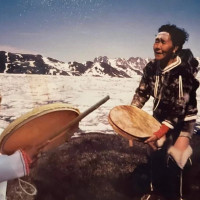
For over 4000 years, the Inuit in Kalaallit Nunaat, as Greenland is called in Greenlandic, have been living in an intimate relationship with nature in the Arctic. Their knowledge of how to survive under such harsh conditions has been preserved and passed on via sound through the millennia.
The article analyses the genre of listening scores – texts written in a natural language that provide the readers with instructions to listen in a certain way or to a certain kind of sounds.

This audio paper explores the phenomenon of voice-based technology in the smart-home. Through ethnographic interviews we study how older people use voice-based technologies and with what effects for their experiences of the affective environment in their homes.

How do we talk about musical colonisation? How do we talk about this work of talking about it; that is, interrogating what we mean by colonisation and its counter-logic of decolonisation or decoloniality?

Slowly the idea of universality is dissolving, experimental music exists everywhere and in every genre – Abbasi, Eizirik and Sanchéz-Chiong in conversation.

Salomé Voegelin’s book about our uncurating sound is her most personal and also most difficult to read – however, succeeding with her project, despite almost all odds.

Music has been a healing balm for me.

In this audio paper, we are focusing on a guided lamenting circle, and explore on the meanings that the participants in the circle give to the lament.

This audio performance paper queries if the application of sound and music has the potential to evoke and relieve the pain of intergenerational grief.

In this audio essay we interrogate the autoethnographic in soundscapes by engaging with the narratological nature of field recordings in their ability to convey not only affect but also memory, history, and context.

This audio paper analyses the emotions of contemporary laments in the context of music and performing arts in Finland, and presents the course of events behind the current practices with audio examples.

In his music, composer Allan Gravgaard Madsen tries to create a better version of himself

The 2nd Helsinki Biennial launches on 11th of June. Aarhus University's Critical Environmental Data research group was tasked to write an Environmental Audiotour that narrates the city as energy, as sensing, as multiple histories and imagined futures. We feature the 2nd episode of the tour that features the ruins of an old weather station on the island of Vallisaari, a key curatorial site of the Biennial too.

Statement from Kaija Saariaho's family.

The mixtape has always been a format with which to swagger and seduce, meant to project both front and vulnerability. How, though, might we interpret a sampler from another star system; what might its effect on us be? A journey with Ziggy Stardust, Yuri Gagarin, afrofuturists and intellectuals from Mars.