The Darkness Speaks in Tones
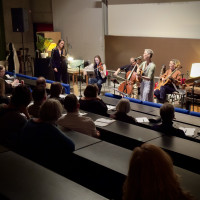
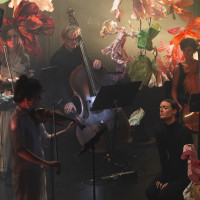
In Reykjavík, snow falls sideways, and sorrowful reindeer sing. Dark Music Days unfolds the winter darkness in experimental tones where silence and noise meet – and even a harp made of yarn tells stories.
Use " " to search for an exact phrase. Use AND, OR, and NOT (in caps) to refine your search.
In Reykjavík, snow falls sideways, and sorrowful reindeer sing. Dark Music Days unfolds the winter darkness in experimental tones where silence and noise meet – and even a harp made of yarn tells stories.
The 30th edition of Spot Festival became a sonic laboratory and cultural mirror, where experimentation, genre-defying music, and raw emotional intensity were given free rein.
After a brutal depression, Warren Ellis returns with renewed strength – and deep gratitude. The 60-year-old Australian multi-instrumentalist opens up about pain, love, animals, creativity, and Nina Simone’s sacred chewing gum.
Every moment is nothing but the uttermost end of the past. Music makes this edge wide and beautiful.
At the Jazzkaar Festival in Tallinn, improvisation and reflection meet in a landscape shaped by historical fault lines, westward gazes, and hopes for the future.
Peter Ablinger has died. Yet his work continues to open our senses to the impossible: to hear hearing itself.
Music is not just sounds, but a vain attempt to capture the infinite, which has always been and always will be.
»Music is hope, confusion, and memory talking with each other, leading us toward futures we haven't yet imagined.«
Music like sex are means of communication, people come into contact and negotiate with each other and their instruments/tools and meet themselves in it.
Music to me is… my work. I've landed in the best job in the world, where a core task is to discover new music, to learn its internal logic and aesthetics, who created it, and why.
Music is the fanciest way of communication.
»I love being part of the ritual that heals our forgotten connection to nature, which is the very foundation of our lives.«
»When the gloom returned with renewed force, it was Kjærgaard who, with a roaring guitar, sprawled across the emotional abyss. It was beautiful and brutal.«
As a listener, there is nothing to do but surrender to Amalie Dahl and the group’s convincing display of strength.
Damon Albarn’s Mozart spin-off »The Magic Flute II« is replete with synths and spectacle, but does it truly capture opera’s essence – or merely its aesthetics?
Jenny Wilson’s first opera – an adaptation of Elfriede Jelinek’s »Women as Lovers« – delivers sharp theatricality and biting satire but struggles to find its musical voice.
»Enchanting. One left KoncertKirken a little taller, happier, and more playful.«
»Cohesive, yet lacking challenges for the listener – such is the impression left by Josefine Opsahl’s new work.«
Three albums with music for string quartet – and the likes – by Jürg Frey, Simon Christensen, and Anders Lauge Meldgaard each approach musical simplicity in their own way. But they aim for entirely different things with it.
»Music is like an ancient mineral, containing a history of wisdom reaching over centuries, stratifying and evolving into new forms.«
»Bodies of Sound« gathers reflections from women and non-binary individuals on sound as experience, strategy, and resistance. This book should be read by anyone interested in sound as something beyond just music.
The surprises keep lining up in your ears with Xenia Xamanek’s new hybrid work on repeat.
Sól Ey and Ryosuke Kiyasu both confronted the boundaries of sound with uncompromising dedication, demonstrating that sound art is not just about playing – but about transformation.
A world so distant from the inferno of Roskilde that one can hardly see where the ends meet. But they do, that night at Roskilde.
It is hard not to feel almost physically exhilarated by the album’s intense contrasts between presence and destruction.