


A Musical Fresco
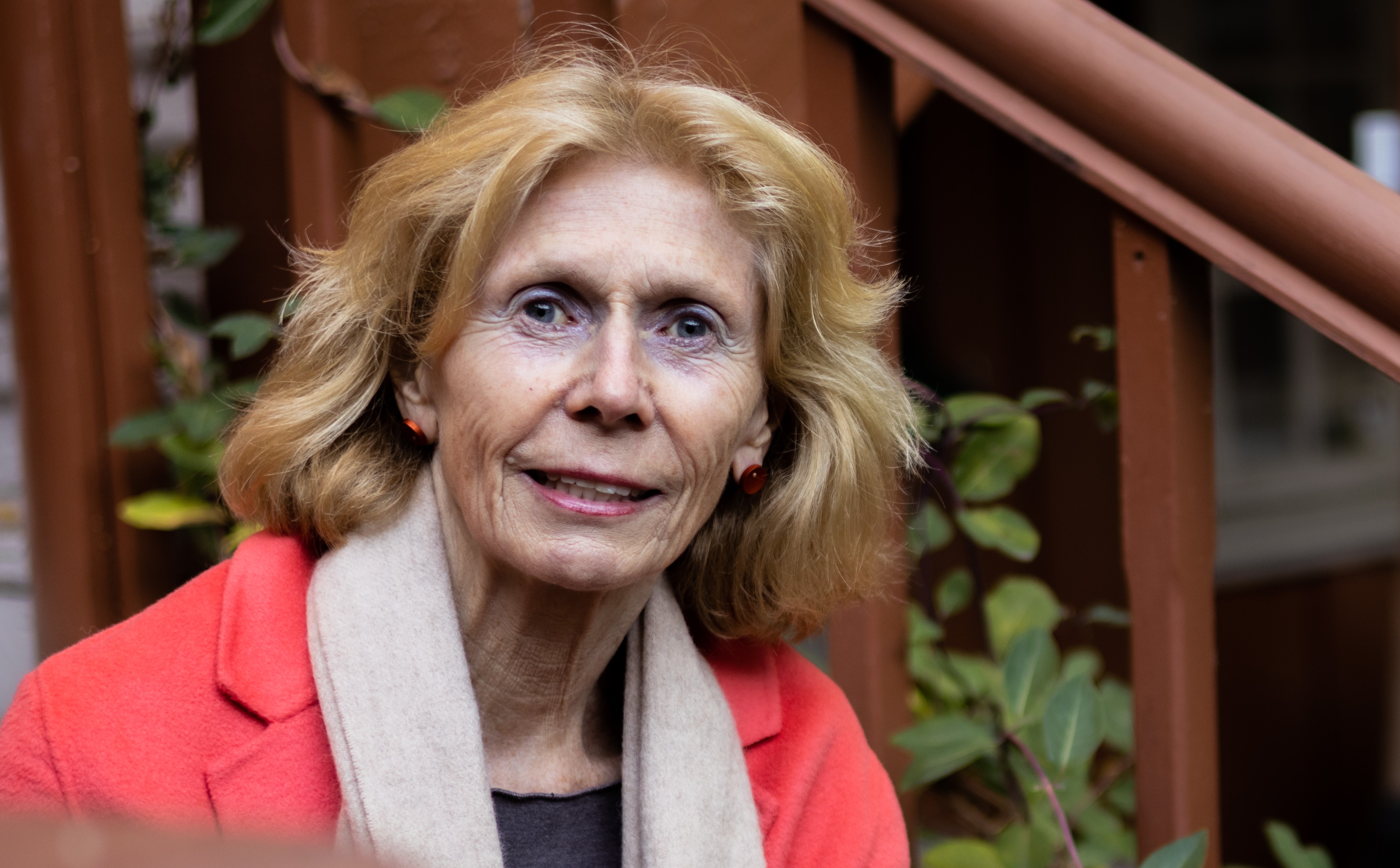
»If opera is to mean something to us today, it has to have an impact. It is not enough to commission an opera and see what comes of it. As opera houses, we have to take the lead and say that we want answers to certain questions about what matters to us today. What are our hopes and fears? What are we passionate about, and what are we afraid of?«
»Opera is slow, and our time is fast«
This was Kasper Holten’s vision for the new operas he commissioned while serving as director of the Royal Opera House in London from 2011 to 2017. Composers and librettists were given a free hand to engage with the great questions of our time.
»Opera is slow, and our time is fast. Amid everything happening in the news, there are other kinds of movements taking place deep within the human mind that we fail to perceive in our everyday lives. That is why we need an art form that can reach down to the tectonic plates shifting within the human soul.«
He made these remarks in an interview I conducted with him in 2015. The commissions from the Royal Opera House were co-productions with other major opera houses and went to the English composer Mark-Anthony Turnage, the Italian composer Luca Francesconi, the German composer Jörg Widmann and the Finnish composer Kaija Saariaho.
Saariaho’s opera Innocence premiered at the festival in Aix-en-Provence, France, on 3 July 2021. Since then, it has been performed in Helsinki, London, Amsterdam, San Francisco, Adelaide, New York and several German cities.
»Innocence is like a musical fresco. A puzzle in which the complete picture gradually emerges«
A Chorus of Languages and Voices
»The original idea emerged from discussions with Sofi and Aleksi,« Kaija Saariaho tells me in an email shortly before the world premiere. She is referring to the acclaimed Finnish author Sofi Oksanen and her own son, Aleksi Barrière, a director and writer. »He has been my main collaborator from the beginning,” she writes, “and he also developed the ideas for the casting with me and translated the text into nine languages.«
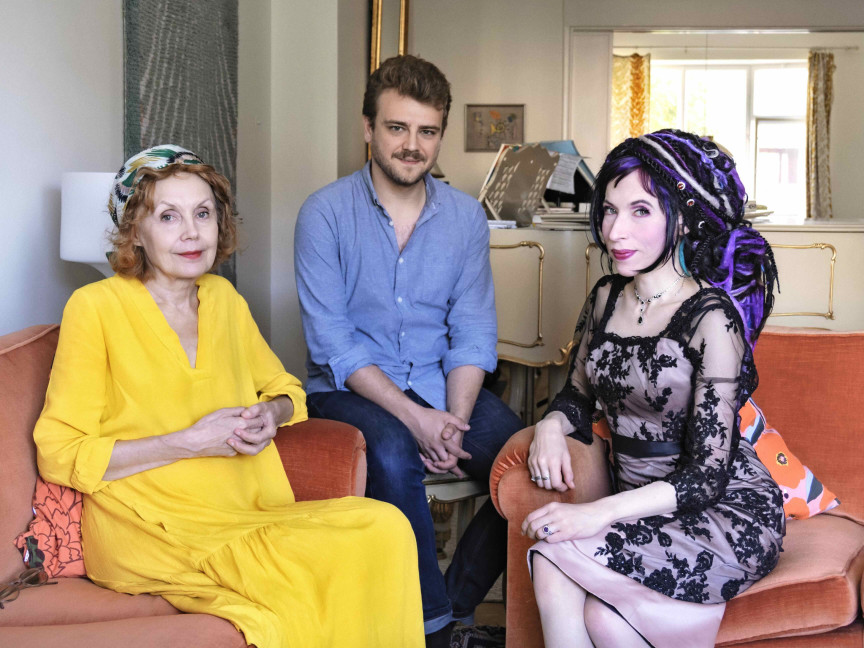
In her Composer’s Note for the opera, Kaija Saariaho describes the collaboration between the three of them. She outlines the different roles they played throughout the process and explains how they complemented one another. For example:
»Sofi wrote impactful dialogue in Finnish, Aleksi adapted it into different languages and polished it into a finished libretto I could compose music to.«
Their roles are defined as follows in the work catalogue:
»Original Finnish Libretto by Sofi Oksanen, Dramaturgy and Multilingual Libretto by Aleksi Barrière.«
Before the opera’s first performance in 2021, it was important to Kaija Saariaho that audiences experience the work without knowing the plot in advance. Now that the opera has become so well known, fulfilling that wish is no longer quite so easy. At the time, she also had no time for an in-depth interview, so instead she referred me to a video conversation with the Czech soprano Magdalena Kožená.
In the conversation, the composer explains that she wanted to challenge herself by doing something she had never done before: using different languages within a single work, including languages she did not speak herself.
She explains that Sofi Oksanen wrote the libretto in Finnish, and that Aleksi Barrière translated the sung and spoken text into a total of nine languages: Finnish, Czech, Romanian, French, Swedish, German, Spanish, Greek and English. Since the characters have different nationalities, each language brings with it an identity, both for the person speaking it and for the person listening. The different languages have their own intonations and sounds, inviting different kinds of music. Saariaho therefore employs a variety of vocal techniques and styles, including traditional operatic singing, folk music, Sprechgesang and speech. She refers to every performer on stage as a soloist. Thirteen musical personalities.
»Many of the problems we see today are eternal problems. That is what interests me«
»The different ways of singing and speaking have to be distinct enough for the audience to recognise them and become familiar with each character. We made many decisions together, but it was Sofi who created the characters. Her dramatic sensibility established the connections between them. The original Finnish version of the text is the skeleton of the opera. Aleksi’s translations and the further development of the characters came afterwards.«
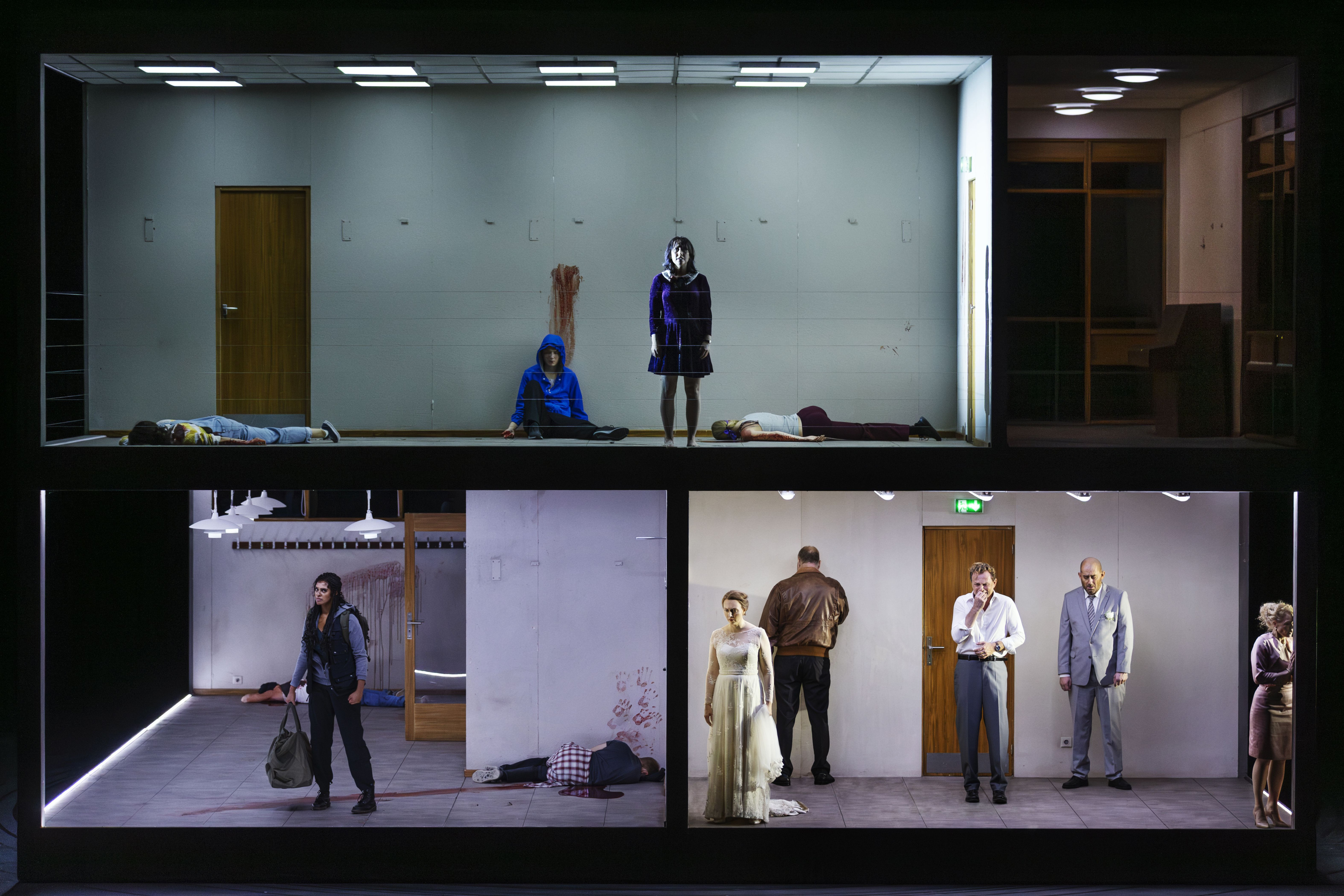
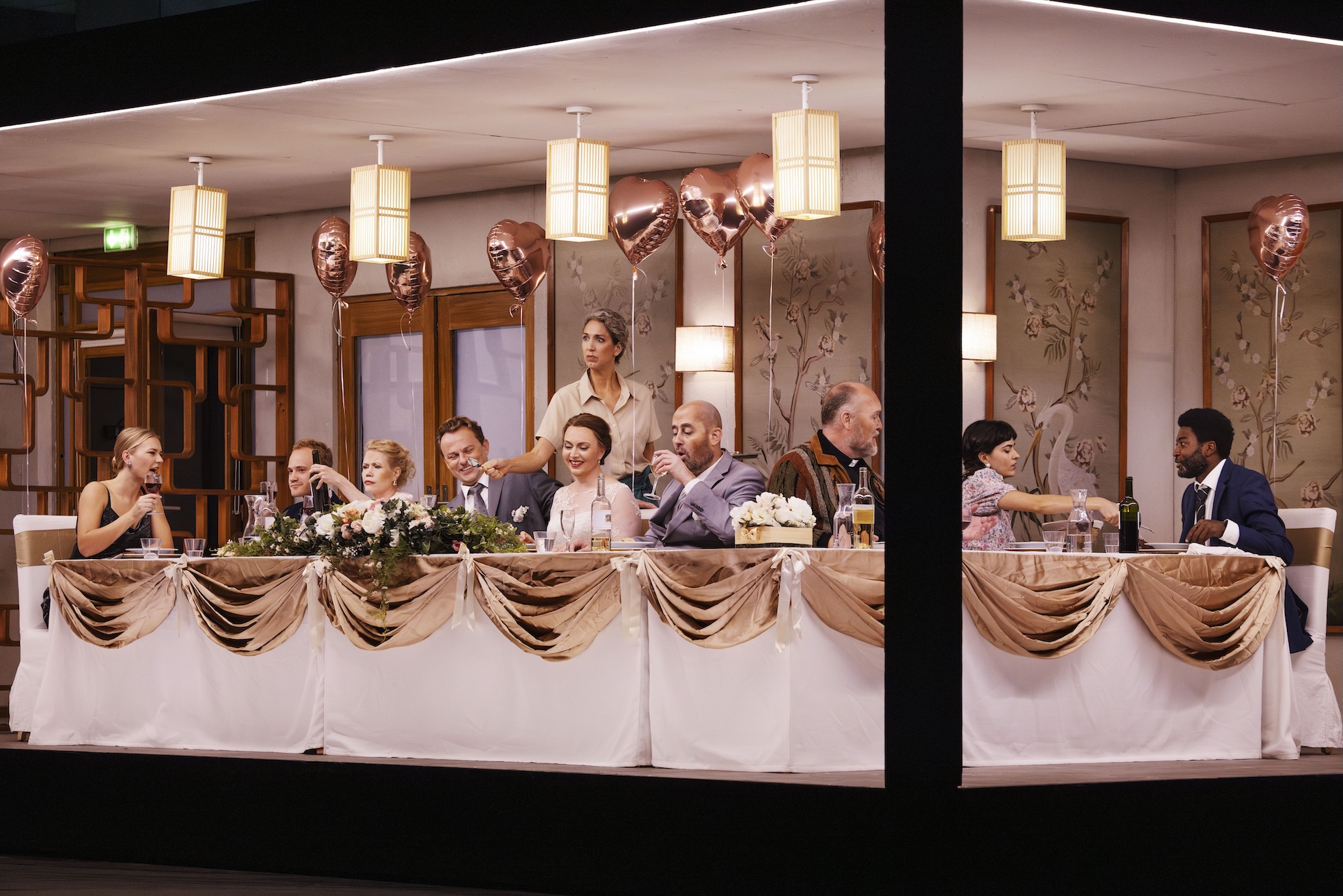
»Some of the inspiration for this vast, shifting soundscape came, surprisingly enough, from a fresco: Leonardo da Vinci’s The Last Supper. It depicts thirteen people experiencing the same event, each in their own way,« she explains.
»Innocence is like a musical fresco. A puzzle in which the complete picture gradually emerges.«
So where does the contemporary relevance Kasper Holten was looking for lie?
»Violence is unfortunately a topical subject, but it is also something that has existed for as long as humanity itself,« Saariaho observes in the same video. But she is not a composer who could have written about a specific event, she says.
»Many of the problems we see today are eternal problems. That is what interests me,« she says firmly.
»I knew the opera would have an international audience«
Sofi Oksanen’s »Cornerstones«
»The main theme is trauma: how trauma defines your life over a long period of time, and how to survive and carry on with your life despite the past.«
Sofi Oksanen tells me this in an interview I conduct with her shortly before the 2021 world premiere.
»When we received the commission from the Royal Opera House, they wanted an opera that reflected contemporary society. That was one cornerstone. Kaija Saariaho then wanted to write an opera in several languages, including Finnish, our shared mother tongue. That was the second. Kaija also had this idea of having all the singers on stage at the same time. The number of singers had not been decided from the outset, but it was clear that there would be many characters. That was the third. And the fourth: I knew the opera would have an international audience, so I was looking for a story that could be told in many different places.
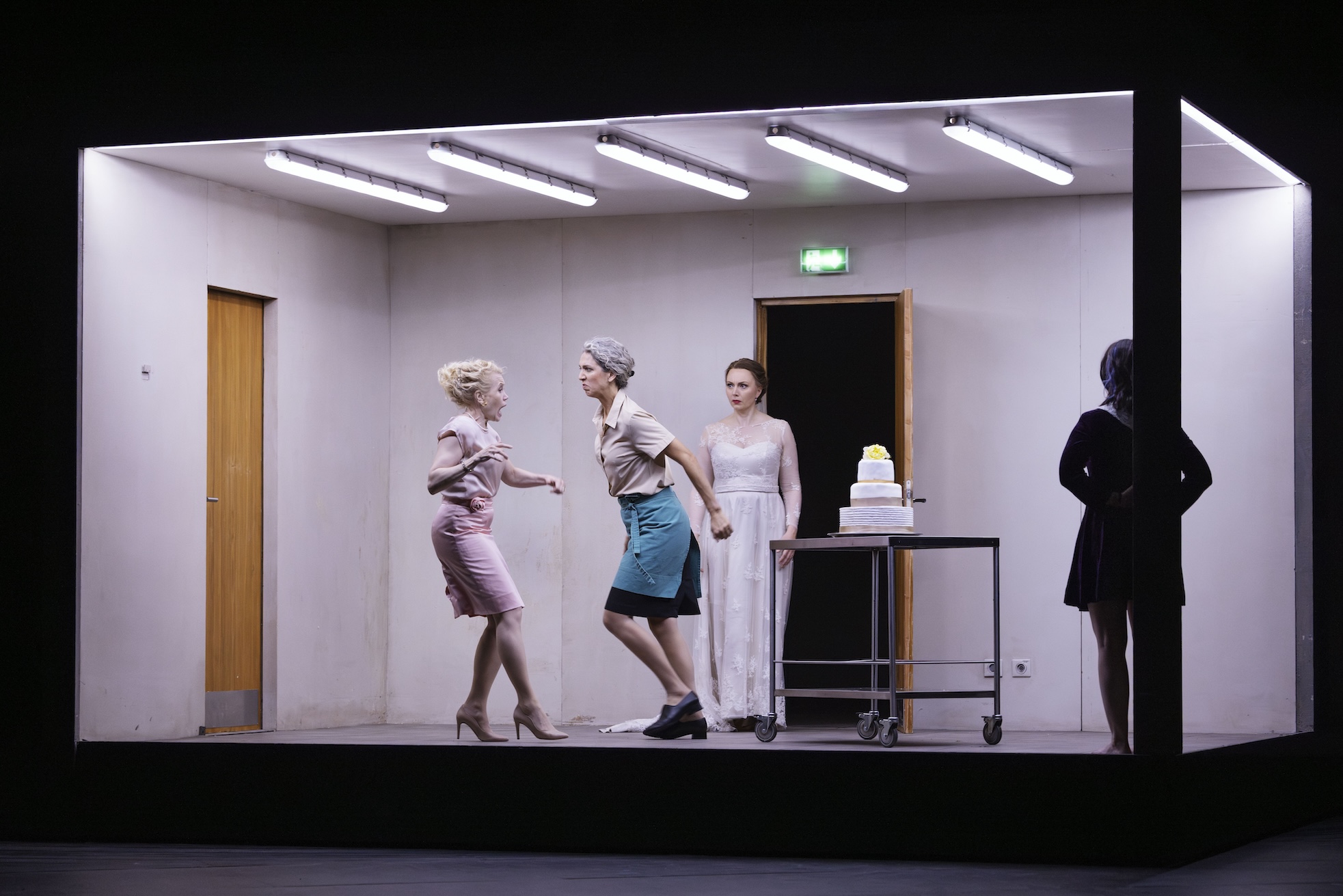
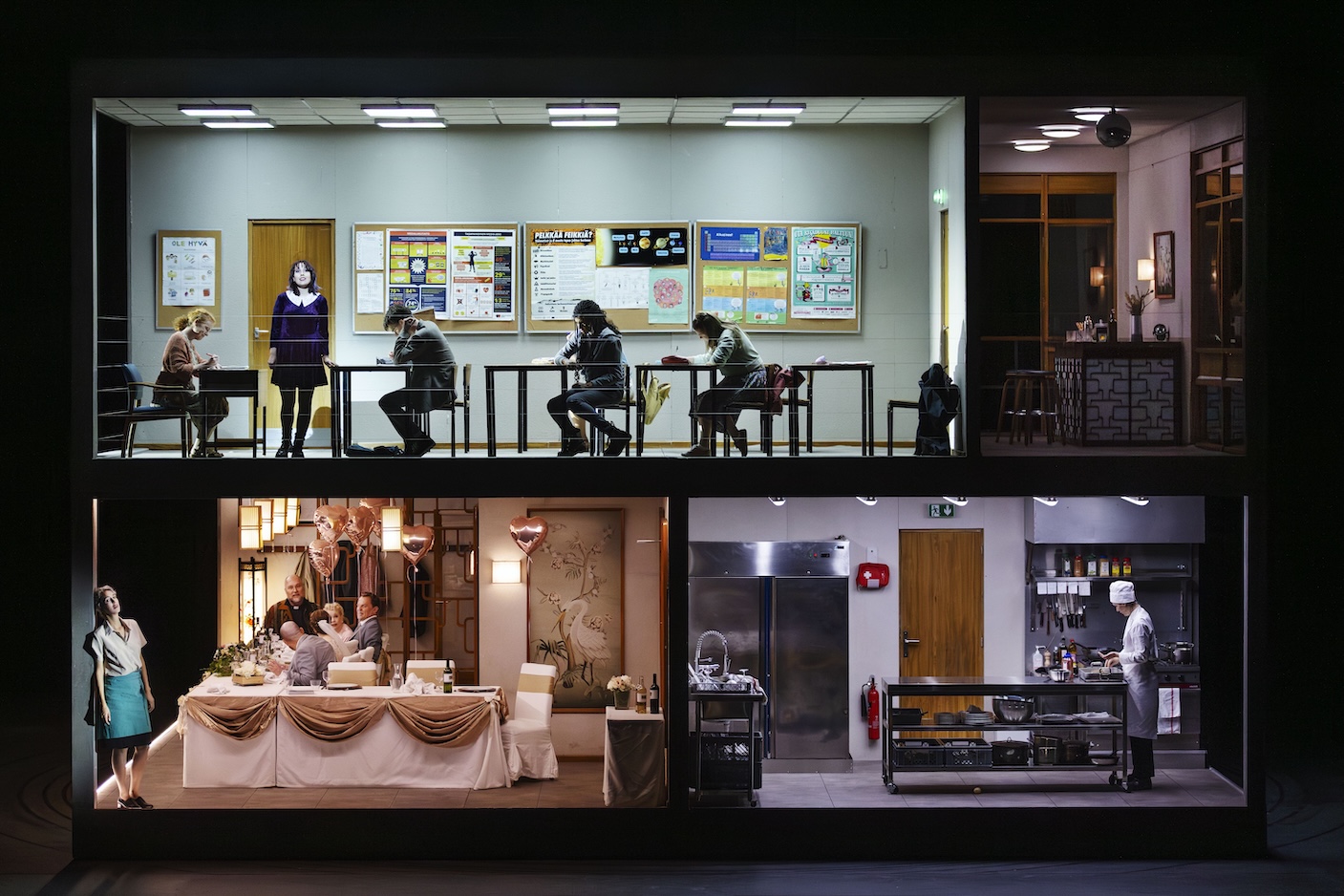
»So I began searching for a story I could build on this foundation. It was clear to me that it had to revolve around an event, quite simply because that would create a situation in which it made sense for all the characters to be on stage at the same time. I also needed an event that would reveal the connections between them. A wedding is one such occasion. It provides a reason to bring many people together on stage. A multicultural wedding and an international school therefore became the two settings around which the opera is built, both offering natural encounters between different languages.
»From the beginning, I knew I had to create vivid, clearly defined characters. Each of them had to be fully present in their own right. If they served only a secondary function, it would be difficult to explain why they needed to remain on stage throughout. And it is not easy to spend two hours on stage if you have nothing to do. The intensity of the entire opera is affected when characters wander around without a clear purpose.
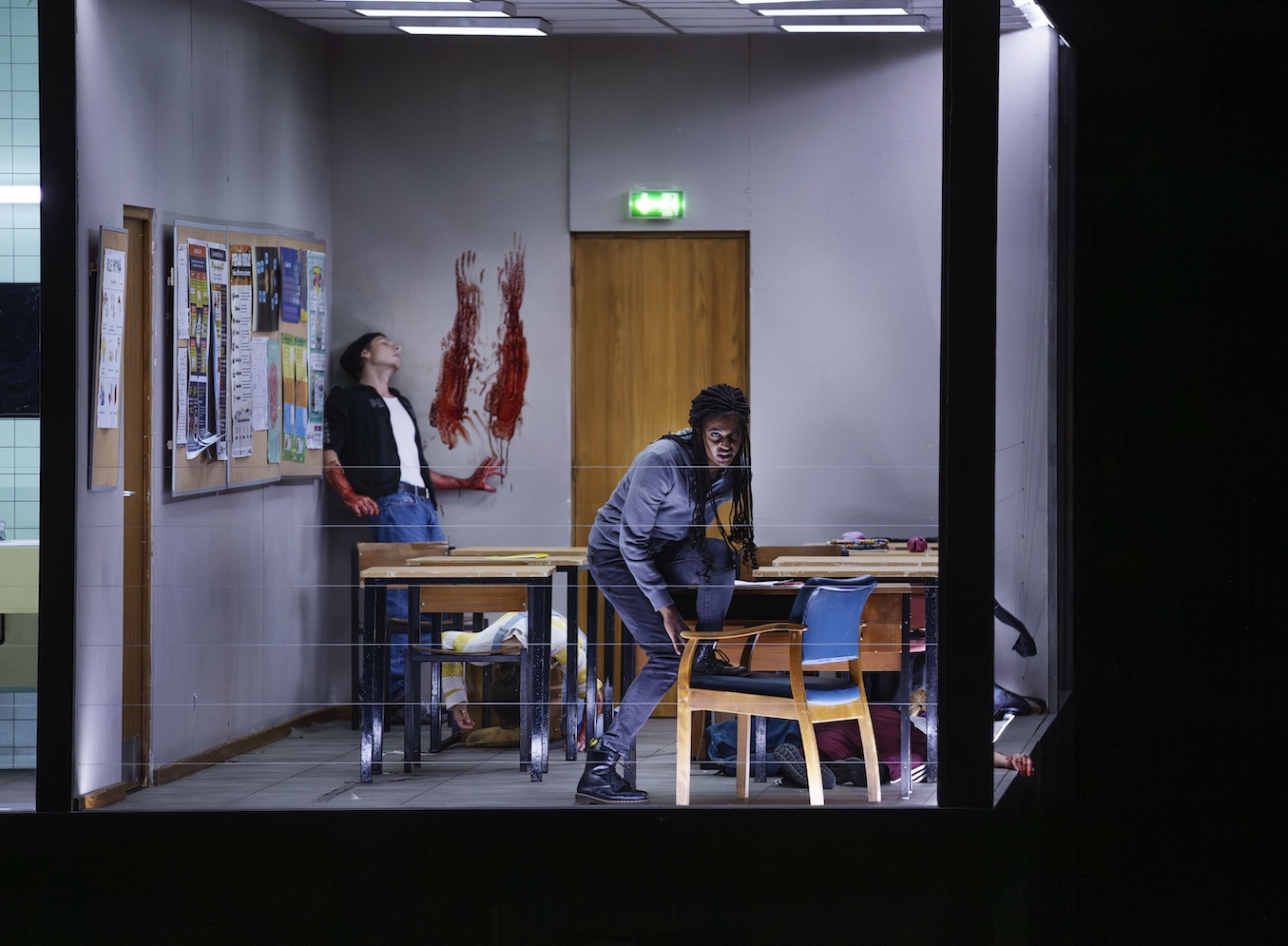
»Of course, a director can come up with solutions if the text does not offer enough material. But I think a good dramatic text is one that provides performers with all the information they need to create their roles.«
»I have always thought that I have far too many words in my head to be able to write poetry«
Innocence is Sofi Oksanen’s first libretto, but two of her novels have previously served as the basis for operas adapted by other writers. Purge, for which she received the Nordic Council Literature Prize in 2010, was adapted for the stage and set to music by Jüri Reinvere. The opera premiered at the Finnish National Opera in 2012. Her novel Baby Jane was adapted into a libretto by Essi Luttinen and Janne Lehmusvuo, with music by Markus Kärki. The work premiered with Opera Skaala in Helsinki in 2019.
»A libretto is a literary form that does not allow for too many words, much like poetry. I have always thought that I have far too many words in my head to be able to write poetry. Whenever I try, I just end up producing notes for a longer story. I am a novelist, and the novel devours everything. It is a beast that gobbles up whatever you feed it. But a libretto is a form that has to be concise while still allowing for a complex, far-reaching story to be told. Because the number of words in an operatic text is limited, every single word counts. It is quite different from writing a novel, but that is also what has fascinated me about it.«
»I assume Bach has had a profound influence on my writing«
Are you influenced by Kaija Saariaho’s music, or by music in general, in the way you have written the libretto?
»For me, the musicality of language is always essential. The text must resonate, independently of the plot. It needs flow and clarity, just as Kaija’s music does. Otherwise, it is difficult to say how music influences my writing. I cannot speak for my subconscious, but I am sure music has an influence in one way or another. In fact, I learned to understand the structures of a work of art through music rather than literature. As a child, when I was too young to read long novels, I could perceive and hear structures in fugues, for example. So I assume Bach has had a profound influence on my writing, because I imagined those structures long before I was old enough to analyse them in a novel. I believe Bach’s school of structure is valuable for every aspiring writer.«
»Innocence« is performed at the Royal Danish Theatre in Copenhagen from 11 October to 6 November 2026
English translation: Andreo Michaelo Mielczarek