




Irony Is Not Dead. It Has Just Got Feelings

There should be a natural scepticism when someone announces a new age. Such exclamations tend to be driven by a sensationalist impulse, which may well draw headlines, but is rarely backed up by a nuanced historical analysis. So when years ago I read metamodernism’s birth certificate – »The postmodern years of abundance, pastiche and parataxis are over« – my immediate reaction was: scoff.
It would not have worked in the 90s, I think, as I sit on my golden chair in AFUK’s darkened hall
Cut to the present: Nibelheim, the underground realm of the Nibelungs in Wagner’s mastodontic Ring Cycle, transformed into a provincial flea market with children’s entertainers, a dragon bouncy castle, schlager parade and communal singing. I stand with a low-cultural sauerkraut sausage in one hand and draught beer in the other and watch with a broad smile the audience-involving street theatre that constitutes one half of The Ring – Forever Hot – just performed at Copenhagen Opera Festival – by director Anna Sofie Keller Brandsborg, dramaturg Marlene Schlechner and composer Kristine Fogh Vindelev.
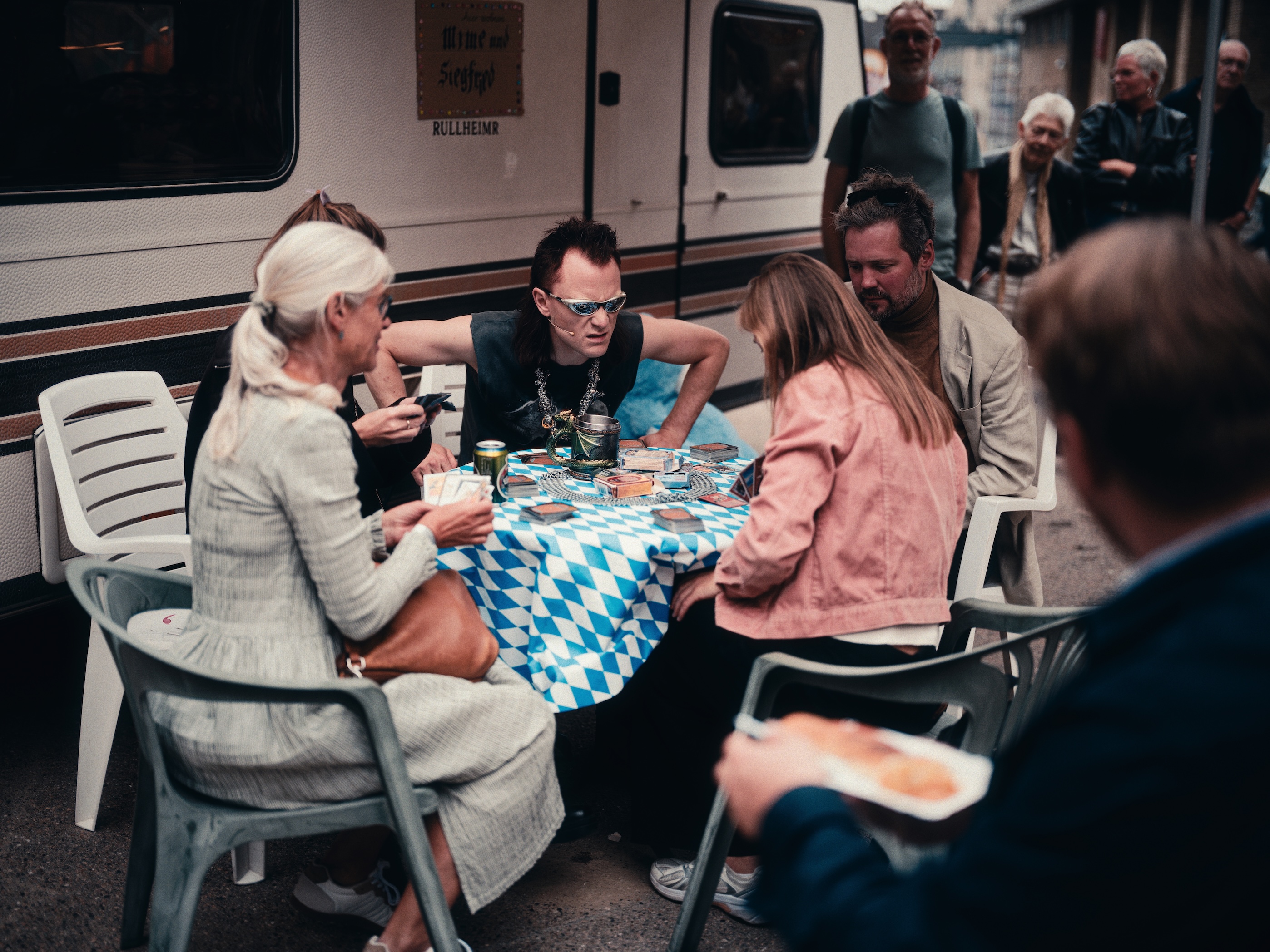
On the surface it looks like sacrilege against Wagner’s highly treasured Gesamtkunstwerk: The pop bard Bisse is anti-cast as the heroic tenor Siegfried and sits in dragon slippers and fast glasses and plays Magic with the guests. The dwarf Mime has become a sausage maker painted like a clown, who occasionally does his Johnny Reimar-like hill singer act on the flatbed truck stage.
But inside the world of the gods, Valhalla, the production’s other half, the atmosphere is more reverent. Wagner’s music unfolds predominantly in serious performances based on piano reductions or orchestral recordings. The soprano Laura Helene Hansen, named opera talent of the year, sings the Valkyrie Brünnhilde as if her life depended on it.
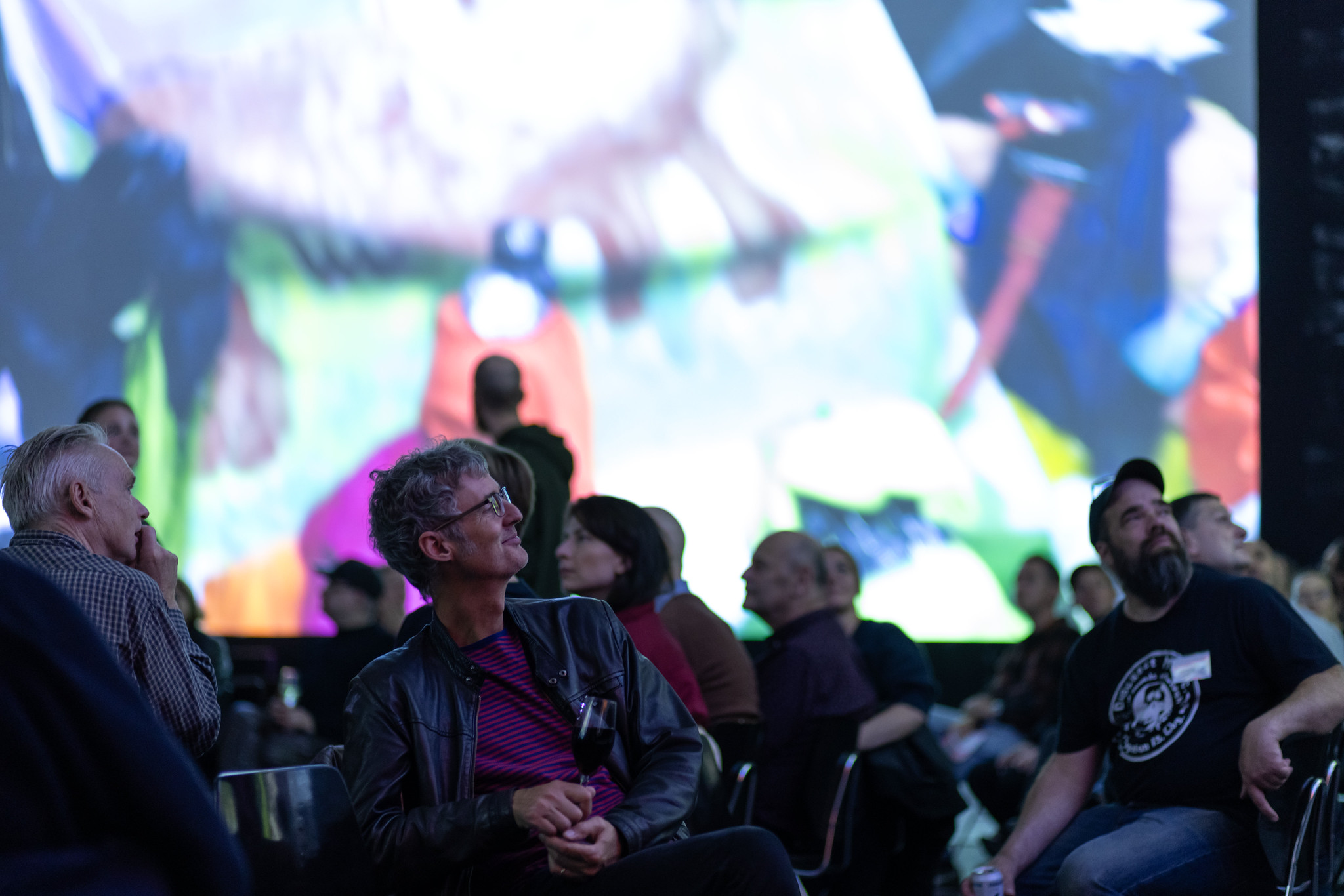
It would not have worked in the 90s, I think, as I sit on my golden chair in AFUK’s darkened hall. A true-believing postmodernist would have promptly punctured the work’s authority and declared that the idea of originality is a confidence trick, that Werktreue is a fundamentalist cult, and identified the operatic tradition as the dark force behind exclusionary canon formation.
So why now all this commitment to Wagner? Maybe there is nevertheless something that has changed. Metamodernism, as it is formulated by media and cultural researcher Timotheus Vermeulen and philosopher and cultural theorist Robin van den Akker, has at least grown on me. For it offers a diagnosis that suddenly makes a number of the developments in composition music over the last 30 years hang together.
We have a problem with Danish opera criticism when a production like this is rejected reflexively as flattening postmodernism
Wagnerian hubris
I was the only opera critic who unconditionally loved The Ring – Forever Hot. Everyone else, with the exception of a single blogger, was either moderately pleased or angry. Although one must be careful about putting one’s own clear-sightedness on a pedestal, I would argue that we have a problem with Danish opera criticism when a production like this is rejected reflexively as flattening postmodernism.
The difficult – and therefore interesting – thing about metamodernist art is that it strives to regain modernism’s belief in authenticity, depth and truth without giving up postmodernism’s critique of the same ideals. Metamodernism’s most frequently cited concept is oscillation: a continual pendulum movement between modernism and postmodernism, where the opposition never finds its resolution.
It was exactly such a metamodernist swing that powered Valhalla when Bisse and Laura Helene Hansen were finally united in Siegfried and Brünnhilde’s love duet: Bisse as a jovial reversal of the Wagnerian hero, Hansen as the genuine article. Ironic distance and sincere involvement in one euphoric embrace.
Mad or brilliant
I am convinced that the reviewers who crossed themselves over The Ring – Forever Hot would get a downright stroke from Norwegian composer Trond Reinholdtsen’s frenetic opera universe Ø, which occupied Spor Festival in Aarhus in 2021. But for me the opera series stands as a high point of musical metamodernism in the 21st century. I probably belong to the quite few who have seen all 17 episodes – almost eight hours in total – from beginning to end. I spent half a year writing my thesis about the work. At the time I had not yet heard of metamodernism and can now, in the unbearably clear light of hindsight, see that it was precisely that concept I was missing.
Instead I was busy criticising theorists such as the German Harry Lehmann, who reduced Reinholdtsen to new conceptualism: A movement bannered by German composer and provocateur Johannes Kreidler, who could both think of outsourcing his compositional work, eating guitar strings and turning up in a truck at the German rights organisation GEMA with registrations of 70,200 samples that he had pressed into a work of just 33 seconds.
I could not, like Lehmann, see the great paradigm shift in Kreidler’s so-called content aesthetics. It looked more like postmodernism’s final, metal-weary convulsions. Reinholdtsen, on the other hand – who was also conceptually oriented and had a penchant for scrappy DIY amateurism – was differently preoccupied with the space around his works. There was another constructive impulse in his approach: a longing to create worlds again.
At the beginning of the 2010s, Reinholdtsen established an opera house in his own apartment, his self-appointed »poor man’s Bayreuth«. Prophetically loud-mouthed, he behaved like a reincarnated proletarian Wagner. Like the old maestro he did everything himself: His MIDI scores played themselves, and he sang all the voices, digitally pitch-corrected into different registers. In Ø – where three posthuman beings with heads of construction foam are born into an isolated, underground world – it teems with Wagner references, and it is impossible to determine where irony ends and sincerity begins. Probably the boundary does not exist at all.
Musical metamodernism has become the new black
The British school?
When I later set out to include metamodernism in my teaching in Musicology in Copenhagen, texts that explicitly connected the concept to music were difficult to find. Much has changed since. Musical metamodernism has become the new black, and both the German journal Positionen and the English Tempo devote entire articles to the subject in their latest issues.
Now metamodernism is ubiquitous. But according to the London-based journalist and academic Marat Ingeldeev and his idea of a »British school of emotionalism and metamodernism«, it has a particular hotbed in England. I myself have wondered why metamodernist sensibility is so pervasive among many British composers living here.
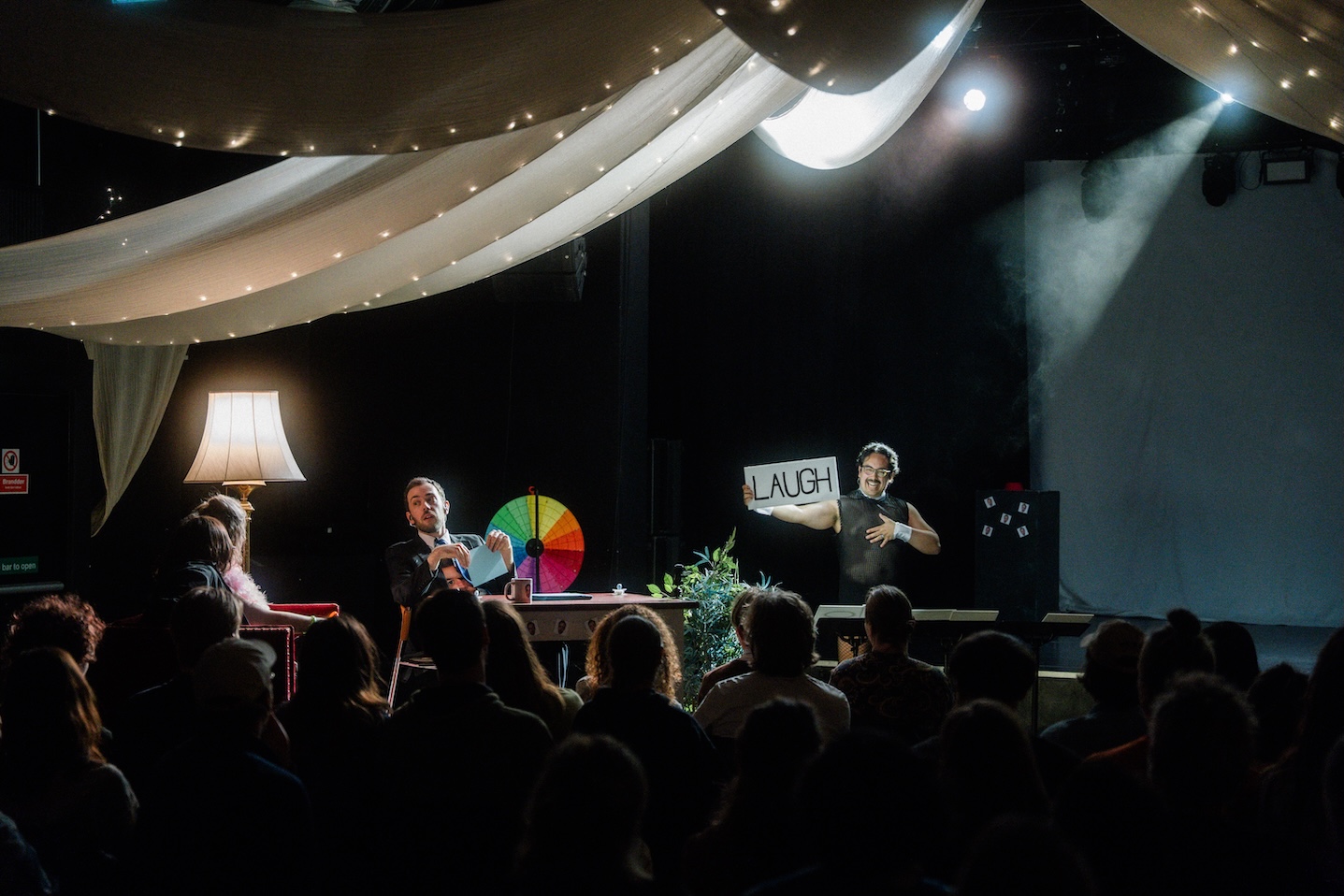
Take Michael Hope’s Late-Night Lineup (2026), performed at Spor Festival, where an entertaining talk show short-circuits only to be reactivated in strict serial displacements. Or Matthew Grouse’s more autobiographical BUMPS (2026), presented at Dansekapellet, which with violinist Anna Jalving’s pregnancy at the centre deliberately ties itself in knots in the attempt to say something essential about motherhood.

The problem is simply that Ingeldeev neither offers a suggestion as to what has made England a particular metamodernist hotspot, nor explains what actually makes the British school British. That kind of argumentation is certainly possible, but in Ingeldeev it shines by its absence.
If the idea of a British school for metamodernism is to be taken seriously, it must be anchored in a broader analysis of British musical life in the 21st century. One could, for example, start with the parallels to hyperpop’s »informed naivety« and the London-based record label PC Music, which with artists such as Hannah Diamond and A. G. Cook and the more loosely affiliated Charli XCX in the 2010s made ironic overheating, commercial bubblegum pop and unafraid emotional seriousness into strange bedfellows.
Metamodernism knows neither genre nor national borders
Metamodernism without a passport
It becomes a little forced when one tries to squeeze metamodernism into British citizenship. But it becomes directly misleading when one simultaneously calls it a school. It conflicts with something of the most alluring about Vermeulen and van den Akker’s concept. It is namely not to be understood as a catechism practised by a dedicated congregation, but as an attempt to capture a zeitgeist or a so-called structure of feeling: a shared sensibility that never quite lets itself be held in an unambiguous form.
Metamodernism knows neither genre nor national borders. Here at home, too, it has spread into composition music. Most pronounced in Simon Steen-Andersen, who is often misunderstood as a postmodernist. His style – particularly in the archive-fever-dreaming monumental work Trio (2019) and the manic opera collage Don Juan's Inferno (2024) – on the surface resembles postmodernism’s grinding sample aesthetics.
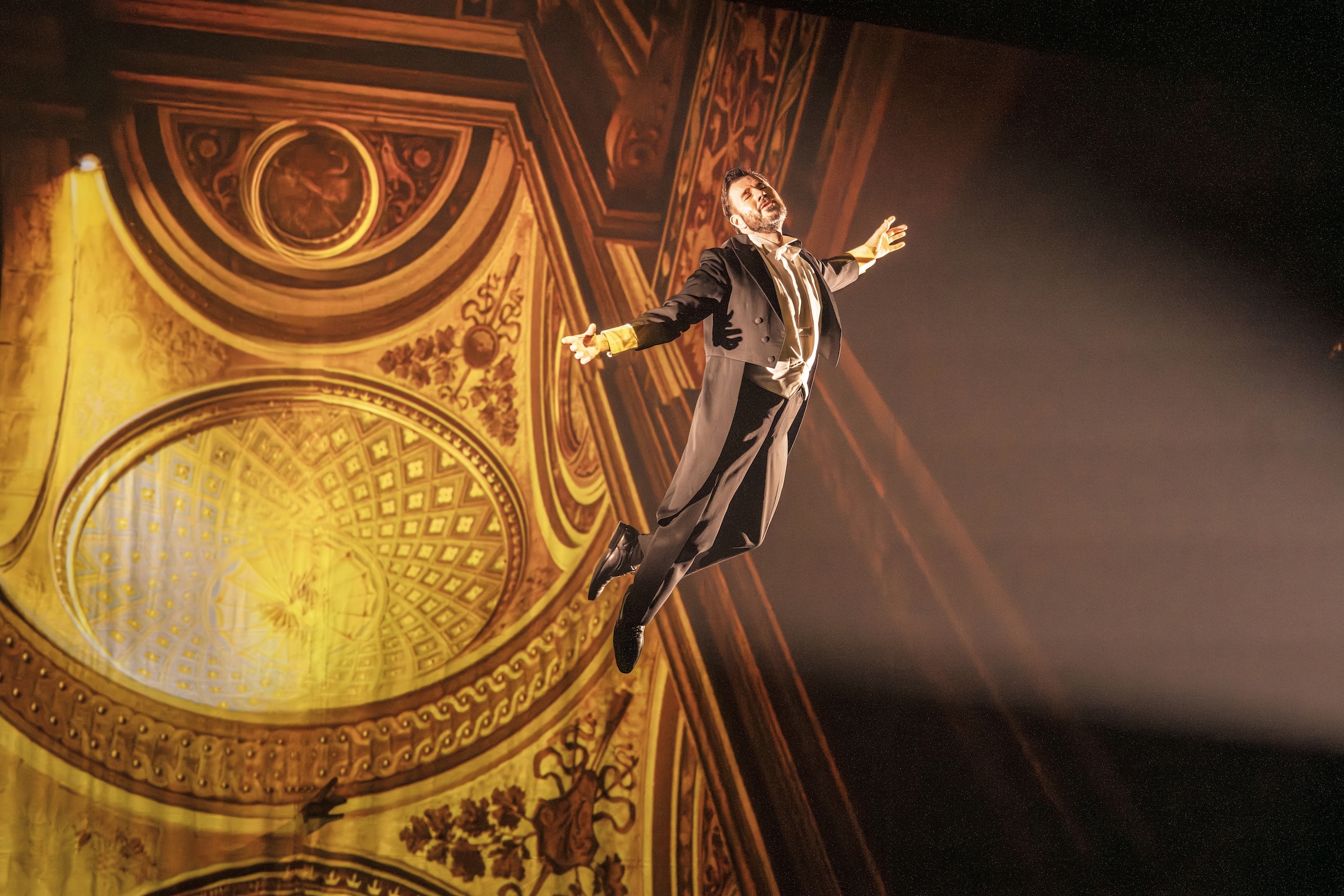
The connection between Steen-Andersen, Beyoncé, Sørensen and Ocean may seem illogical
But Steen-Andersen’s work fragments never completely tear themselves free from the institutional history they spring from. On the contrary, his music seems haunted by the past he apparently quotes so freely from. Like Beyoncé on Renaissance (2022) and Cowboy Carter (2024), he does not turn towards history to revise it, but to reactivate its utopian potential.
A less obvious example is Bent Sørensen’s aesthetics of decay. His music often sounds as though it has been written down across faded scores from Romanticism. In delicate moments, such as the second movement of his Grawemeyer-honoured L’isola della città (2018), one senses the smeared ink from the old manuscripts: an intimate, Romantic passion trembles beneath the surface, blurred by windblown sound surfaces that blow into the music like an erasing loss of memory. Not unlike Frank Ocean’s Blonde (2016), where the heartfelt, potentially kitschy confessions are always just out of reach, constantly amputated by alienating production techniques and narrative displacements.
The connection between Steen-Andersen, Beyoncé, Sørensen and Ocean may seem illogical. But their diverse music is rounded by the same underlying historical consciousness. The past is neither a nostalgic refuge nor a victim of postmodern deconstruction, but a reservoir of unrealised possibilities.
But now that I have opened my eyes to metamodernism, I see it everywhere
There is something in the air
The paradoxical thing is that the better we – including the Danish opera critics – become at identifying metamodernism, the closer we come to its dismantling. Art has a tendency to seek away from the name tags criticism hangs on them.
But now that I have opened my eyes to metamodernism, I see it everywhere. From DR’s at once jovial and snobbish road-trip documentary Operarejsen to Tobias Rahim’s melancholy summer hit »Den danske sommer« with Danish pop matriarch Birthe Kjær. From R8dio’s absurd satirical mirroring of cultured talk radio to Olga Ravn’s self-flagellating fragmentation in the motherhood novel Mit Arbejde.
Back in The Ring – Forever Hot, I look up at the big screen: »The gates to Nibelheim are open«, it says. I get up from the golden chair and move from the serious darkness in the Valhalla hall to Nibelheim’s carnivalised light. On my way out it strikes me that what I am participating in is one great oscillation. The audience is the pendulum. We do not merely experience the sliding between truth-seeking modernist depth and smooth postmodern irony by passively watching, but move ourselves in step with the movement. It hardly gets more metamodernist than this.
English translation: Andreo Michaelo Mielczarek