


When Opera Leaves the House
Having reported on eleven consecutive Copenhagen Opera Festivals, there is hardly a district of the capital in which I can’t point to a building and say »I’ve seen an opera in there.« When Amy Lane arrived as Artistic Director of the event in 2019, she promised to flood the city with opera for two weeks every August. Mission Accomplished.
More complicated, from all sorts of perspectives, is COF’s duplicitous identity as a folkelig celebration of singing and operatic traditions on the one hand and a sphere for radical experimentation on the other. Perhaps Lane’s success has been to acknowledge that these two silos need equal care and attention while gently nudging them into a more symbiotic relationship with one another.
Its audience has grown to resemble none other I’ve encountered at a festival associated with a classical art form
Lane’s most unequivocal, quantifiable triumph has been COF’s reach. Its audience has grown to resemble none other I’ve encountered at a festival associated with a classical art form – as diverse in age and background as is possible (within little Denmark) while apparently highly engaged and perpetually delighted. If Lane has delivered fewer individual ‘hits’ per season than her predecessor Peter Lodahl – and an outright dud of an edition, on that front, in 2024 – she leaves for Opera Australia having triumphed in developing the event on other terms.
The avant-garde strand has developed significantly, despite not always delivering quantifiable successes. The trouble with »bold experimentation« is that the bolder and more experimental it becomes, the less likely it is to deliver work that can galvanize an audience in the moment. There have been plenty of half-baked or simply bad shows in the new writing strand over the last few years.
The best show I saw was in a conventional proscenium theatre and was advertised as a »work in progress«
When Experimentation Works
2026 festival didn’t deliver anything as breathtaking as 2025’s Dronning Annabel, as ambitious as 2023’s Brodre or as spatially provocative as the same year’s sojourn to Vridsløselille Prison. The best show I saw was in a conventional proscenium theatre and was advertised as a »work in progress«.
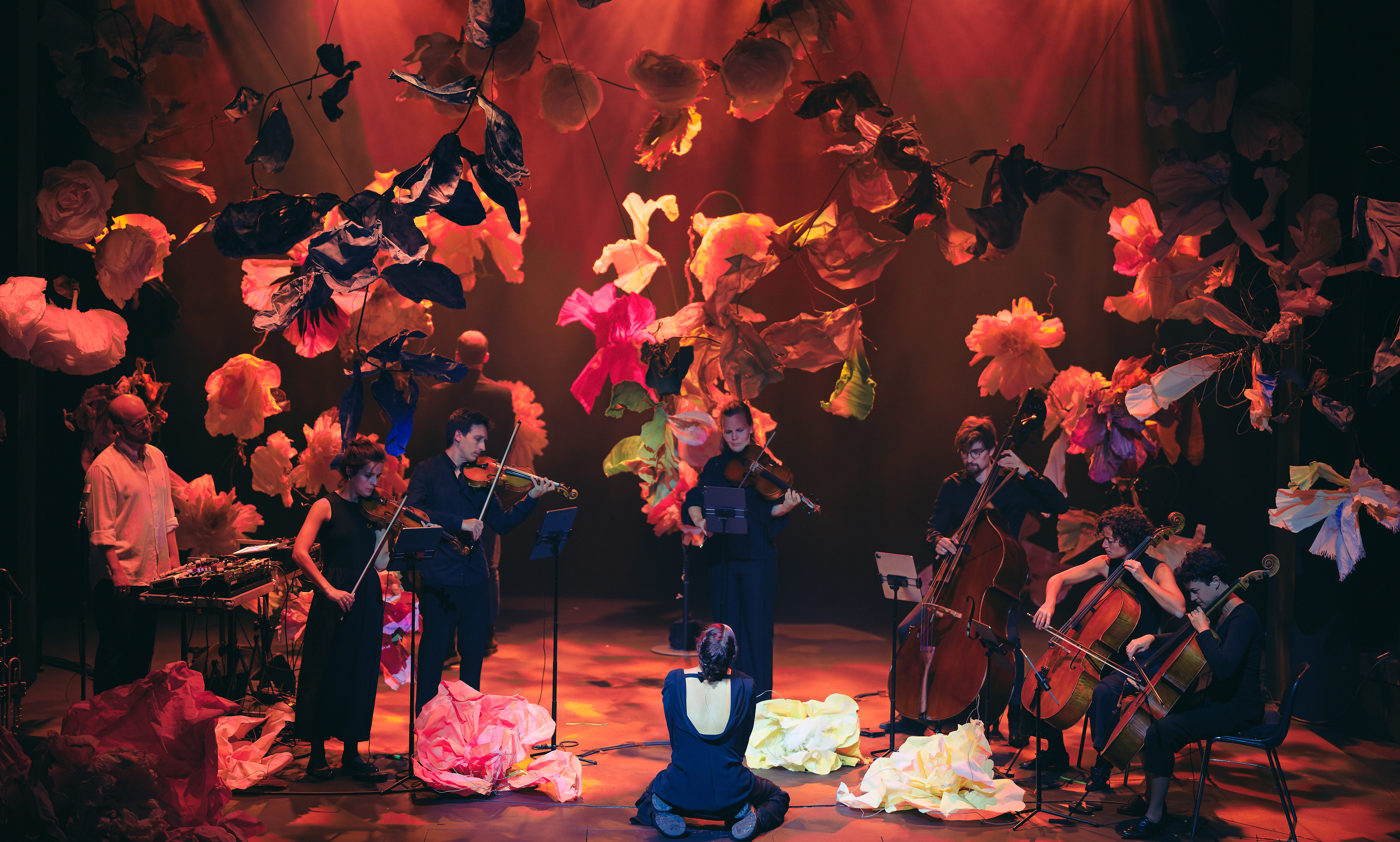
Despite that designation, Helvedsblomsterne provided a theatrical experience that was focused and decidedly sure of itself. It was a staged exploration of existential philosophy, through poetry and music, in which Sophie Haagen’s legato body language, intense stare and creamy mezzo locked-in to the ebb-and-flow of Mikkel B. Grevsen’s fluid music and Signe Kjelbo’s dreamlike scenography.
Hansen soaked herself in stage blood as she fast-forwarded through half-a-dozen of opera’s death scenes
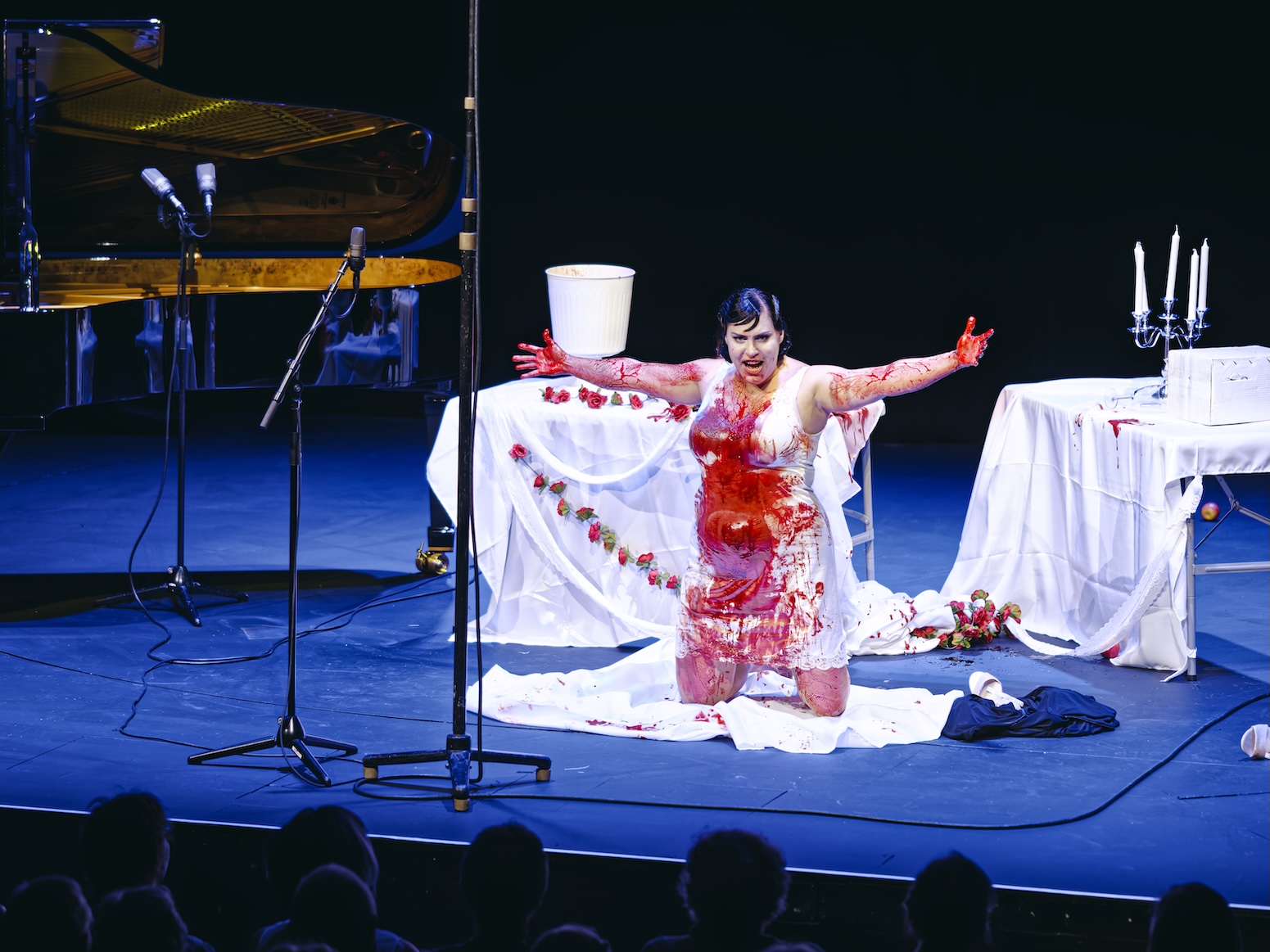
The same venue, Aveny-T in Frederiksberg, hosted Laura Helene Hansen’s recital as winner of COF’s annual talent prize. But just as Hansen is an artist not just a singer, this wasn’t a recital. It was an invitation to step into the conflicted mind of an emerging soprano – unless it was actually a persona we were encountering? We never quite knew, which was part of the show’s charm and bravery. Hansen soaked herself in stage blood as she fast-forwarded through half-a-dozen of opera’s death scenes accompanied by Steven Moore at the piano. What a talent Hansen is.
When Experiments Fall Short
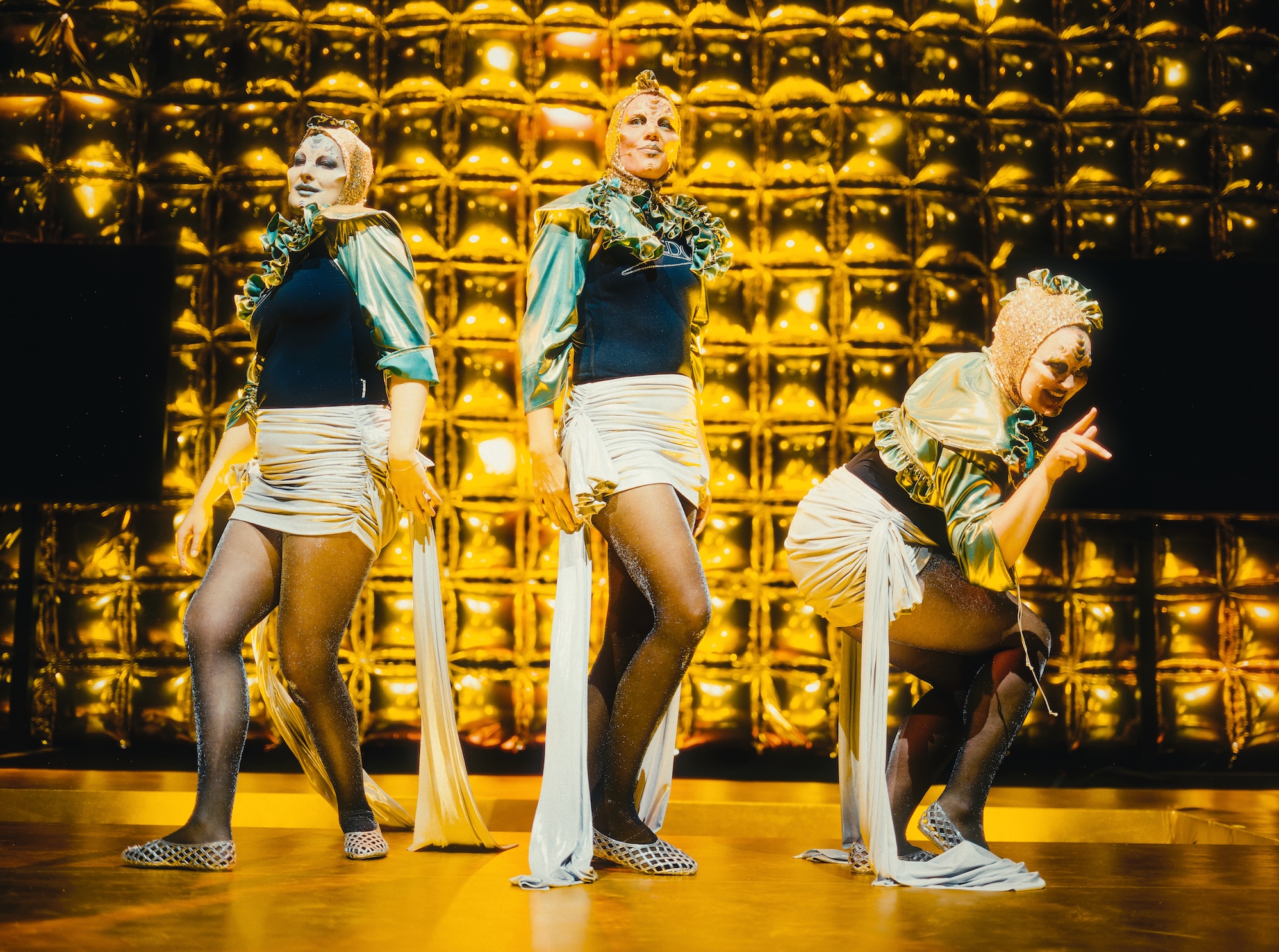
Both Hansen and Haagen featured in the festival’s most talked-about event, The Ring – Forever Hot. In a sense, this show embodied what COF should be all about: opera out of its comfort zone, prodded and probed, stripped of pretense. The immersive and pop-culture elements banished all thoughts of Bayreuth, the synthetically-woven score (with live elements) by Kirstine Fogh Vindelev worked some magic and there were periods in Anna Sofie Keller Brandsborg’s production that sent shivers up the spine. But the narrative lost its thread and every character ended up feeling like a caricature. Ultimately, it felt like a series of LOL responses to a deep and disturbing text which failed to coalesce.
The immersive and pop-culture elements banished all thoughts of Bayreuth
COF should always take audiences into unexpected spaces. There was artistic logic in setting Niels Rønsholdt and Louise Beck’s Den stærkes ret – den svages pligt in the restored University Library on Fiolstræde, given the story of a filial usurping’s reflection on books and knowledge.
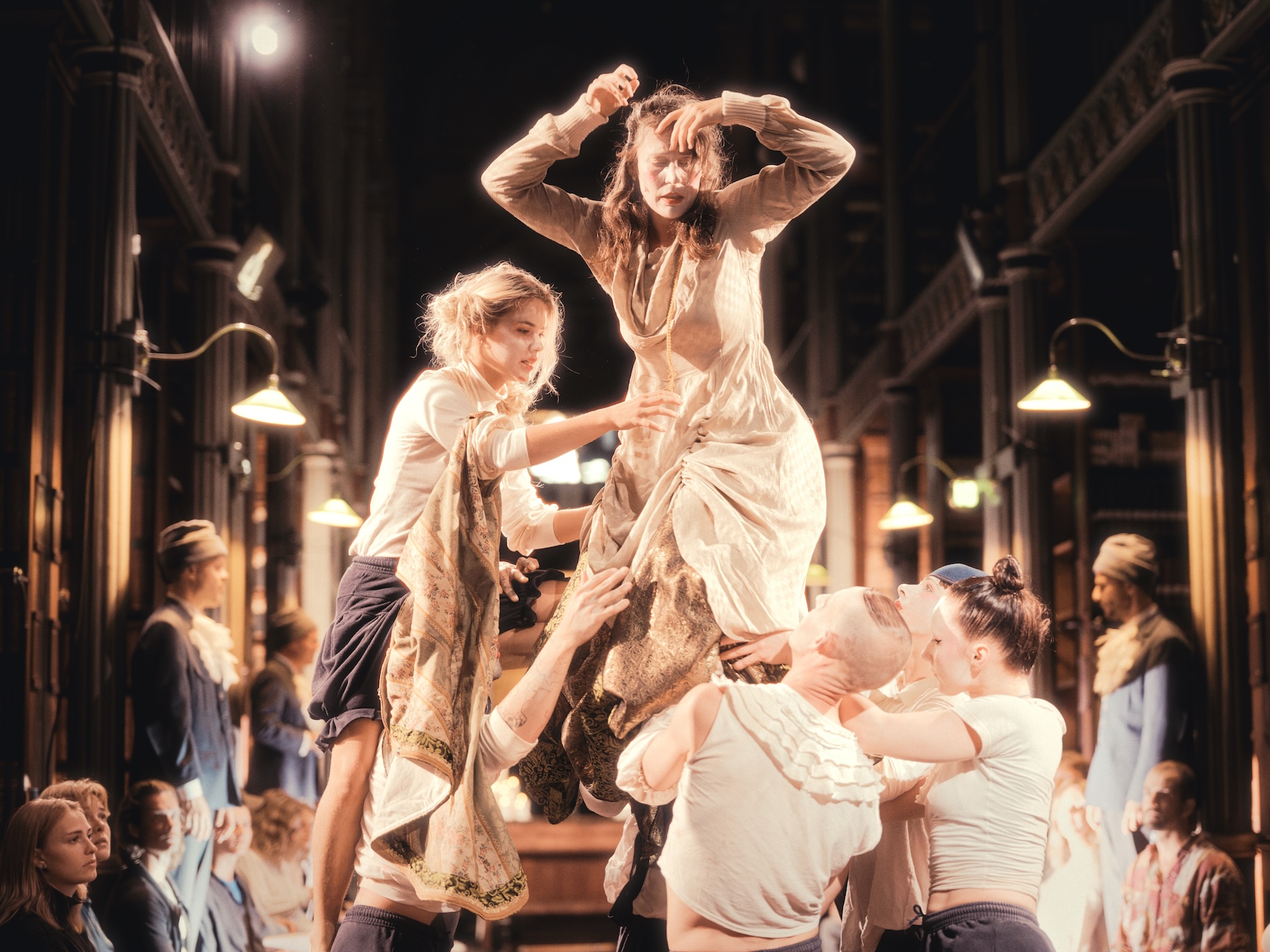
It suited Beck’s evocative, acrobatic staging more than it suited Rønsholdt’s echoing, wave-form music, which could have used a more resonant acoustic. Unlike the best meetings of concept and space, this one felt more incidental – less essential than was the case for Rønsholdt’s Den sidste olie, staged at Østerbro Skøjtehal during 2022’s festival.
The opposite problem blighted Marcella Lucatelli’s The Inhuman Human Voice, though this was another performance that didn’t quite live up to expectations set in previous years (Lucatelli’s deep delve into the realms of the larynx, Necromancy, was a highlight in 2025 festival where it blew the lid off the festival stage at Den Røde Plads).
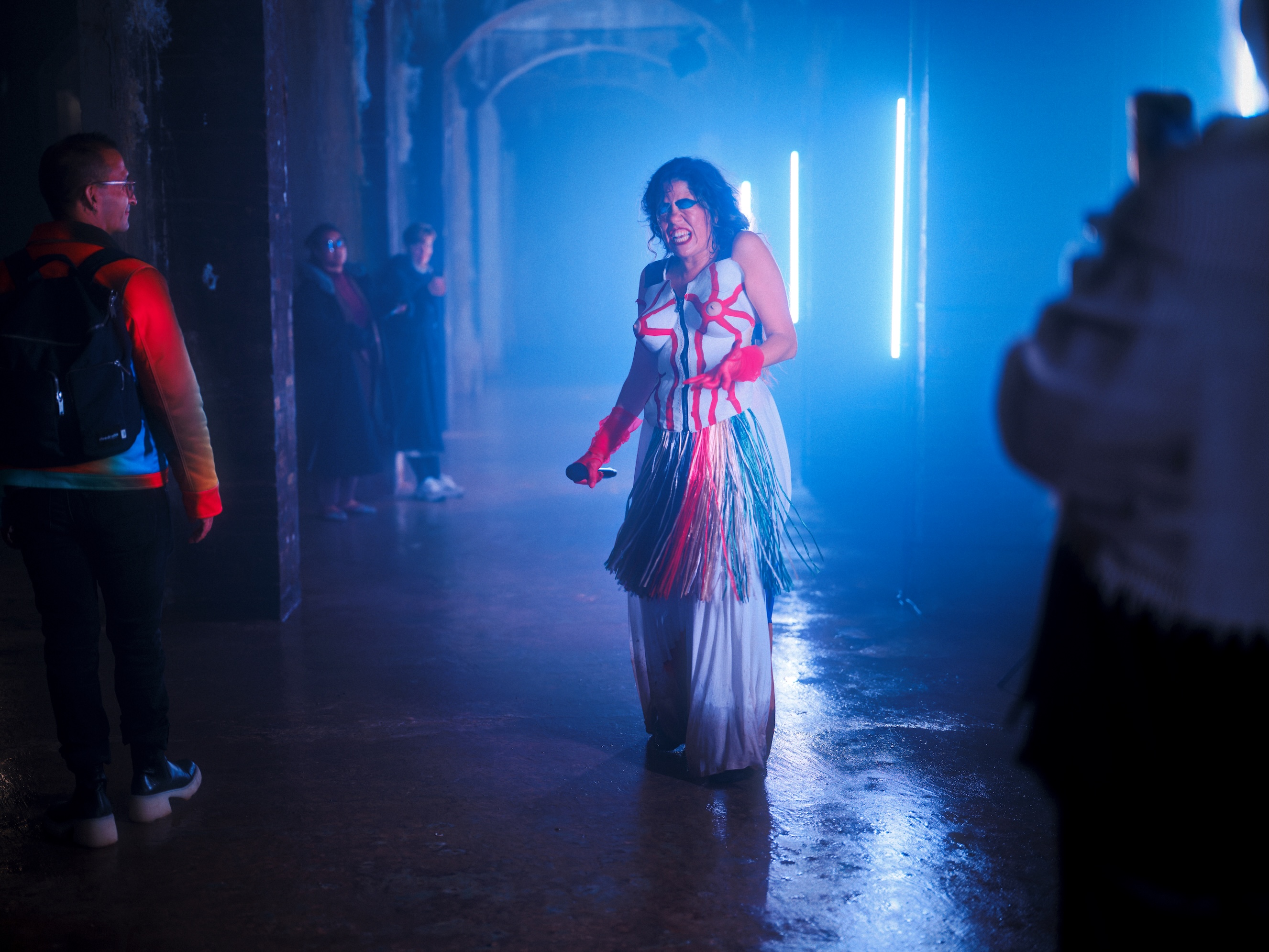
This new show relied overly on the special atmosphere and acoustic of the cavernous underground space of Cisternene in Frederiksberg, and lacked the wit and structure of its predecessor despite Lucatelli’s ability to have an audience literally follow her every move.
This festival appears to be on a roll. But we do need more strange locations and focused new commissions
And so, as Lane moves on to the world’s most iconic Danish opera house, Louise Beck picks up the mantle as Artistic Director from next month. It’s not a critic’s place to make requests, and this festival appears to be on a roll. But we do need more strange locations and focused new commissions – and it would be good to see the return of the ‘new old’ works programmed in the pre-pandemic festivals. Besides, reviving the occasional leftfield or experimental opera from the last 50 years might reduce the risk of putting audiences through successive flops.
Copenhagen Opera Festival, August 13-23 2026
Dansk oversættelse: Andreo Michaelo Mielczarek