



Live From the Universe
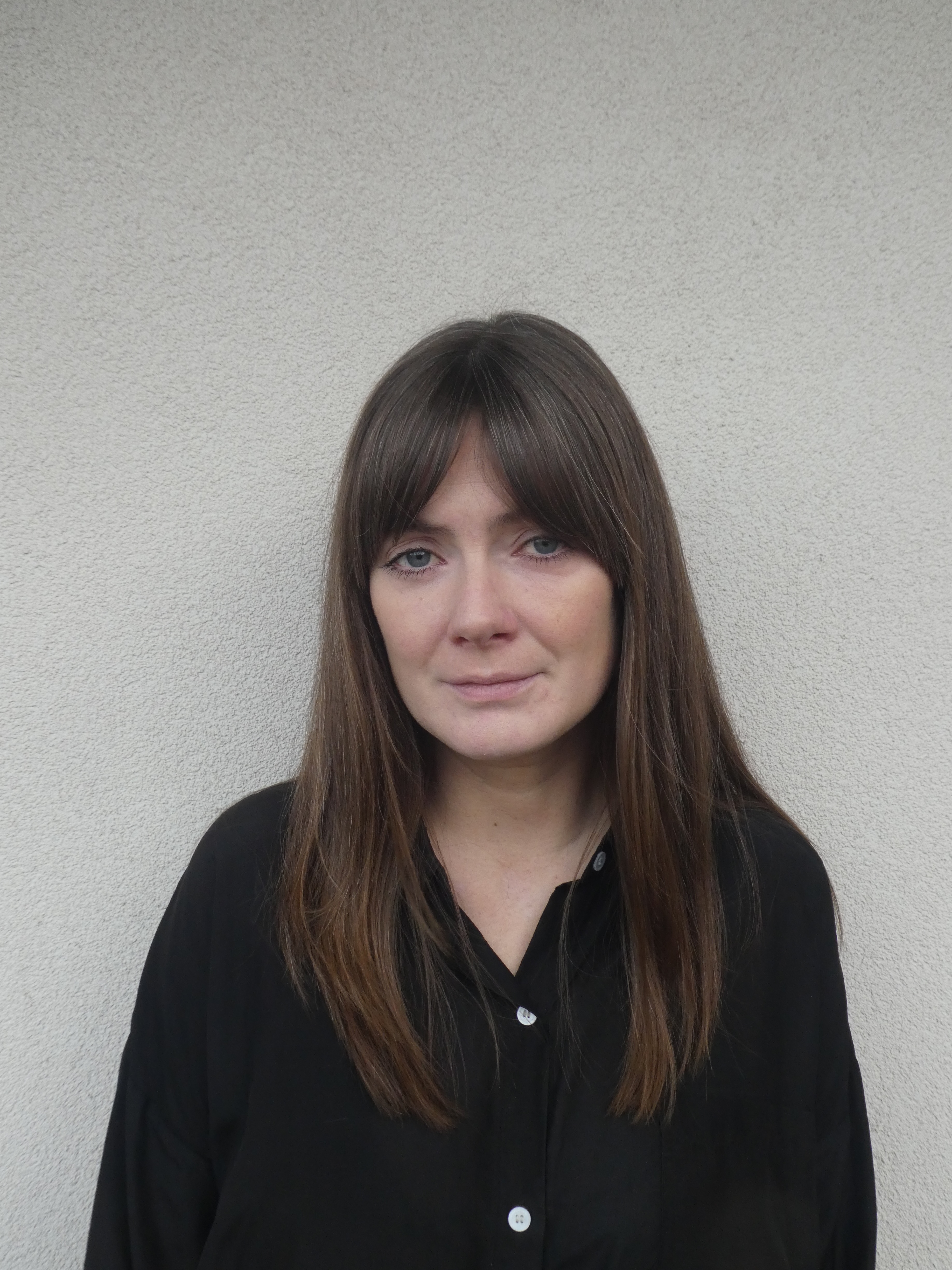
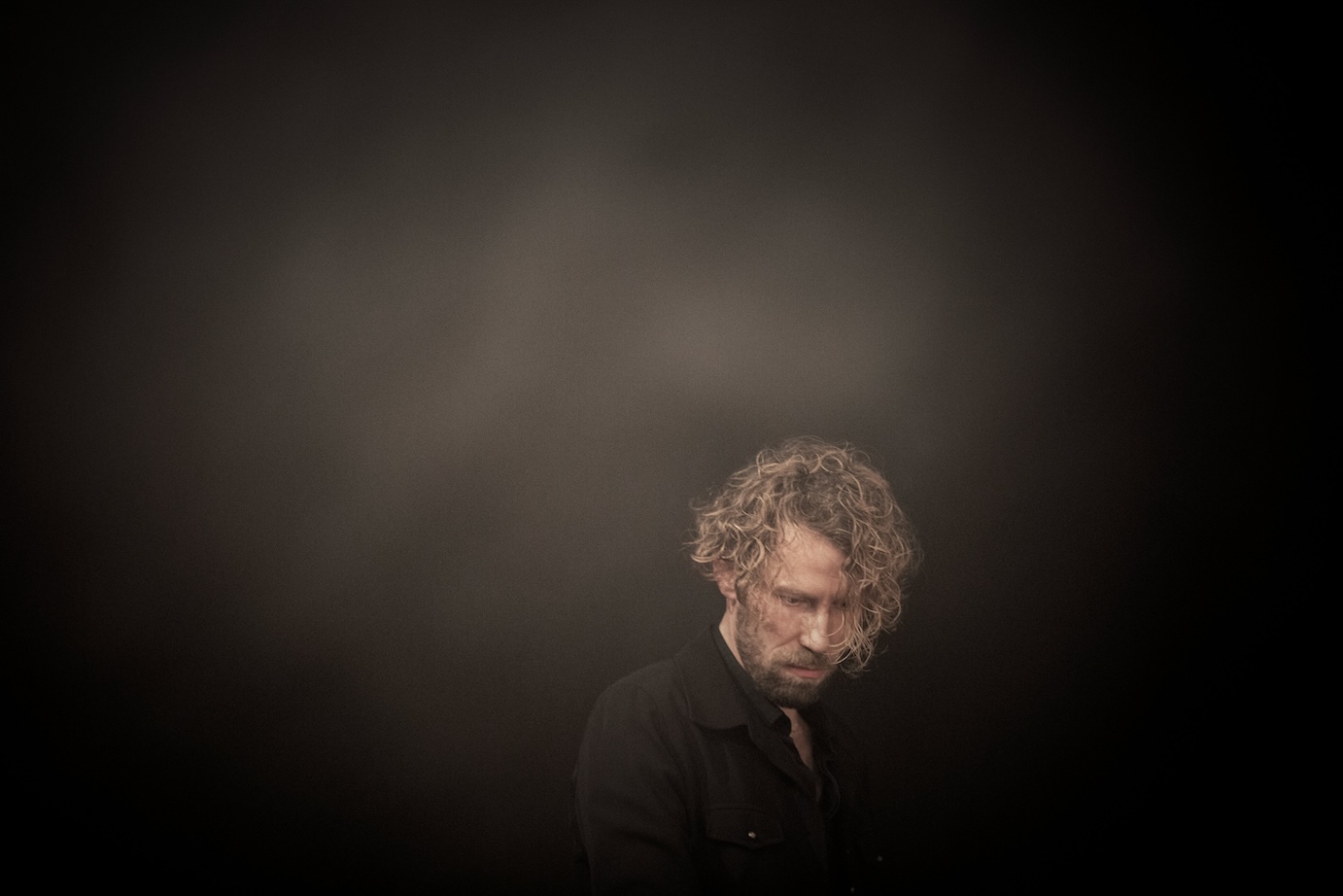
»Honestly, I don’t fully understand it myself,« Christian Skjødt Hasselstrøm admits. We have been talking about particle generators, algorithms, hyperobjects and quantum mechanics – subjects that seem rather abstract to both of us, two people working at the intersection of visual art and sound. And yet, perhaps precisely for that reason, Skjødt Hasselstrøm has spent the past few years creating three installation projects centred on cosmic radiation as both subject and material.
»The cosmic radiation I’m interested in is a kind of constant rain of radioactive rays coming from the universe. Most of the rays are stopped by the atmosphere, but some penetrate it and reach the ground, passing through our bodies, houses, everything, before disappearing into the earth.«
»So while we’re sitting here, we are constantly being penetrated by rays from space – that’s pretty wild, isn’t it?«
»At some point they encounter enough mass to stop them, but the most powerful rays can travel several kilometres into the ground. So while we’re sitting here, we are constantly being penetrated by rays from space – that’s pretty wild, isn’t it?«
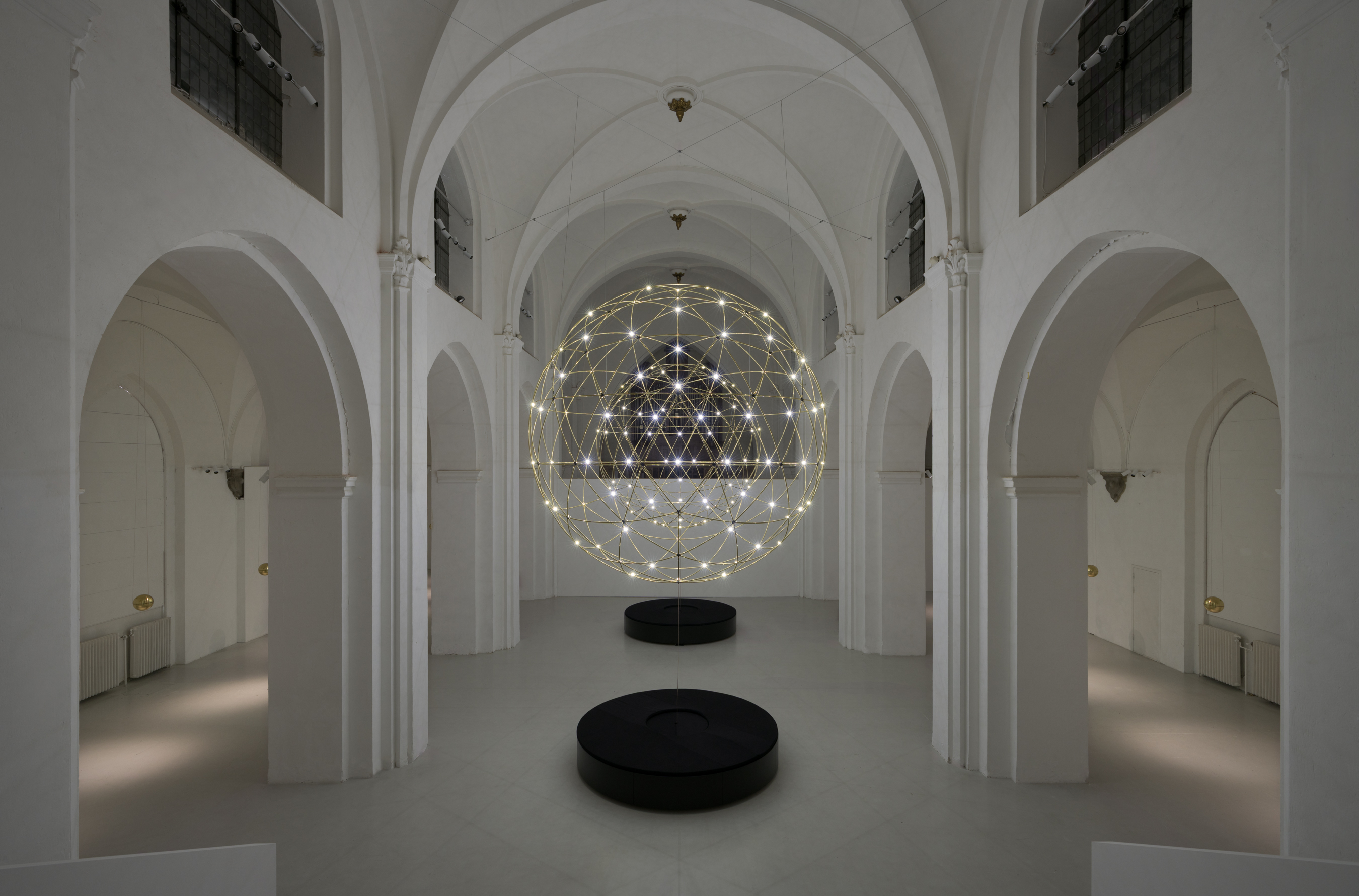
We are sitting on a staircase in the enormous exhibition space of Nikolaj Kunsthal, housed in a former church in central Copenhagen. Above us hang two large brass spheres covered with countless bulbs, blinking in an uneven rhythm. A deep, humming sound follows the flashes, while smaller brass objects in the side aisles produce metallic clicks. This is Skjødt Hasselstrøm’s exhibition Meridians, which translates cosmic radiation into something we can see, hear and feel.
»I find it extremely interesting that we are surrounded by this phenomenon all the time. It penetrates our bodies and constantly surrounds us, and yet we don’t really understand it. I think it’s a human survival mechanism that things we cannot perceive don’t really exist for us. If we had to take everything in, we probably wouldn’t be able to cope with it,« Skjødt Hasselstrøm says, referring to the British philosopher Timothy Morton’s concept of hyperobjects – entities so massively distributed across time and space that they exceed the limits of human comprehension.
»My works are a kind of instruments, an extension of our bodies«
A defining characteristic of hyperobjects is that we cannot escape them; the more we try to understand them, the more we realise that we are entangled in them. They do not simply exist in one place and cannot be isolated as a single object. We experience them only in fleeting moments that appear and disappear within our immediate perception.
Making the invisible tangible
»This trilogy of exhibitions is very much about making tangible through sound, light and spatial installation what we cannot otherwise grasp with our senses. My works are a kind of instruments, an extension of our bodies and cognition, which make it possible for us to grasp what lies beyond our sensory space. They are not sonifications or visualisations, but actual instruments that detect something that exists in reality,« he stresses.
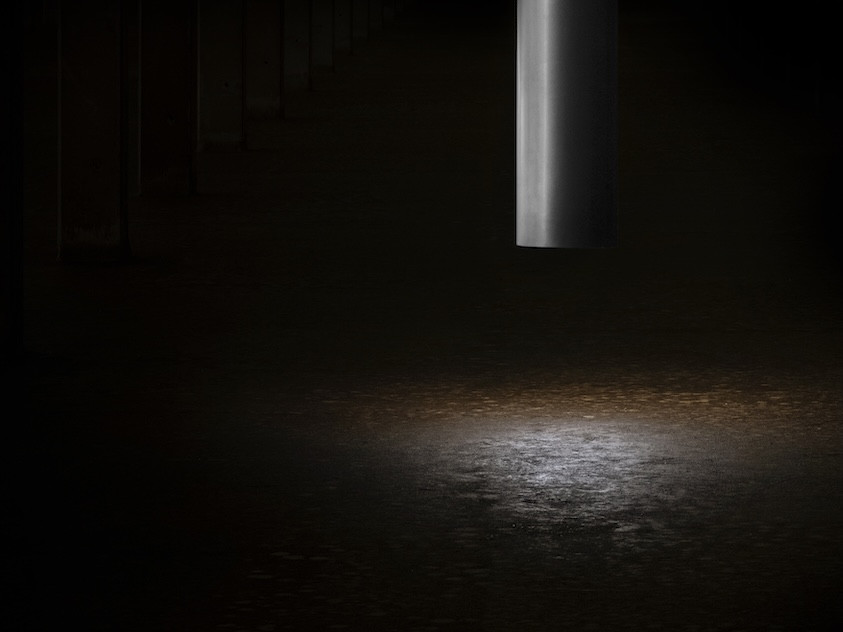
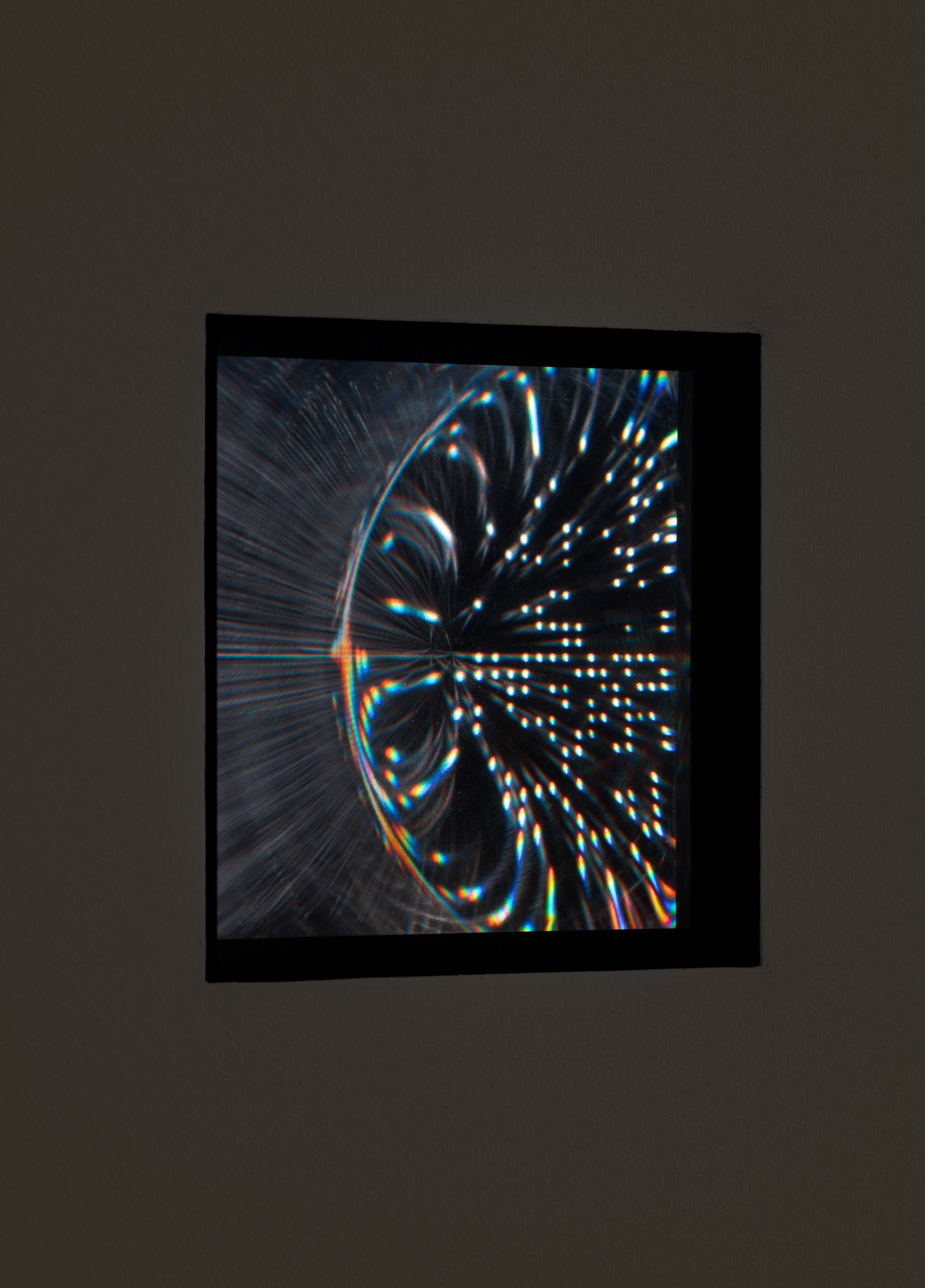
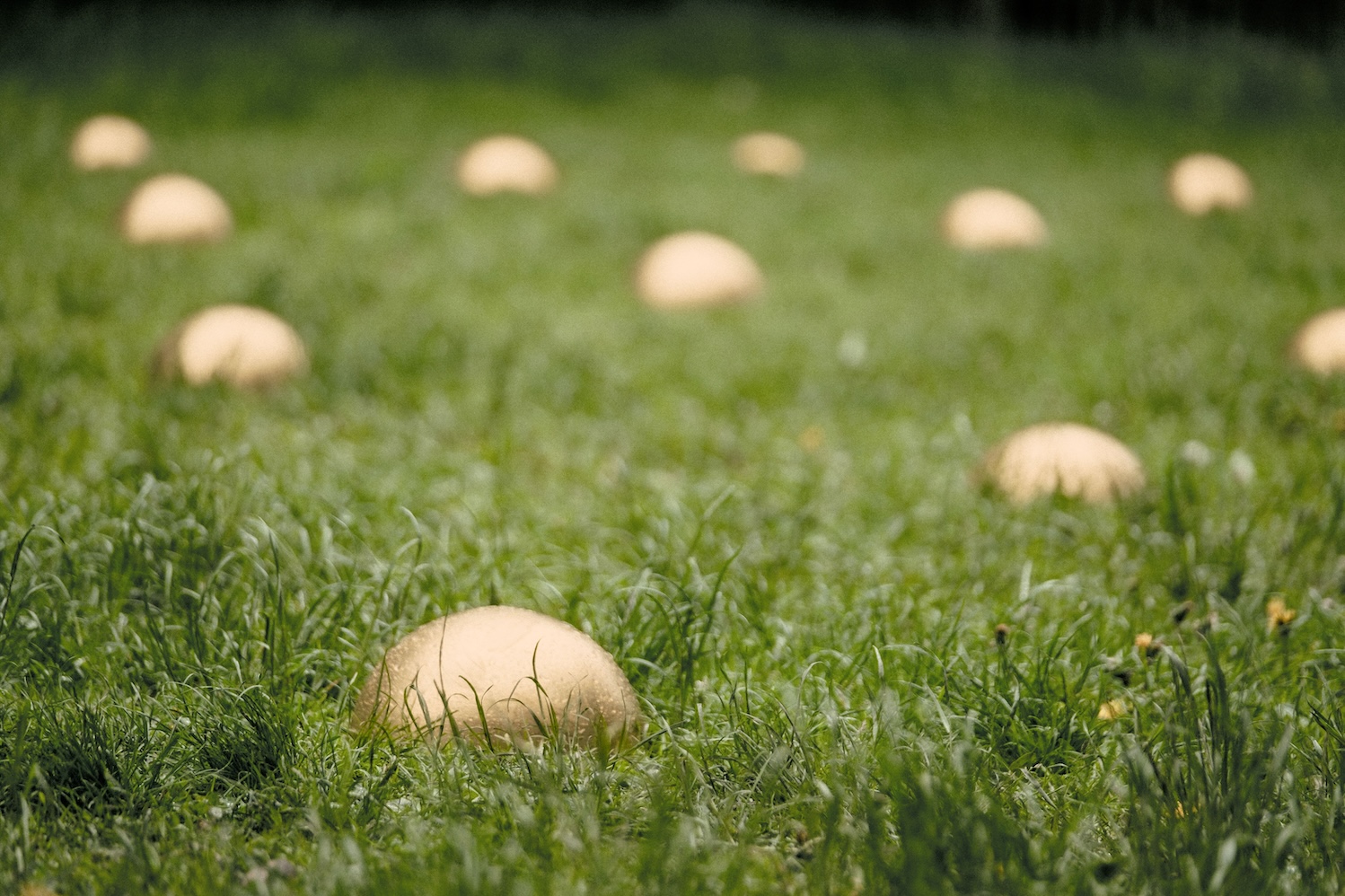
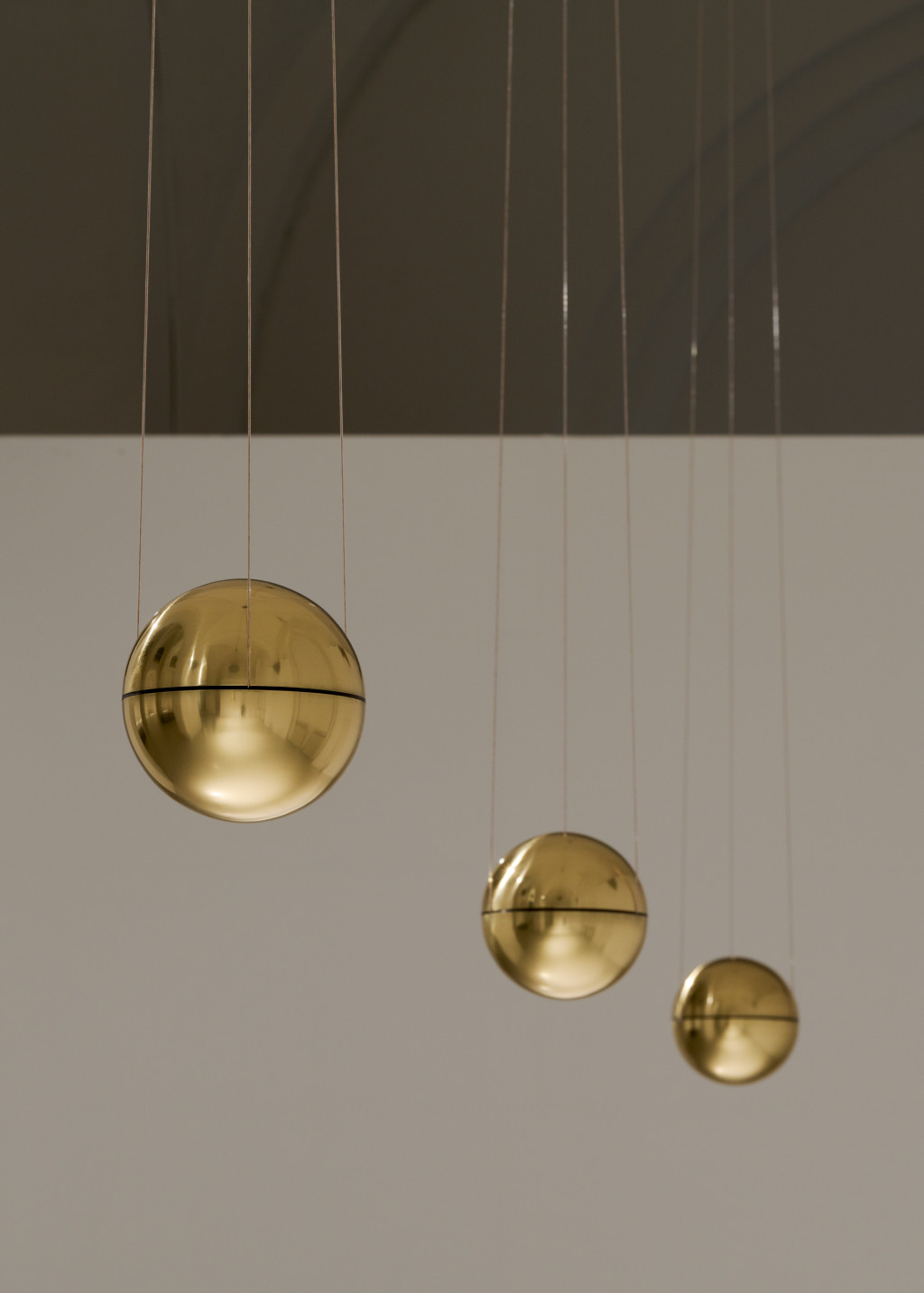
The three exhibitions – µ, presented at the Bloom Festival in 2022; Myriads, which took place in a former water reservoir outside Aarhus in 2024; and Meridians, which has just opened at Nikolaj Kunsthal – are based on the same technique that Skjødt Hasselstrøm has developed in collaboration with researchers from the Niels Bohr Institute. The central element is a particle detector made from a material called »organic plastic scintillator«, which is activated by cosmic radiation. When a particle hits the detector, it releases energy that can be amplified as sound through a material. In µ, which consisted of a grid of brass hemispheres, each equipped with its own detector, the energy was amplified directly through the material, producing a click each time a particle hit it. The brass therefore functioned as a loudspeaker, and the click was the direct signal – live from the universe.
»Cosmic radiation is genuinely random in the sense that we cannot predict when it will hit«
»I don’t assign any sound to it as a principle, and I don’t do anything to the signal,« Skjødt Hasselstrøm says, pointing to the large, round plinths beneath each of the spheres, which also function as benches. »Inside the plinths is exactly the same detector core, but because of the material and the size, they have a completely different, low-frequency sound. When that sound occurs less frequently than the high-pitched clicks from the brass works, it’s simply because there are only two detectors in the plinths, whereas there are twelve detectors in the brass spheres. But the principle is the same.«
At the Bloom Festival – and later at the Momentum Biennal in Norway, where µ was recreated – the brass domes were arranged in a grid on the grass. In the same way, there is something highly stringent about the exhibition at Nikolaj Kunsthal, where the material seems to have been kept as simple as possible.
True randomness
»In my work, I’m generally interested in doing as little as possible. I set up a very simple system, a grid for example, which leaves room for what lies beyond my control. The scientist at the Nils Bohr Institute talk about true randomness, genuine randomness, as opposed to the human-made randomness of an algorithm. Cosmic radiation is genuinely random in the sense that we cannot predict when it will hit. At the same time, it is constant over time: for example, it is the radioactivity from cosmic radiation that is measured through carbon-14 dating, where the amount of radioactivity can tell us how old an object is. I’m enormously interested in that combination of the constant and the random, and I think it comes through most clearly when I add as little material as possible.«
»I’m quite attracted to immersive spaces and for me, they can be violent«
If the materials in Skjødt Hasselstrøm’s works are generally minimalist and the expression restrained, the spaces he works in tend to be large, spectacular and immersive. A church with soaring arches, a dark underground water reservoir and a concrete bunker on the west coast of Denmark are among the spaces that have previously housed his works.
When sound hits the body
»I’m quite attracted to immersive spaces,« Skjødt Hasselstrøm says, »and for me, they can be violent. Myriads, which took place in a gigantic underground space, was an extremely intense experience, for example. It took place in total darkness, broken only by a flash of light whenever a particle hit the detector. In Regelbau 411, which is part of an old bunker system, I turned one of the bunkers into a massive loudspeaker that worked primarily in the infrasonic spectrum – sounds so low that we cannot hear them, but can clearly feel them in our bodies. I think there is enormous potential in working at the extreme end of the spectrum because I’m interested in how sound affects us. The two exhibitions affected people very differently: some people simply didn’t want to enter the space, while others entered a kind of meditative state when they were exposed to the very low-frequency sounds. I find it interesting to make a space available to people, and what they do with it is beyond my control.«
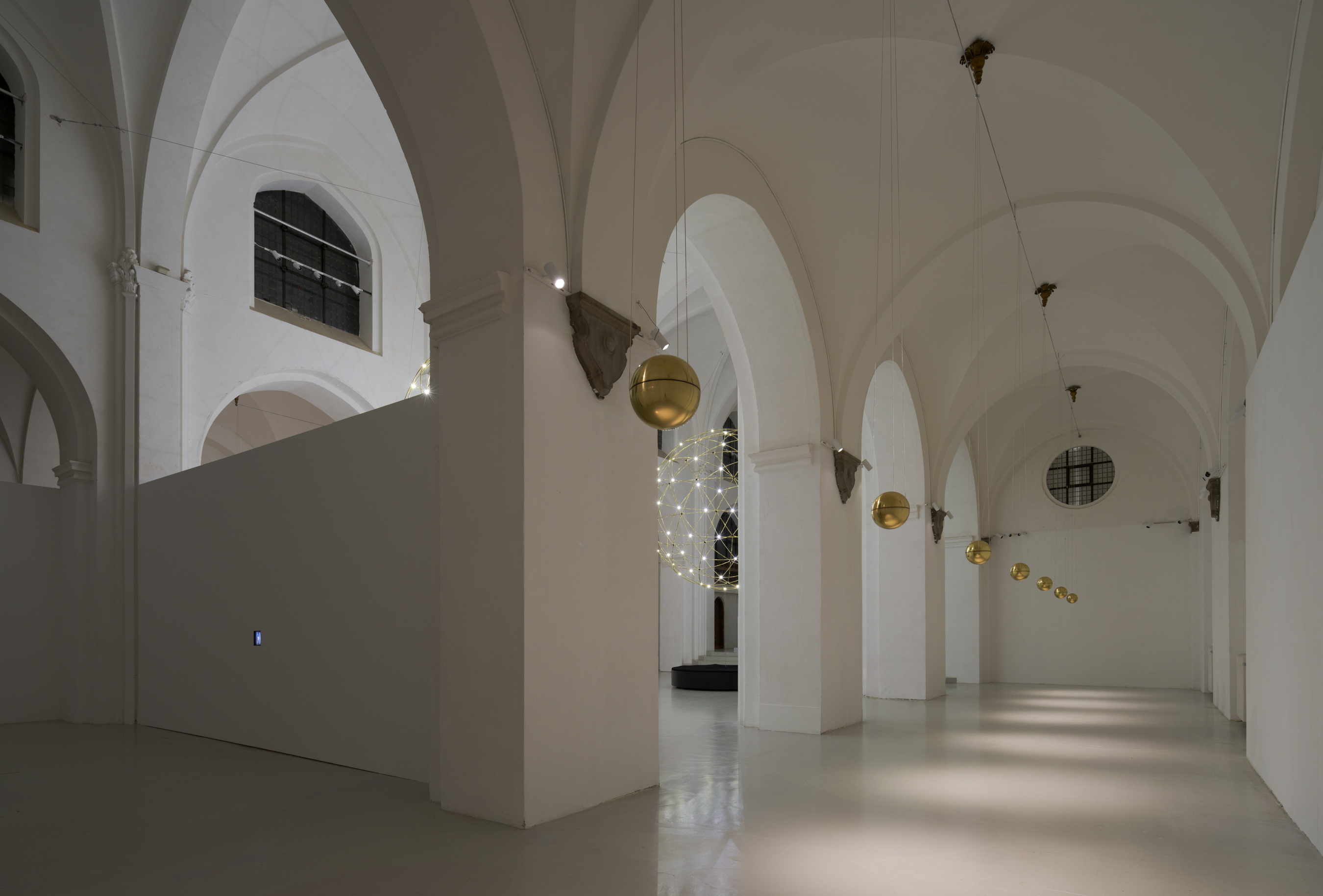
At Nikolaj Kunsthal, the sound level is relatively low, although you can still feel it in the floor. It is a gentle experience compared with the heavier, droning wall of sound Skjødt Hasselstrøm often works with, but also a necessity when working site-specifically in a listed building in the middle of the city.
We sit quietly for a moment, listening, while I try to formulate a question that I keep struggling to put into words. Skjødt Hasselstrøm smiles.
»We simply don’t have a very well-developed language for describing sound. I think it has to do with the fact that sound somehow penetrates our intellect and reaches us directly in the body and the emotional system. At least that’s how I experience it. Whereas visual art often takes place up here, in the head, sound plays on our instincts. Through sound, we can gain access to emotions and sensations that we might otherwise find difficult to get in touch with.«
Why do you think that is? Is it a quality of sound that makes it difficult to describe?
»I didn’t know it was called sound art«
»I think it lies deep in our development; it’s something utterly primal and instinctive. I remember being very fascinated by my father’s loudspeakers as a child. He had these big, square speakers, and as a little boy I would sit on top of them and feel how the sound produced vibrations in my body. I think that was when I realised that I wanted to work with sound.«
»I didn’t know there was a field called sound art, so I experienced it mostly as play and investigation«
From his childhood home in Aalborg, Skjødt Hasselstrøm went on to study at the The Jutland Academy of Music in Aalborg, where he played drums and composed electronic music. Alongside his studies, however, he and a fellow student were working on a series of experiments that he now calls »secret sound installations«.
»I didn’t know there was a field called sound art, so I experienced it mostly as play and investigation. We would set up different devices or investigate what happens when you put two things together: What if we attach a motor to an elastic band that runs down into a gramophone record playing at a low speed? Can we modify this toy so that it produces a different sound? They were often spatial investigations into what different media could do, but I went through my entire time at the academy without knowing that what we were doing had a name and was part of something already existing.«
Skjødt Hasselstrøm has carried that experimental approach from his youth into his work with scientific phenomena such as electromagnetism on the 2017 album Æter and the Doppler effect on Ventilator, Trio from 2013.
»For me, the scientific field is something extremely distant and very abstract, but at the same time it is something that constantly and directly affects human existence. There is something interesting in that contrast. The fact that we can survive radioactive radiation at all is because our atmosphere blocks most of the radiation that come through, so we ought to be extremely grateful for the atmosphere and our very special planet, and perhaps take better care of it,« he says.
»That’s the best I can do: ask questions, remain curious and try to make hyperobjects tangible to the senses«
»That is also what I think characterises the researchers I have met in connection with the exhibition trilogy. They generally have a great humility and groundedness that the rest of us could probably learn something from. I have this idea that one of the reasons for all the crises we find ourselves in as a species is that we struggle to understand – and remain humble – towards what we cannot see or hear. I think it is important that we learn to address these crises – the biodiversity crisis, the climate crisis and so on – before they escalate into something that can no longer be saved.«
How do we do that when it is so difficult for us to understand?
»I spoke to a professor of quantum optics who said that if someone claims they fully understand quantum mechanics, they’re lying. That actually made me feel a little better: so it’s okay that I don’t fully understand it either. I’m not a professor at the Niels Bohr Institute, after all. But because I come from another background and have a very specific artistic project in mind, I can ask slightly crazy questions that might even make them view at the whole thing a little differently. That’s the best I can do: ask questions, remain curious and try to make hyperobjects tangible to the senses.«
Christian Skjødt Hasselstrøm’s exhibition »Meridians« can be experienced at Nikolaj Kunsthal from 27 August 2026 to 10 January 2027
English translation: Andreo Michaelo Mielczarek