


Sound Is Something We Talk About
Sankt Hans Hospital on the outskirts of Roskilde is the kind of place where you can be sure there are ghosts. The hospital, now known in contemporary Danish as the Psychiatric Centre Sct. Hans, is picturesquely situated on the Roskilde Fjord, combining old Neoclassical buildings, towering trees and small networks of paths with the eeriness that comes with psychiatry’s horrifying history. A unique place.
Only one work is located on the hospital grounds – but what a work!
In recent years, the Museum of Contemporary Art has staged several exhibitions in the gardens and in buildings no longer used to house patients, and it is easy to see why. In the museum’s current exhibition, Lyden af (The Sound of), only one work is located on the hospital grounds – but what a work!
Humming as Resistance
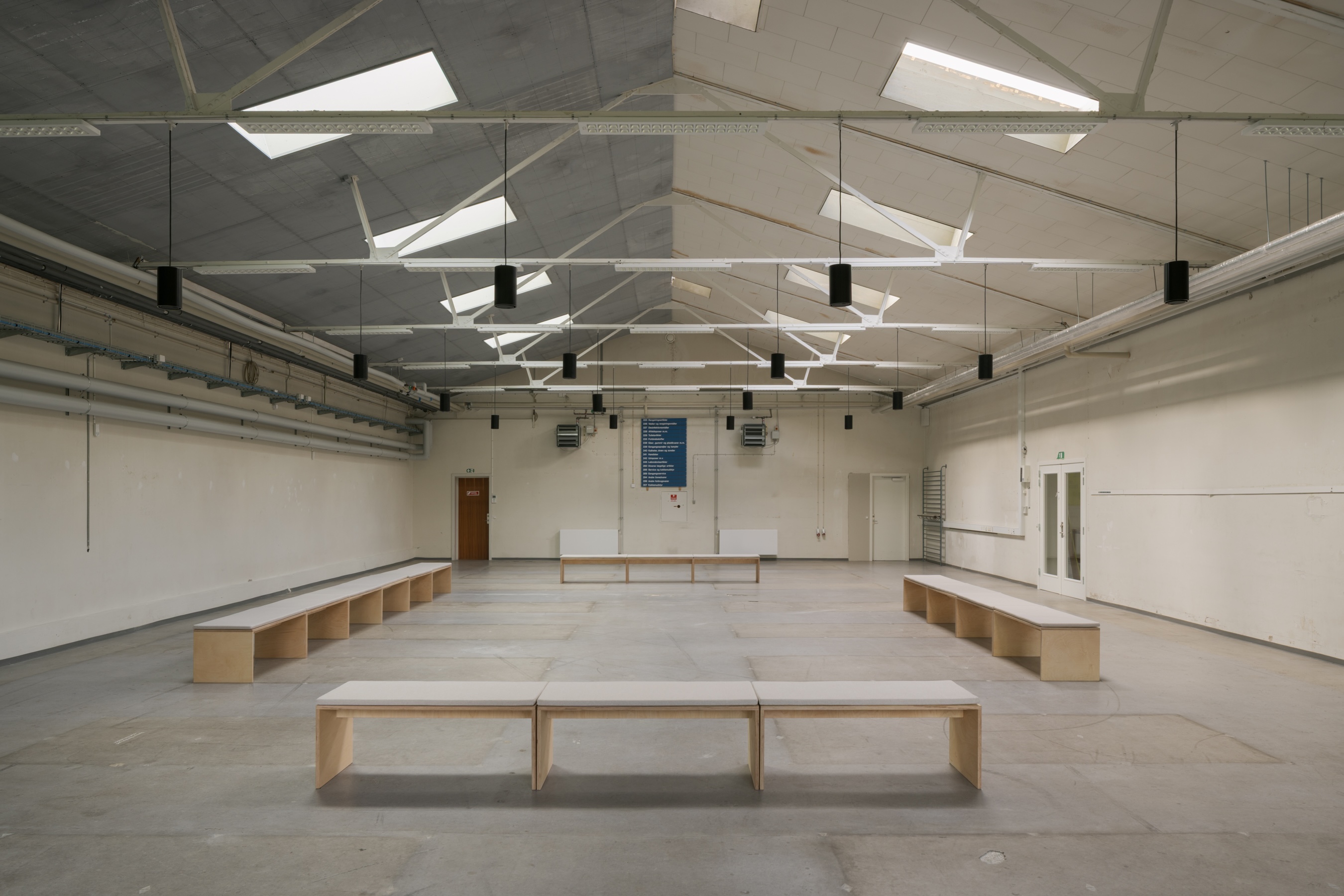
In the disused central laundry, Canadian artist Hajra Waheed has installed a 16-channel sound work titled Hum. In English, the word means to »hum«; in Urdu, it means »we«. The work consists of a melody woven together from eight different political protest songs from Turkey, Palestine, Egypt, Sudan and several other flashpoints around the world.
The content of songs may be censored, but people cannot be forbidden to hum
The songwriters, most of whom are now deceased, share the experience of having been imprisoned, censored or forced into exile for using the collective voice as a political tool. That is why the melodies are hummed rather than sung: the content of songs may be censored, but people cannot be forbidden to hum.
It is an incredibly intense work, with different voices taking over from one another and scattering the sound around different parts of the room, while the singers’ breathing remains clearly audible. Despite the geographical and temporal distance from the events that originally inspired the protests, the voices feel extraordinarily close. The work is not only breathtakingly beautiful, particularly for those of us with a fondness for traditional Middle Eastern music; I also believe it will resonate with the experiences of current patients, who are part of a system with a long, violent history in which the individual voice is not always heard.
When Sound Becomes Conversation
The Museum of Contemporary Art was formerly housed in a mansion in central Roskilde. A few years ago, it was decided that the museum should become a mobile exhibition platform, working across the urban landscape, and so it moved out of its premises. The decision may have been regretted; at any rate, the museum has once again secured a permanent base for the next three years, this time in a former gasworks by the city’s harbour.
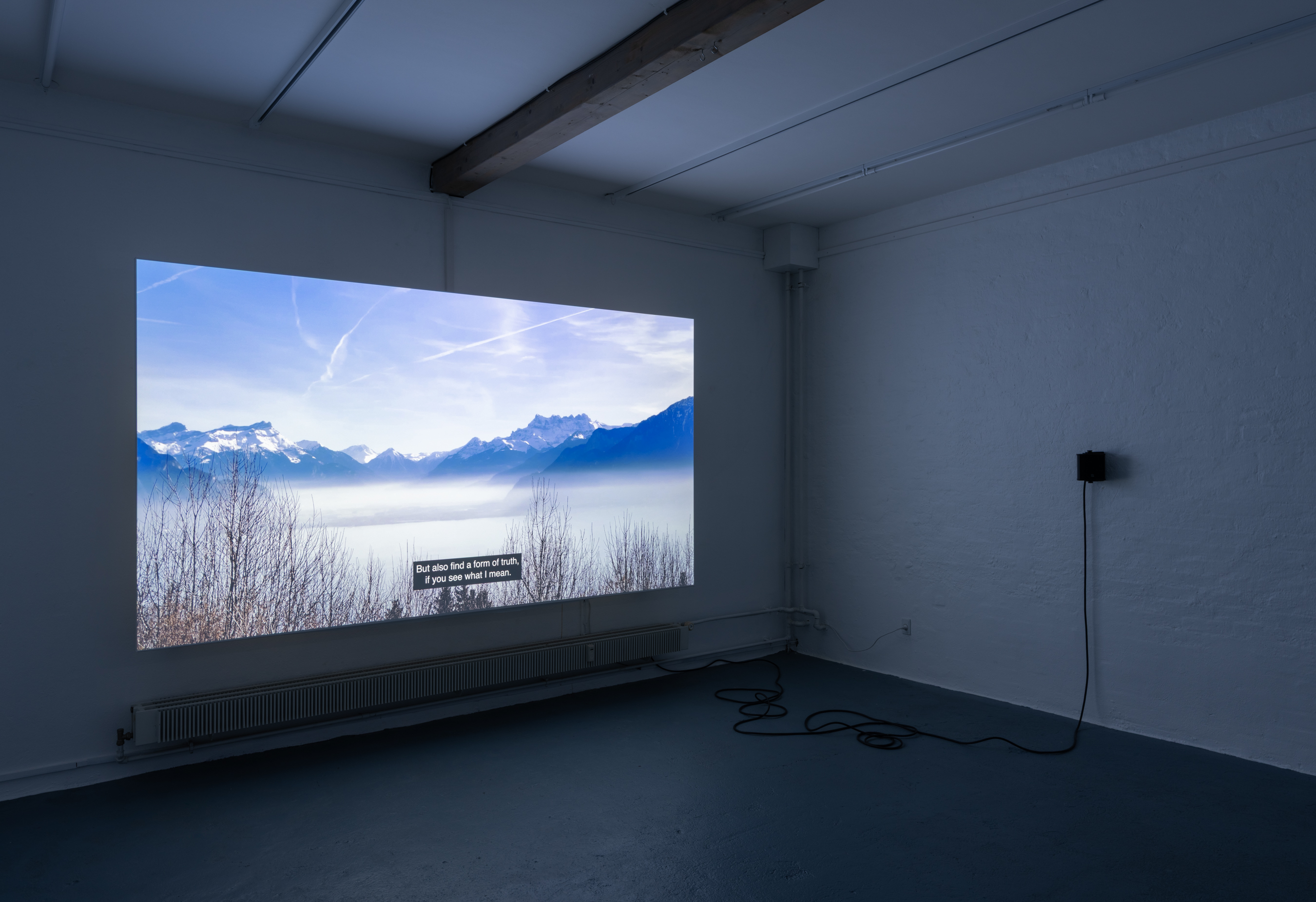
This is where most of Lyden af is located, and here, sound is above all something to talk about. Most of the works are monologues or dialogues, sometimes supplemented by other recordings, but with a focus on language. Cally Spooner, for instance, has recorded a telephone conversation with her mother in which they discuss how political and economic systems are experienced in everyday life. The work also has a visual component: a very slow projection of Lake Geneva that looks a little like a screensaver. On the lake’s shore stands a hotel that served as the backdrop for a conference in 1947, where members of the liberal world elite formulated their vision for the future of the free market. Spooner’s telephone conversation unfolds against this backdrop as she and her mother discuss notions of freedom, capitalism and what it means to be a loser.
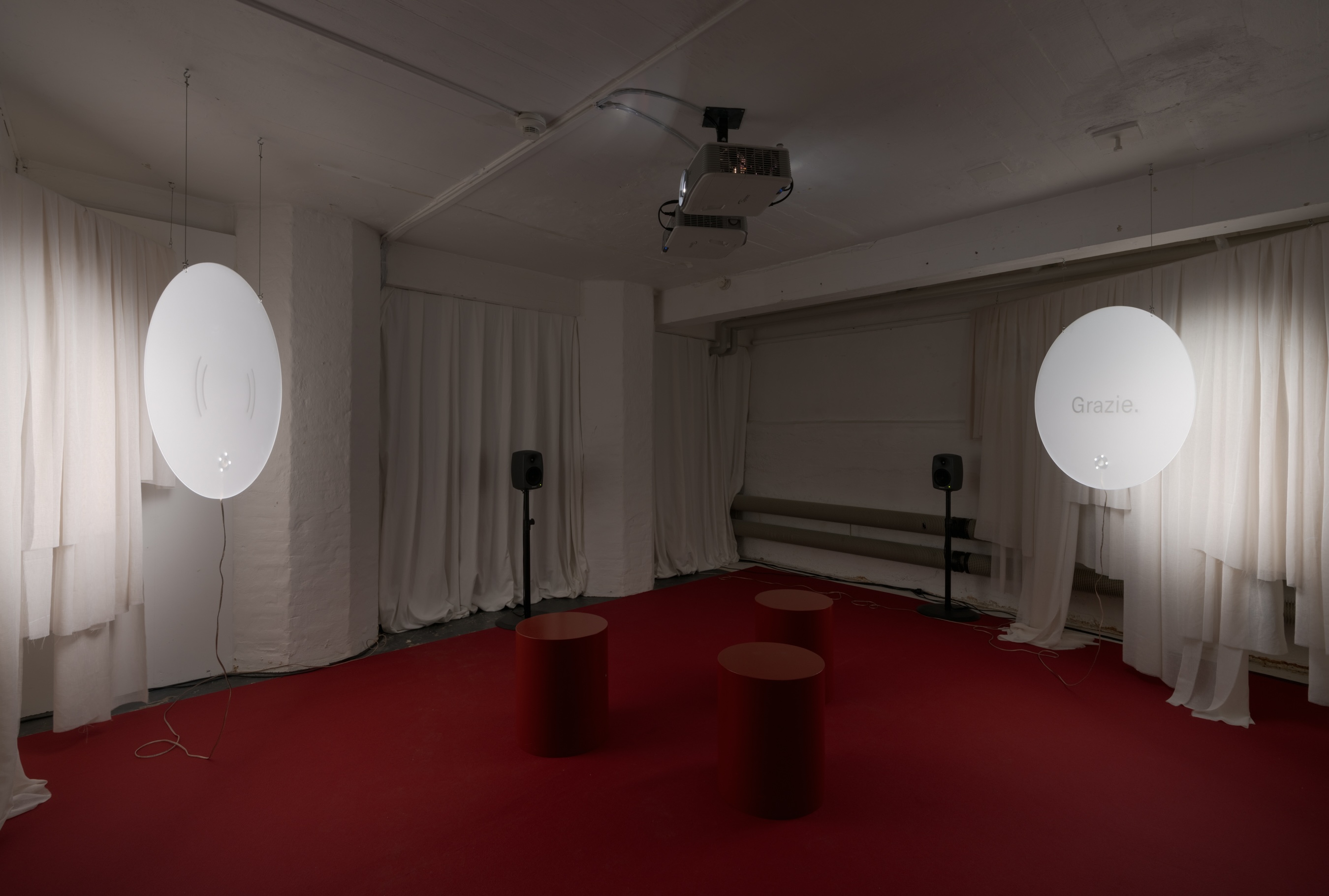
In the basement, Clara Mosconi is engaged in a similar conversation with her father. It takes place in Italian, a language the Danish-Italian artist grew up speaking but later forgot and is now trying to relearn. A video projection continuously translates the spoken words, but also captures the pauses and rhythms, the subtle little sounds that emerge in a conversation when language does not quite suffice.
We are invited to imagine what it feels like to be part of the water: to be mixed with soap
In the gasworks’ toilet, short monologues by Danish artist Arendse Krabbe play on a loop, taking the water running through the sink and cistern as their starting point. The conversations touch on wastewater issues and the climate crisis, and we are invited to imagine what it feels like to be part of the water: to be mixed with soap, to flow through sewers and trickle down through the earth.
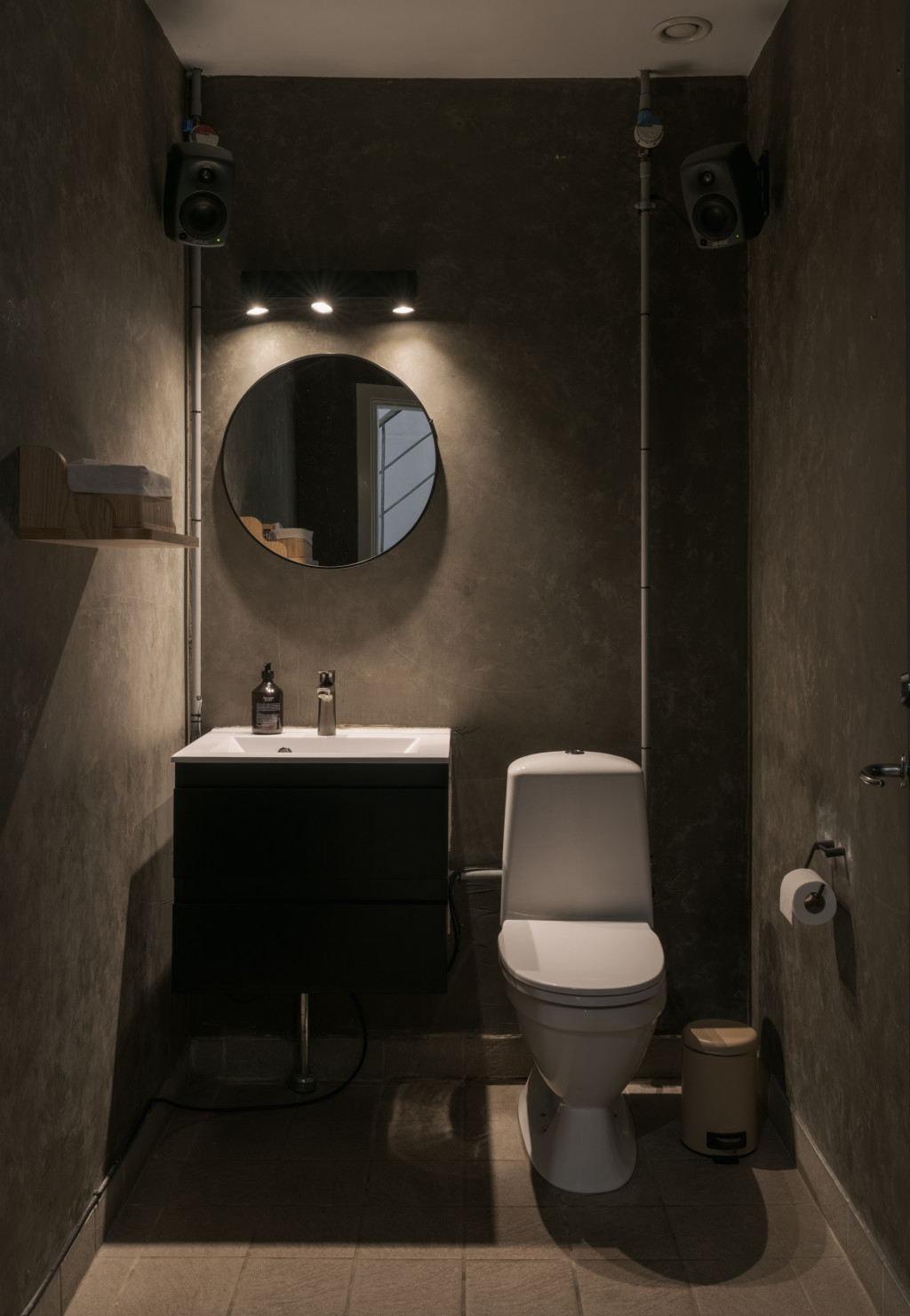
We are venturing into a kind of trans-species solidarity, and between the monologues there are recordings of running water – which, given the location, may be quite practical.
Decolonial Afrofunk
Two works by Julian Abraham ‘Togar’ and Emeka Ogboh explore decolonisation through sound that, thankfully, is not (exclusively) verbal. The former presents two videos from an ongoing project in which he drums his way through landscapes and cities along the routes connecting former colonies with their colonisers.
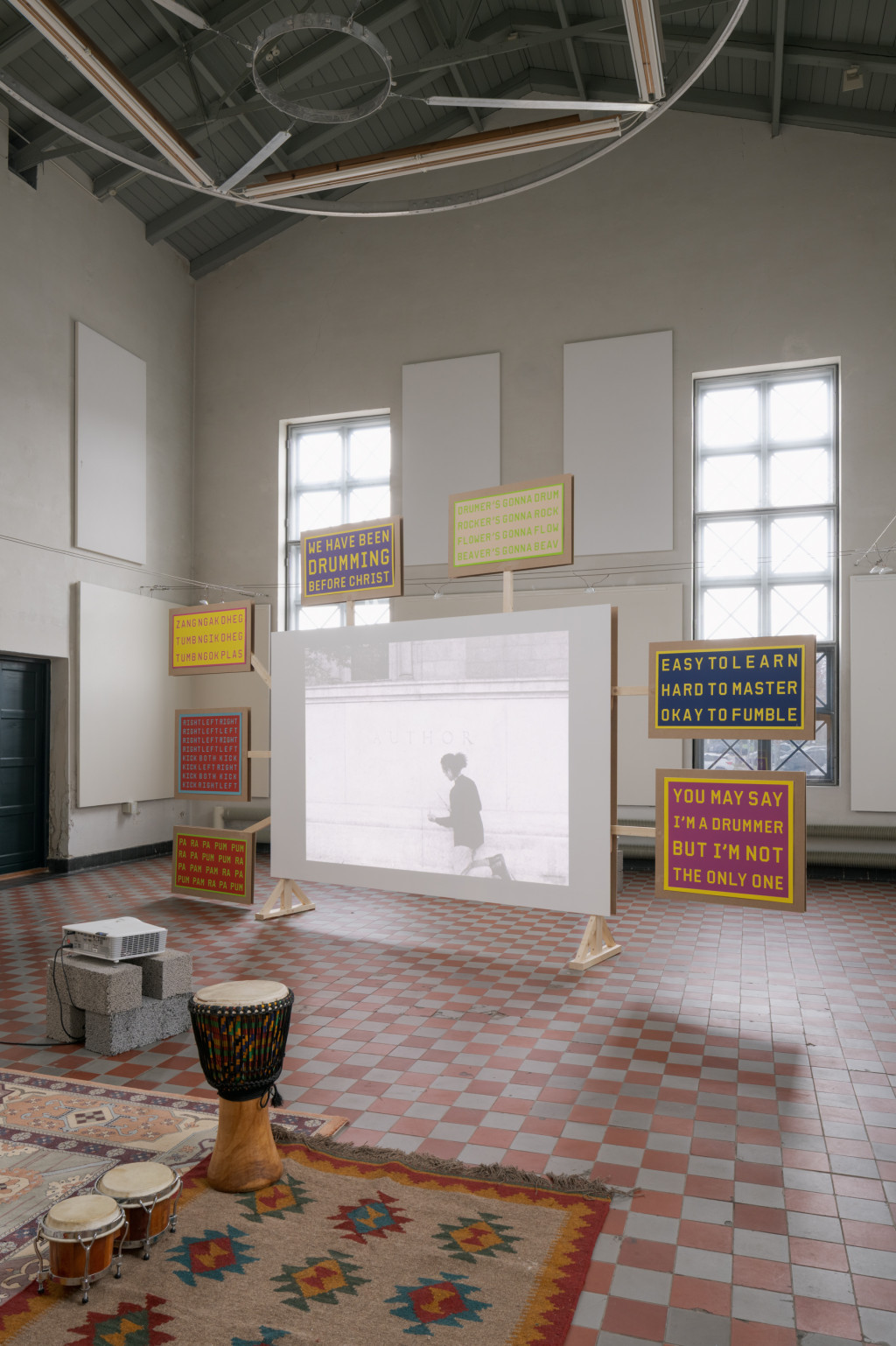
The rhythm is initially simple and steady, but the sound changes depending on what the drumsticks strike. In one beautiful scene, he stands knee-deep in water, bringing his drumsticks down on the waves of the Atlantic Ocean and sending water splashing around him. Everything is an instrument, clearly.
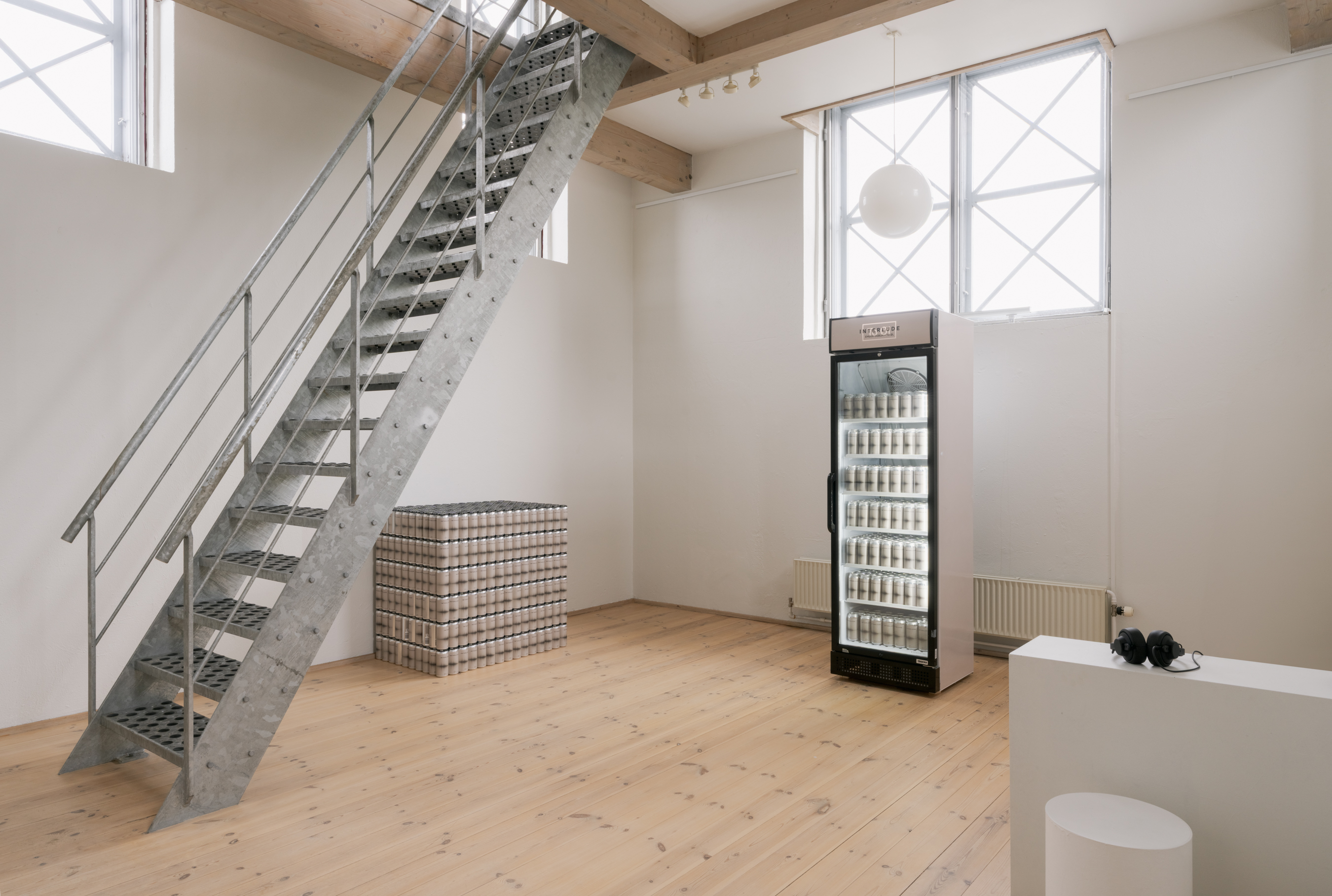
Emeka Ogboh has produced a beer that visitors are invited to drink at a very minimalist bar while listening to a work through headphones. I do not drink alcohol, but I gather from the description that the beer has a sparkling, lemony flavour, which presumably pairs rather well with the afrofunk playing as I listen. The sound work also engages with decolonial themes, but what I find particularly interesting is the idea of translating taste into sound. Two senses we rarely associate with one another – but why not?
As an exhibition, Lyden af is an oddly decentralised affair, with venues spread across three cities – Roskilde, Copenhagen and Malmö – staggered exhibition periods and an extensive programme of events. It seems unlikely that many visitors will experience the exhibition in its entirety, so perhaps the works are best regarded as individual encounters to be stumbled upon in various public spaces and cultural institutions. This may also explain the title, the somewhat indeterminate Lyden af: the sound of what?, one cannot help but wonder.
As an exhibition, Lyden af is an oddly decentralised affair, with venues spread across three cities – Roskilde, Copenhagen and Malmö
In Roskilde, it is above all sound as a political instrument that takes centre stage – as resistance and protest, but also as a connection to the outside world that sometimes fails. And amid all the verbal expression, all the conversations and monologues, it is the suppressed voices humming at the hospital that strike me straight in the heart.
Lyden af: Hajra Waheed, Hanne Lippard, Clara Mosconi, Julian Abrahm ‘Togar’, Emeka Ogboh, Cally Spooner, Arendse Krabbe, Fransceso Fonassi, Annika Kahrs
Museum of Contemporary Art Roskilde (in collaboration with Moderna Museet Malmö), 26 September – 8 November 2026
English translation: Andreo Michaelo Mielczarek