




Breaking the Rules or Just Having Fun? The State of Contemporary Music in Reykjavík

Few festivals radiate a sense of cool like the State of the Art. Based in Reykjavík, the event challenges the confines of contemporary music. Lightness and playfulness have been key elements of the festival’s programming since its first edition in 2024, reflecting the four directors’ – Bjarni Frímann Bjarnason, Bergur Þórisson, Magnús Jóhann Ragnarsson, and Sverrir Páll Sverrisson – adventurous tastes, strong sense of community and hunger for humour. By staging concerts in football pubs, clubs, and art galleries, they make room for different ways of listening. But does breaking the rules always lead to something new?
Few festivals radiate a sense of cool like the State of the Art
Baroque Goes Clubbing
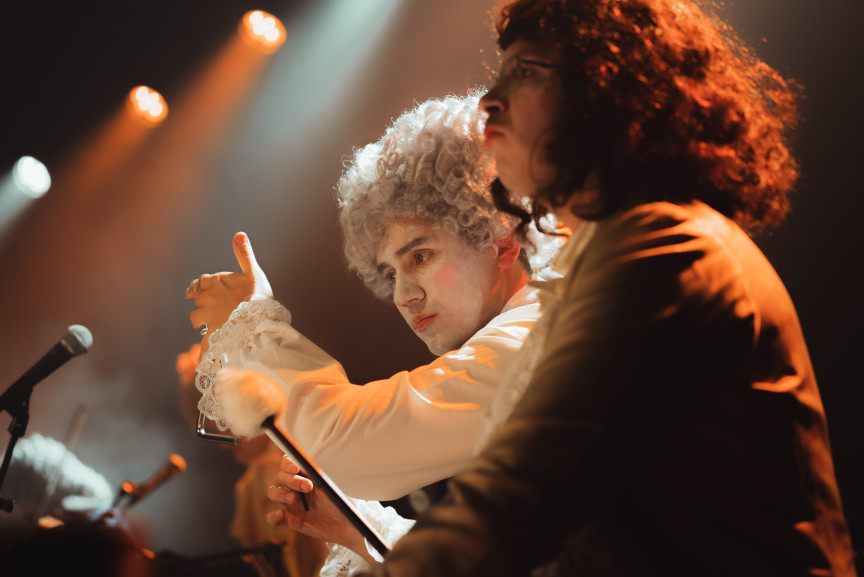
If conventions weigh early music down, a good rave might lift it up. This year, the festival took place for the third time, from October 6 to 11, and brought back Baroque at the Club, a beloved and rebellious format. On Saturday night, the atmospheric Austurbæjarbíó bar was packed with an eagerly awaiting crowd. It is rare for festival curators to grace the stage themselves, but at State of the Art, Bjarni Frímann, Magnús Jóhann, and Bergur Þórisson appeared several times alongside guest ensembles and musicians, including in this performance.
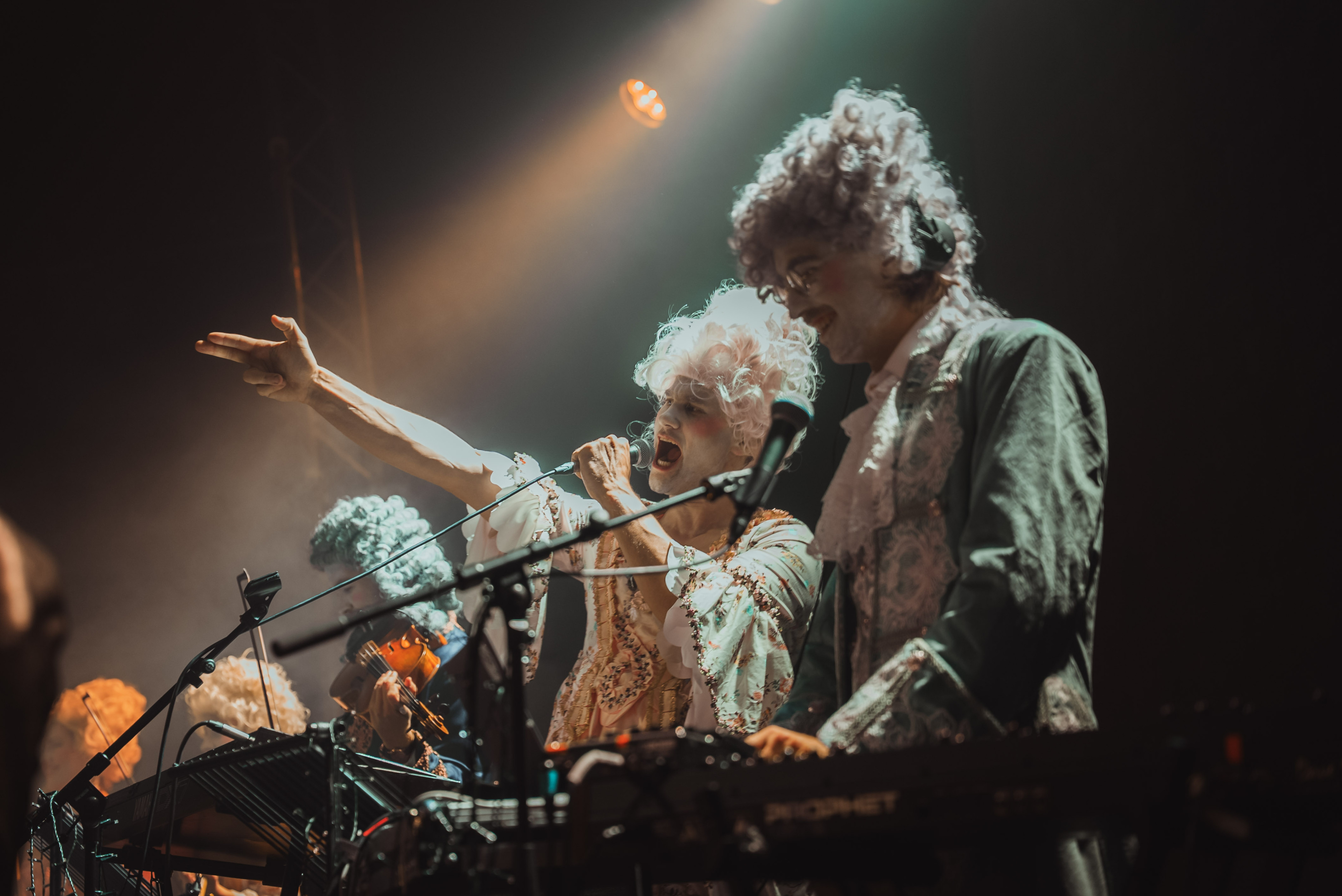
When I arrive at the bar, pass a long queue and find a good spot, a local ceramic artist who moved to Iceland seven years ago joins me and quickly shares her observation that apparently half of Reykjavík is here. Indeed, the bar quickly fills with concert-goers dressed in long gowns, flowing fabrics and dramatic silhouettes. The feverish anticipation culminates in a loud electronic beat, as a group of musicians appears on stage. Two violins, viola, cello, keyboard, drums and a computer: the theatricality of the performance suggests that early music is about to get special treatment.
Despite the poor acoustics and high volume, the musicians successfully tapped into the whirling rhythms of Vivaldi’s The Four Seasons concerti. The opening movement of Spring and the final movement of Summer were performed several times over the course of the night, each time paired with different high-energy beats. While Max Richter sought to recontextualise Vivaldi’s instant familiarity, stripping away its cultural associations and bringing out its inventive qualities, Baroque at the Club seemed to reinforce its vigorous melodies as a cliché, enjoyed simply for the pleasure of recognition. And everyone seemed to delight in it.
The programme also featured other hits by Bach, Handel, Telemann and others. With deadpan humour, Bjarni Frímann turned the composers’ names into a call-and-response exchange: he shouted each composer’s first name, and the audience responded with the surname. The energy in the room was more like a rock star’s concert, with the crowd singing along to their favourite band. I couldn’t help but join in the frenzy.
Football, Fraternity and Vulnerability
A similar spirit of comedy and exaggeration hung in the air during Ég er kominn heim, an event hosted by Ölver, a local football bar a little further from downtown Reykjavík. Atvinnumenn, a group of performers, invited us to an imagined football viewing party. It began with a polyphony of »ahhhs« and »ohhhs« from the performers seated among us, their passionate reactions following the unfolding game.
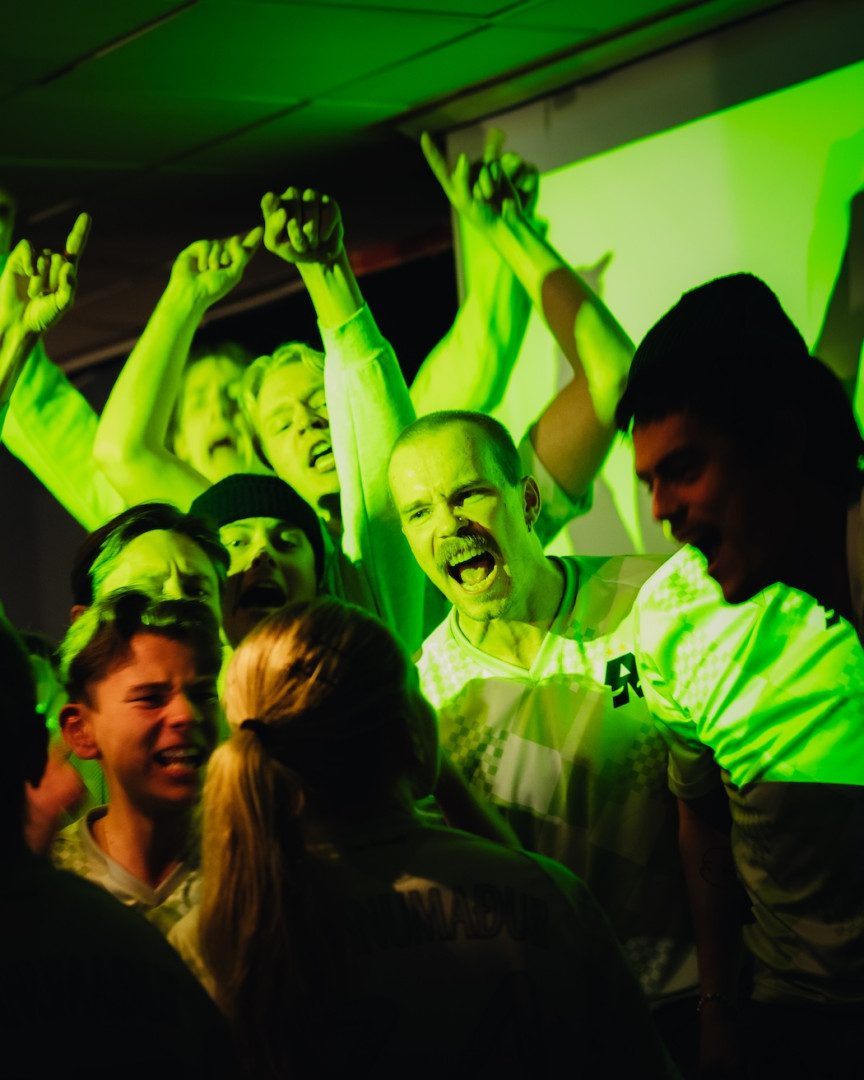
Big screen, glass of beer, favourite team’s T-shirts, all checked. Voices of disappointment, voices of excitement, voices colliding with one another. The lyrics of football anthems, none of which I could make out. A steady drumbeat pulsing through the room. In this football theatre, every gesture and every facial expression seemed to sustain this ambivalent display of brotherhood.
The climax came with an intimate scene: two football mates caught in a tender moment in the middle of the stage
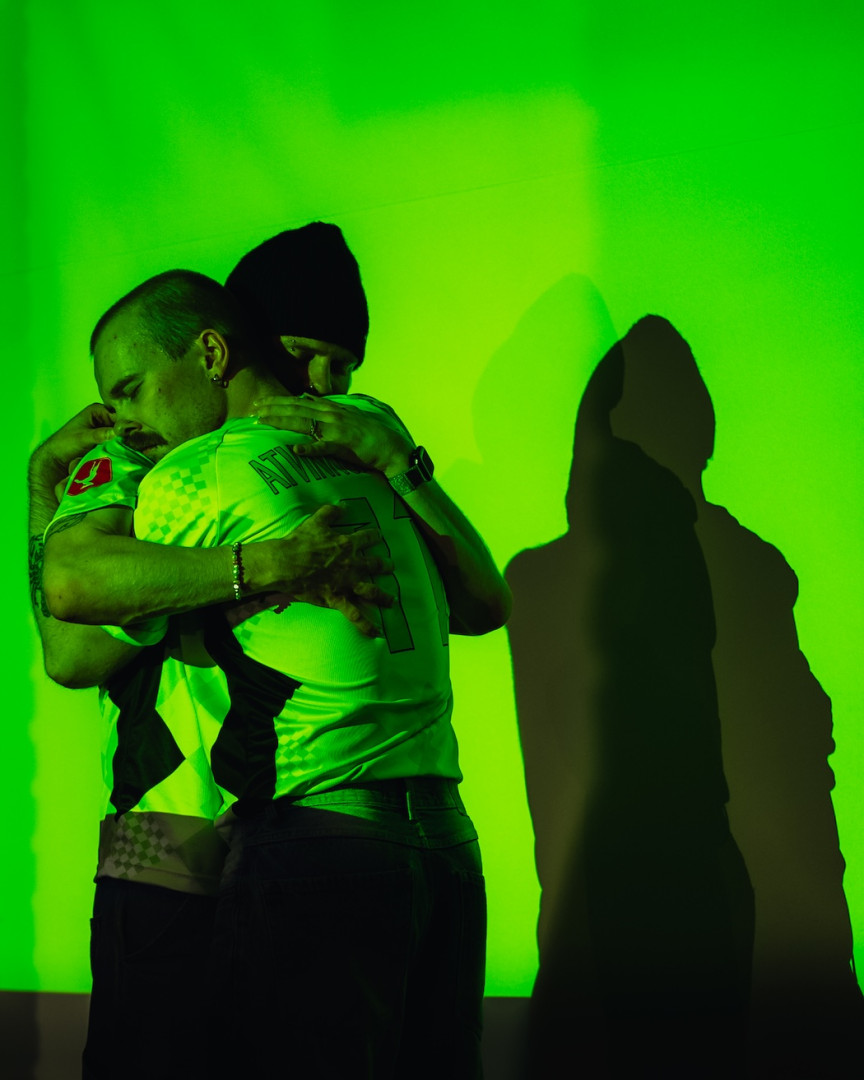
The climax came with an intimate scene: two football mates caught in a tender moment in the middle of the stage. The narrative and choreography followed the dramaturgy of a 90-minute match, though only one half was played. The performers filled the room with various expressions of masculine solidarity, suggesting that participation can create space for vulnerability and connection.
Less thrill-seeking, but still centred on the idea of belonging, was the event I attended on Thursday evening at the Living Art Museum. Kiður & Tu ha? Tu Bjö! brought together a choir and a wind quartet, not an obvious combination in the new music programme. But here, the format worked quite well. Spread throughout the room and bathed in red light, singers of Kiður, under the direction of Gyða Valtýsdóttir and Snorri Hallgrímsson, performed a selection of songs composed by members of the group: folk songs, hymn-like pieces, and daring explorations of the fabric of the human voice. The repertoire unfolded gently, cocooning us in whistles, hisses, and mellow melodies. The musicians of Tu ha? Tu Bjö!, an ensemble made up of two trumpets and two saxophones, found equal footing with the resonating voices, providing an architectural frame and colouring their textures.
A solo cement mixer entered with brisk authority and a flash of humour
The Orchestra Goes DIY
The final concert, meanwhile, set saws and electric drills in motion. Among the musicians, I already noticed a few familiar faces, whom I had met at dinner just before the community choir evening. Reykjavík Tool Orchestra, the festival’s only orchestra, was indeed a hardware ensemble: alongside electrical tools and sharp blades, a concrete mixer and heat guns appeared on stage.
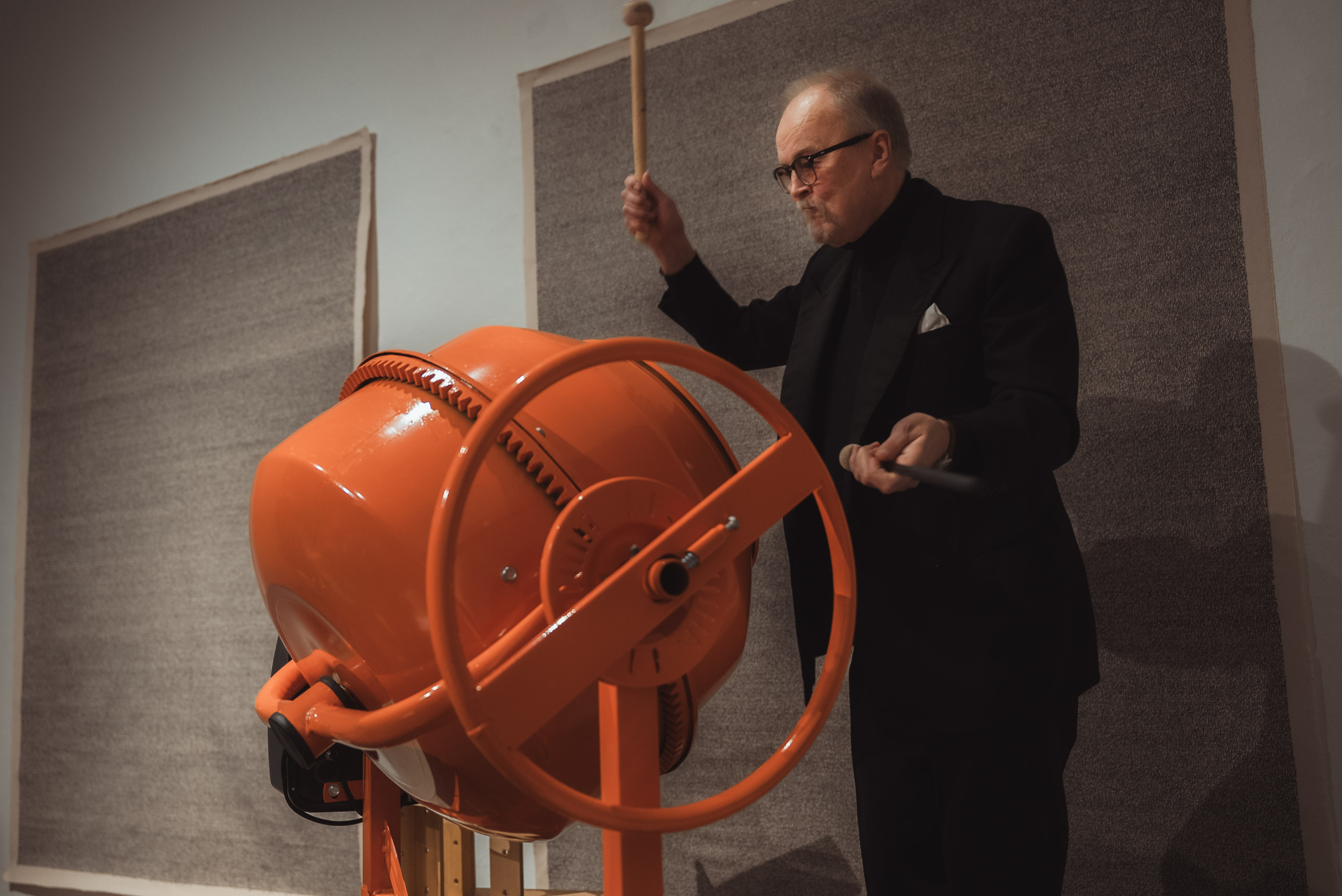
Led by Kristinn Arnar Sigurðsson, the group resisted the lure of noise and instead plunged the art gallery space into softness. The gentle textures of bowed, high-pitched saws blended elegantly with the rhythms of drills and heat guns. A solo cement mixer entered with brisk authority and a flash of humour.
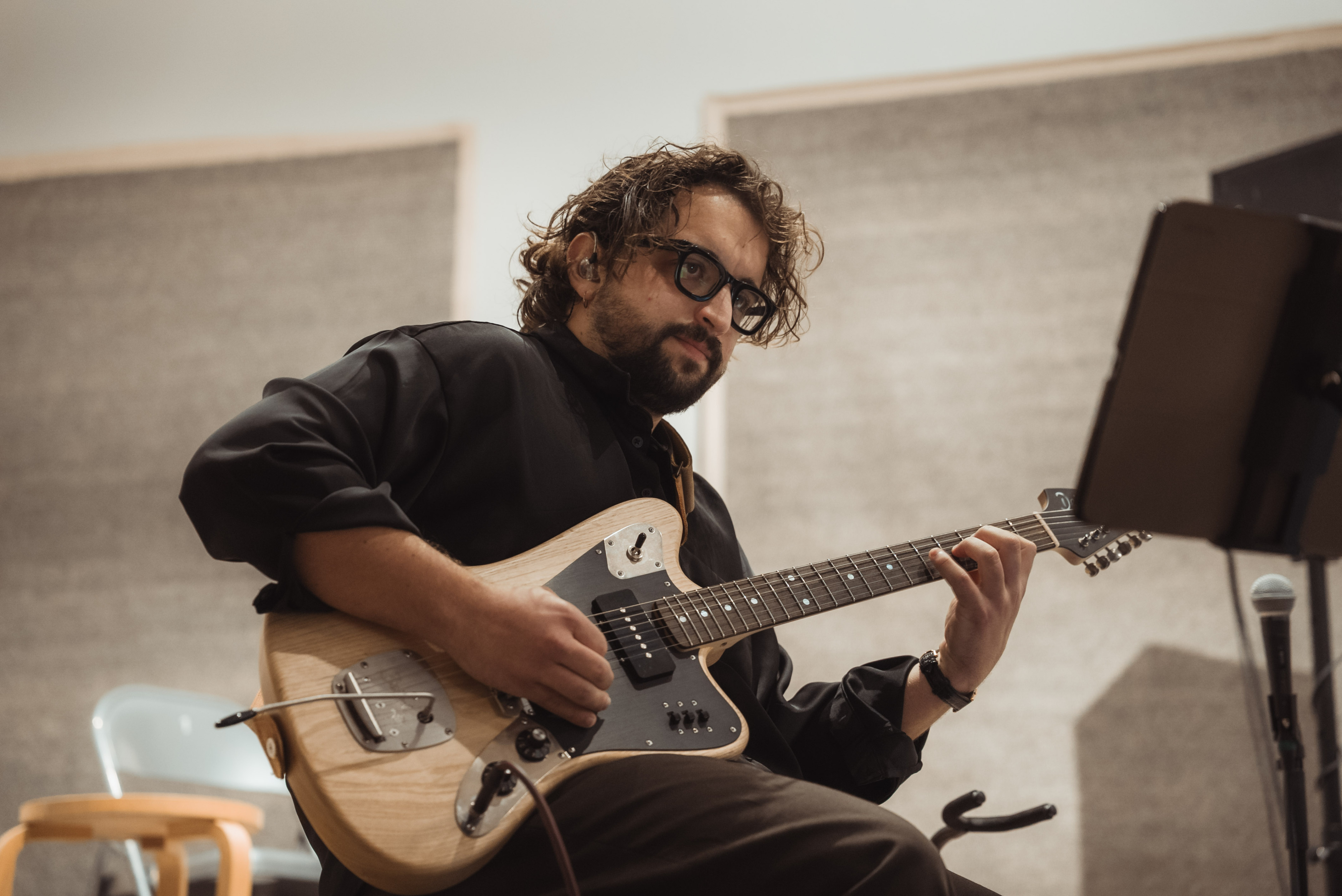
Despite its seeming pastiche, the orchestra was designed to surprise with its symphonic potential, nodding to the conventions of a classical concert. In the first half, guitarist Francesco Rista took the stage with a solo recital, paying tribute to Steve Reich, who turns 90 this year. His programme included Electric Counterpoint (1987), written for electric guitar and tape, with the soloist performing alongside ten prerecorded guitars and two electric bass parts. The piece is built up on interlocking melodic patterns that twist and turn, changing keys and tempo. Rista gave it a feverish flair, adding nuances and drawing out its boundless textures. The programme also included John Cage's Dream, Eve Beglarian's ...until it blazes and John Dowland’s Flow, My Tears, offering us a great exercise in listening.
Beyond the Nordic Stereotype
The question of the current state of contemporary Nordic music came to the fore in the BIT20 concert on Sunday afternoon. Under the direction of its artistic director, Bjarni Frímann, the ensemble delivered a weighty programme, by no means easy to classify, sweeping us along with its idealism and offering a glimpse of the challenges facing contemporary society.
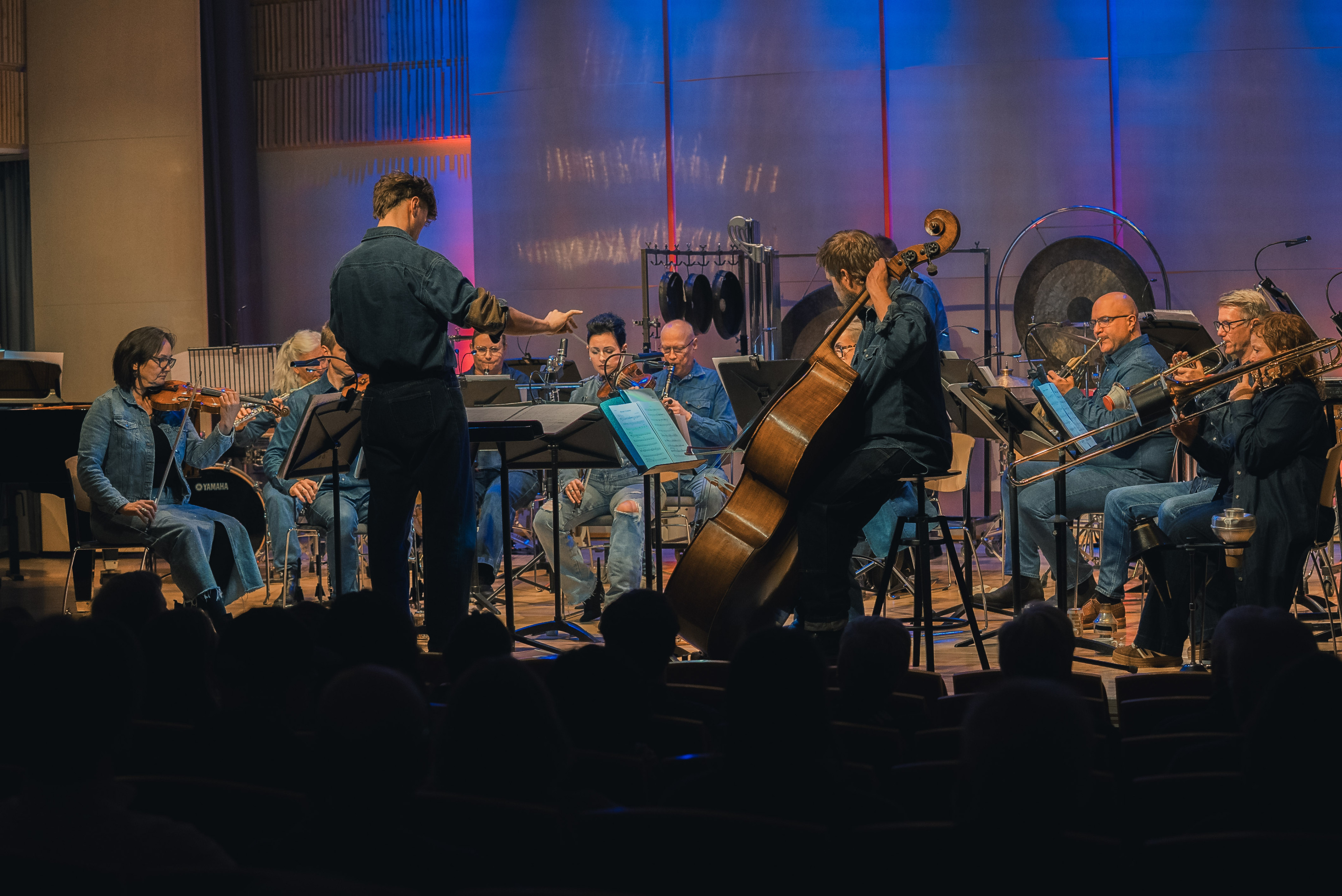
Knut Vaage’s Odyssey, written for the ensemble more than two decades ago as a recomposition of Edvard Grieg’s Lyric Suite, unfolded as an amiable sequence of contrasting soundscapes, punctuated by crescendos. Andrea Tarrodi’s dreamy Nightingale draws on H. C. Andersen’s tale, evoking the chirping sounds of woodwinds and strings, with oneiric harp carrying unsettling undertones. The premiere of Jakob Thonander Glans’s Symphony II shifted the musical currents into brazen, outspoken territory, as though picking up where Jennifer Walshe’s concept of The New Discipline left off. Self-recorded videos of the composer going about his daily life, interwoven with the live instrumental parts, felt more like an escapist gimmick than a conceptual gesture. Yet it came with plenty of punk-rock energy, harsh edges and slapstick moments.
Lotta Wennäkoski’s Nosztalgiaim was perhaps the most personal work in the programme. Inspired by her time in Budapest, it drew on her encounters with Hungarian folk music, interpreting them through a lens of formal complexity and timbral nuance, while also raising questions about memory and what we choose to remember. The evening rounded off with Atli Heimir Sveinsson’s Icelandic Rap V, a performative work driven by rhythmic patterns and shifting colours. In doing so, the ensemble paid homage to the Icelandic avant-gardist, who also founded the Dark Music Days festival.
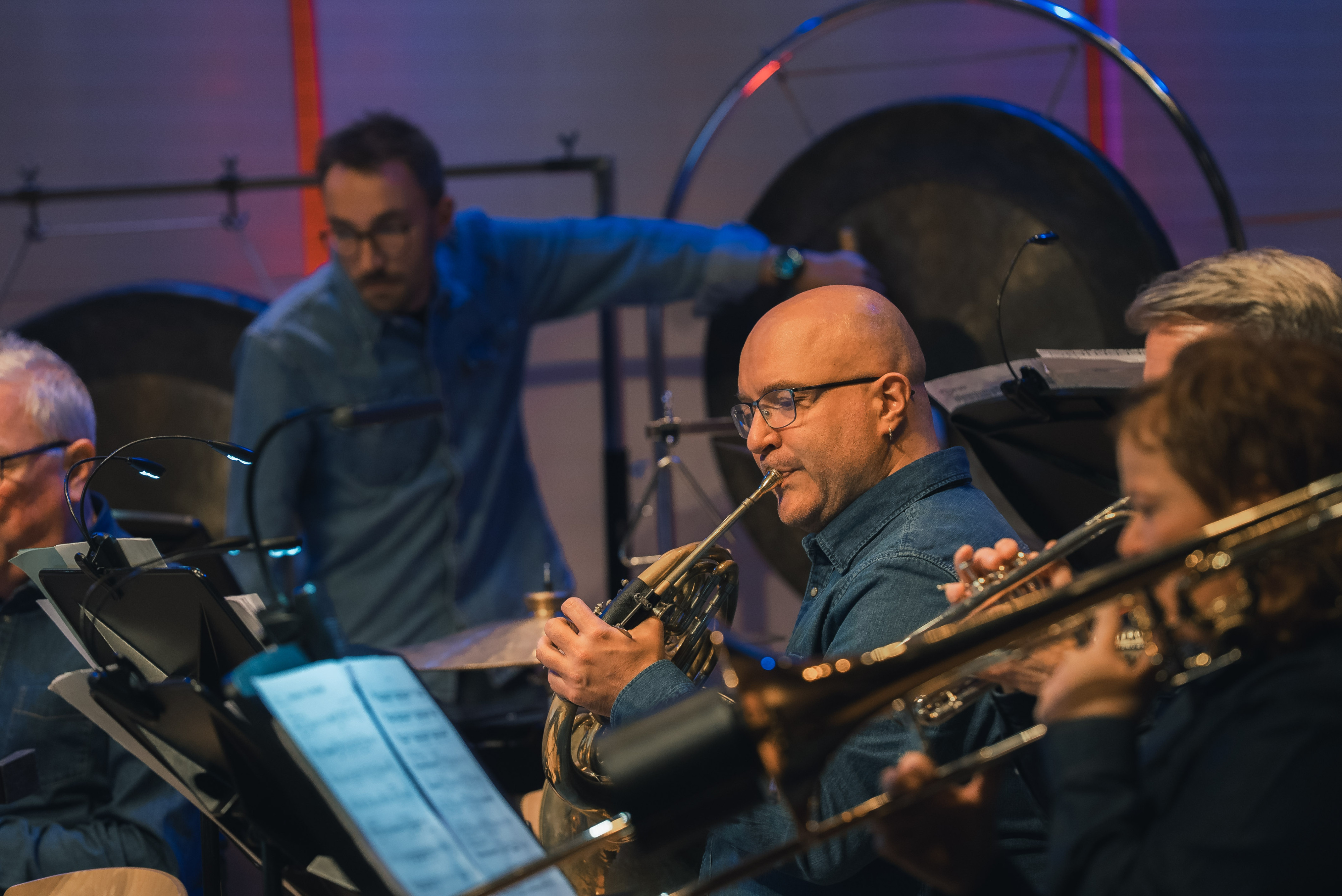
Oscillating between tradition and reinvention, the BIT20 programme did not reveal anything new about the musical ecosystem hidden beneath the umbrella term »Nordic«, but it left plenty of room for nuance. Cutting through stereotypes about Nordic composers and conventional depictions of nature and mythology, it offered a more layered perspective on the ways folklore and traditions can be reinterpreted. Questions of identity, heritage, and the relationship between nature and technology surfaced along the way.
Where can music go, and whom can it reach?
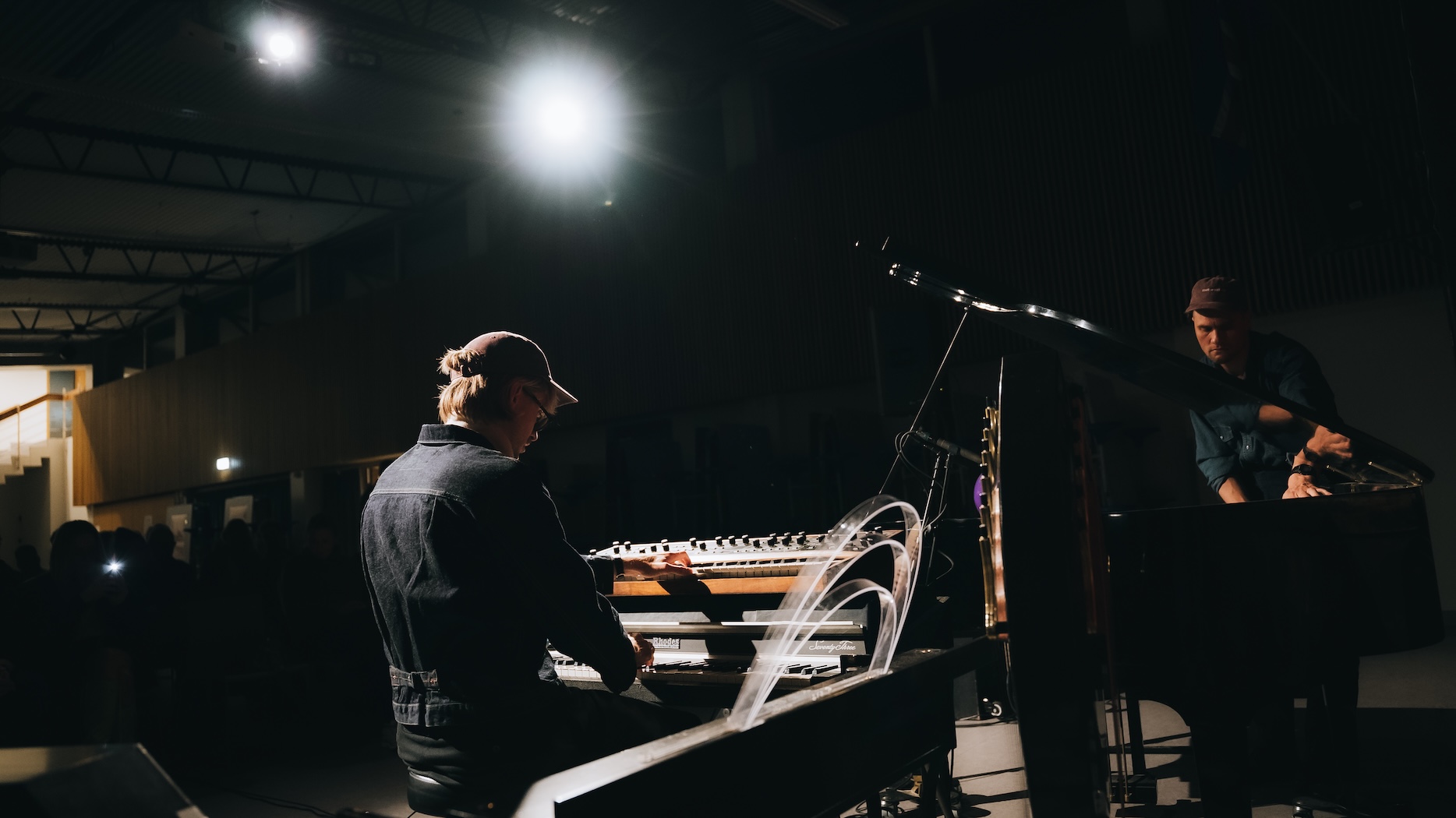
Perhaps the State of the Art is so appealing because, rather than trying to define or diagnose what contemporary music sounds like today, the festival seems more interested in asking different questions: where can music go, and whom can it reach? This year’s programme thrived on a willingness to take things less seriously without compromising artistic quality. Not every concert needs an intellectual frame, but every concert benefits from the presence of curious listeners.
State of the Art Festival, 6-11 October, Reykjavík, Iceland