The Anatomy of the Organ
A few years ago, I threw myself into the adventure of learning to play the church organ. In conversations with friends about this project, I have often reflected on how the organ is an instrument that at once appears extremely niche and utterly commonplace. For many, it is surrounded by a certain mysterious aura, and yet air is blown through its pipes Sunday after Sunday in every corner of the country, and organ music keeps a multitude of musicians occupied. The organ exists on a paradoxical threshold between the esoteric and the democratic.
The organ exists on a paradoxical threshold between the esoteric and the democratic
It is precisely this paradoxical threshold that the Organ Sound Art Festival manages to activate – a task the festival has undertaken for the past ten years within the walls of Koncertkirken in Nørrebro, Copenhagen. Just as organs – at least the large ones – are integrated into the space in which they sound, as a kind of architecture within the architecture, so too does the Organ Sound Art Festival seem conceived specifically for Koncertkirken’s room. Koncertkirken itself occupies a threshold between the sacred function to which the former church space points back and the secular venue it houses today – a venue that also actively explores a fruitful dialogue between early music and new experiments. And because much of the church’s interior has been preserved, it is one of the rare venues that possesses its very own full-scale pipe organ. An organ that, naturally, is allowed to unfold fully at the Organ Sound Art Festival, yet which by no means stands alone in the festival’s sonic investigations of the organ’s anatomy.

For the Organ Sound Art Festival does not approach the organ with the reverence so often associated with the instrument; on the contrary, it seeks each year to explore the organ’s paradoxical threshold by, so to speak, taking the mighty instrument apart and reassembling its elements in new and surprising ways. This unfolded in this year’s programme through musical play, gothic drama, and intense sound meditations.
In meditation circles, so-called gong baths – where listeners are enveloped by the sound vibrations of various gongs – have become popular
From shō to human organ
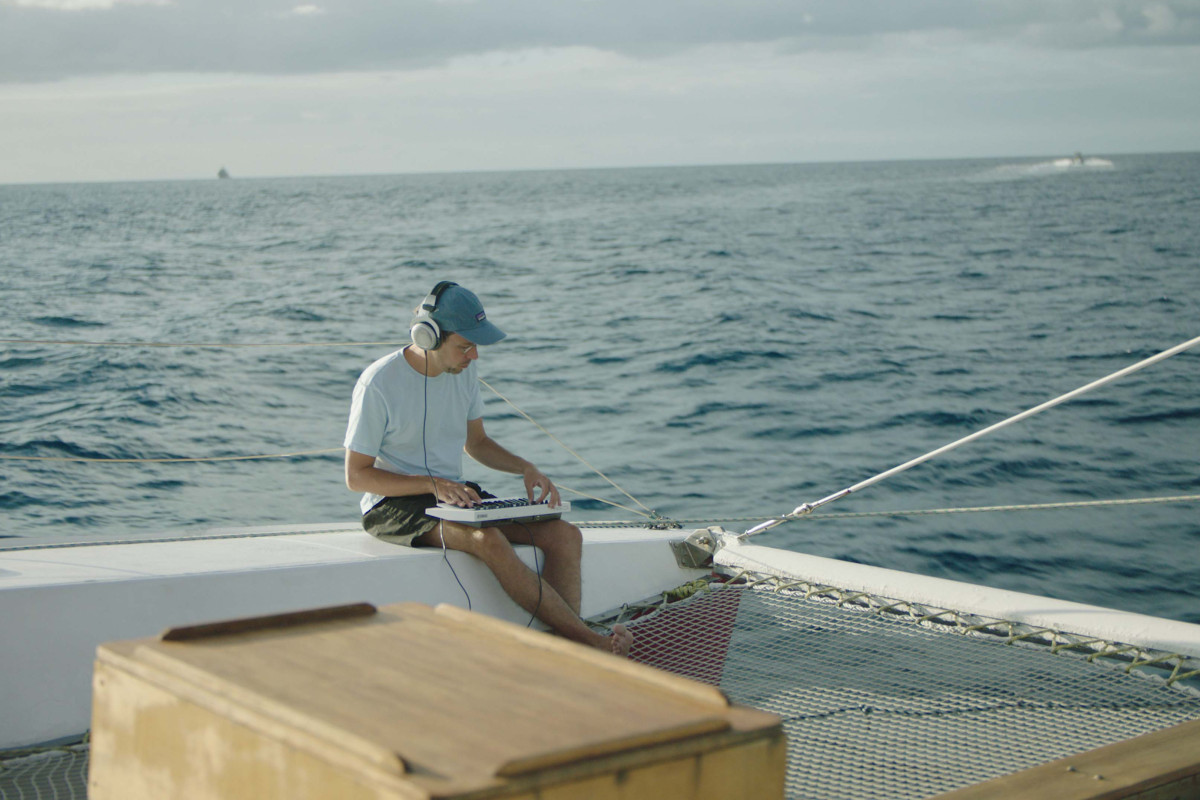
It feels fitting that this year’s festival opens with a concert by the Swedish composer Mattias Hållsten for the ancient Japanese instrument shō – a kind of mouth organ made up of small bamboo pipes. Here, the organ’s principle of air blown through pipes is distilled into an instrument that could almost fit into a large pocket. There is something quietly amusing about watching Hållsten coax droning sounds from the light, fragile instrument, while the church’s larger organ constructions resound in the darkness of the room like very different, much larger animals on the festival’s organ safari.

Over time, Koncertkirken has amassed a substantial collection of transportable organs that supplement the large church organ from 1926. Much of this arsenal is rolled out when the Australian Calum Builder performs in a quartet format on Saturday evening. Builder himself plays a so-called deconstructed organ, while both the church’s main organ and two other organs are also put to use. In meditation circles, so-called gong baths – where listeners are enveloped by the sound vibrations of various gongs – have become popular.

What Builder and his ensemble present might well be described as an organ bath: an experience of being surrounded on all sides by vibrating organ tones, with elongated sounds that easily invite meditative and ambient states, while simultaneously offering a kind of engine-room view into the organ’s mechanics. Builder wrestles with his homemade instrument during the performance, manipulating or entirely replacing pipes along the way to alter the sound.
What Builder and his ensemble present might well be described as an organ bath
The entire space is also activated by the collective År & Dag, who on the festival’s first day present their commissioned work Multiple Pipes for Major Players. Where Builder’s concert is grounded in a heavy, massive organ presence with four large instruments in play, there are – conventionally speaking – no organs present at all in År & Dag’s performance. And yet. The concert presents a kind of human organ distributed across twelve musicians moving through the space with various pipes, some carved from wood and others 3D-printed. The ensemble blows into these pipes to produce different tones and timbres in a concert that is equally choreography, concert, and musical gamification. Unpredictability and chance are opened up within a system where the musicians pass through different trajectories across the room and, among other things, take turns standing at the centre of a circle to conduct the others.

At times, these processes recall avant-garde musician John Zorn’s work Cobra, which similarly employs principles from games to guide an improvising ensemble, but they also evoke countless games most of us probably played as children. Fully in keeping with the composition’s democratic and open character, one can afterwards even buy 3D-printed organ pipes at the merch stand. Perhaps at Christmas one might circle the tree with the whole family as a human organ? In any case, Multiple Pipes for Major Players opens up – very much in the spirit of the festival – new perspectives on the organ in a concert that, on the one hand, disenchants the instrument, but on the other hand re-enchants it through a childlike imagination and sense of discovery.
Fully in keeping with the composition’s democratic and open character, one can afterwards even buy 3D-printed organ pipes at the merch stand
The lungs of the organ
From weight to lightness. Calum Builder and År & Dag, in their own ways, present extremes in ensemble playing, while both work with interpretations of the organ as a space that envelops the listener. On Friday, too, one can experience a larger ensemble that embraces the entirety of Koncertkirken’s room. Here, the Danish composer Ragnhild May and the Canadian Stefan Maier perform their joint composition Bellows together with an ensemble of wind instruments. »Bellows« refers to the device that pumps air, thus signalling a dialogue with the organ’s physicality and, as in Builder’s case, a glimpse into the engine room itself. As with Builder, a number of homemade organ installations and the church’s large organ are brought into play, but through the expanded ensemble of wind instruments there is also a kind of fusion of human lungs and organ lungs – a sort of all-encompassing cyborg organ in which bodies and machines pulse together in the space. In contrast to År & Dag’s human organ, May and Maier unfold their cyborg organ with a high degree of theatrical drama, with May herself moving through the room as an almost ceremonial figure, carrying a transportable instrument resembling a hybrid of a lute and an organ.
Melancholic re-enchantment
The Organ Sound Art Festival’s 10th anniversary coincidentally coincides with another anniversary: the 10-year jubilee of the Swedish label XKatedral, originally founded by organist Kali Malone together with composer Maria W. Horn. In its aesthetic, XKatedral has frequently explored atmospheric and ambient sound worlds with a fondness for the organ’s deep drones and rich overtones, as well as an interest in precisely that threshold experience of the sacred which the instrument opens up.

XKatedral occupies a significant place in this year’s festival programme, with several artists connected to the label performing. On Friday, there is a performance for organ and electronics by Theodor Kentros, and on Saturday Maria W. Horn closes the evening together with sound artist Mats Erlandsson, with whom she has an ongoing release series of so-called Organ Rehearsal Tapes. These releases often enter into dialogue with organs in small churches in the region where Horn herself grew up. As with År & Dag’s project, one can speak of a kind of re-enchantment of the organ through the gaze of childhood, though the mood here is quite different, with organ sounds steeped in melancholy and haunted atmospheres.

Without surrendering to a singular religious experience, Horn and Erlandsson exploit the organ’s aura of ritual sound, and for Horn – who also works under the project name Funeral Folk – the organ is stretched across a threshold between intense presence and ghostly absence. Where many of the artists at the Organ Sound Art Festival largely work to wrench the organ free from religious mysticism, Horn and Erlandsson place a melancholic full stop on Saturday by transporting the instrument back to the threshold of the sacred. This only serves to underscore that the organ can contain it all. It can open portals to dread, beauty, and awe. But, as other examples at the festival show, it can also inspire lightness, play, and delight in mechanical constructions. Like the very air that flows through both the organ’s pipes and the human lungs, the organ embraces both the cosmic and the earthly.
Organ Sound Art Festival, Koncertkirken, 11–14 December 2025
English translation: Andreo Michaelo Mielczarek